Posts

Significant warmth across the US next week, but will it last?

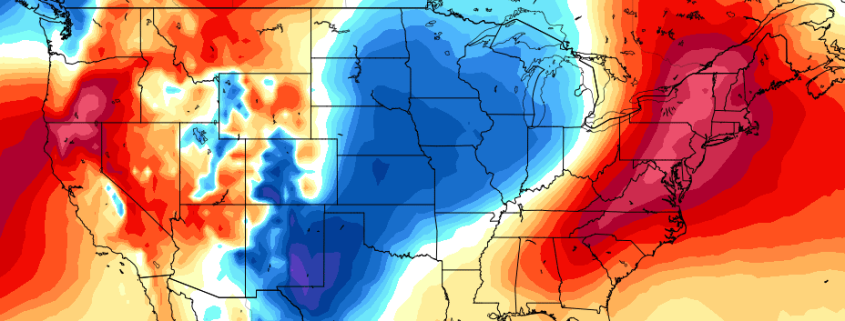
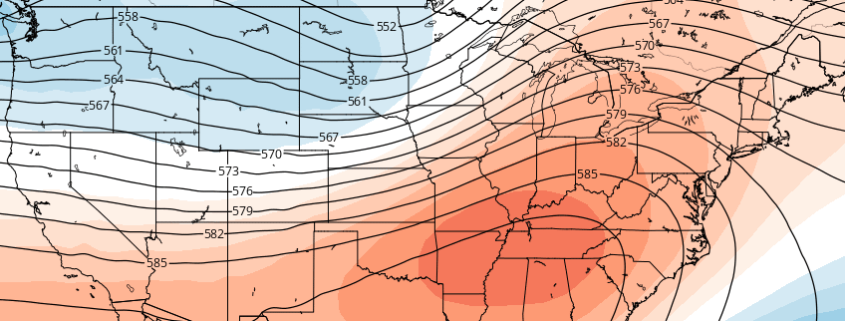
The hemispheric pattern evolution over the next 7-10 days will be quite intricate, to say the least, and could potentially include both a significant — possibly record breaking — warmup, and a large scale cooldown directly behind it. The pattern changes and evolution are being largely driven by changes that are ongoing in the Pacific Ocean, as a large low pressure system and mid level trough form in the Gulf of Alaska. This forces dramatic changes to the pattern across the Continental United States.

Late this week, a large trough centered near the Aleutian Islands of Alaska will begin a dramatic shift. This trough — overall — has been centered near the Aleutians for quite some time now. But a changing pattern, wavelengths, and an extra boost from a recurving typhoon will help to bring forth the change. The Aleutians trough shifts southeast by hundreds of miles this weekend, resulting in a significant storm system pushing into the Pacific Northwest.
Read more

Long Range: Cooler, active pattern ahead for Central US

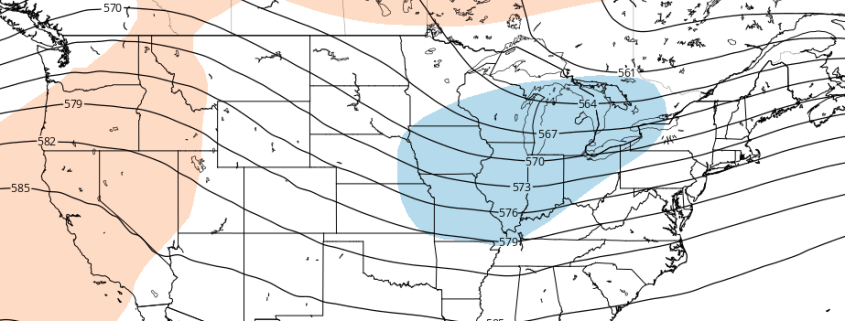
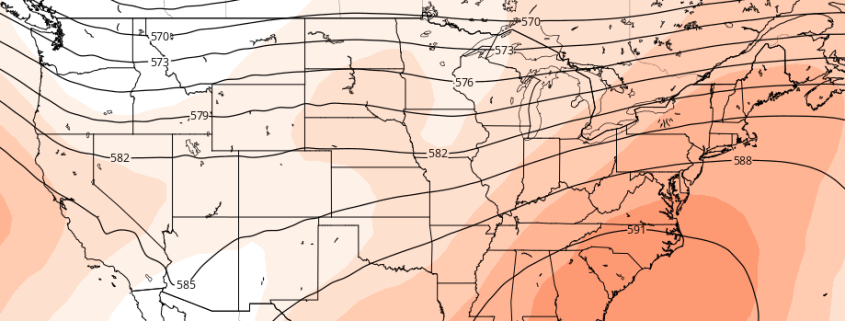
Far away from the United States, in the equatorial Pacific, a propagating MJO has some ideas as to how the weather pattern will evolve through early October. Okay, maybe that’s not exactly how it works. But the development of an MJO wave will, in fact, aid in the patterns progression over the United States through the end of September. The instra-seasonal traveling pattern of convection more affectionately known as the MJO (Madden Julian Oscillation) has significant impacts on our weather, and this occurrence will be no different. You can read more about the MJO right here.

While the MJO has been stuck in a period of inactivity over the past several weeks, the overall hemispheric pattern has fallen into a bit of a lull. Wash, rinse, repeat has been the overall terminology used. Occasional cold fronts and troughs have brought periods of below normal air to the Central United States while, by and large, the East Coast has remained at the mercy of a large Southeast US and Western Atlantic ridge.

Read more

Long Range: Autumn cold blasts, southeast ridge

Meteorological Autumn technically began 9 days ago now. Although Hermine took much of the focus off its start and placed it on tropical weather, the first 9 days of the meteorological season have offered an ironically similar pattern to what had been observed over the last month or so of summer. Warmer temperatures have dominated in the East — especially the Mid Atlantic. Much of this owes to a Southeastern US ridge, which has built back continually over the past 2 months, even when forecast models have suggested otherwise.

Meanwhile, back west, cold fronts and disturbances have continued to drop southward through the Northern Great Plains and into parts of the Great Lakes and Mississippi and Ohio Valleys. By and large, however, the colder than normal temperature anomalies associated with these disturbances have remained west of the Mississippi River. Airmass modification has essentially nullified any below normal temperature anomalies as they move east of there.

Read more

Heat returns to East, but active pattern awaits

The remnants of Hermine are still hanging around, off the coast of New Jersey and south of Long Island this afternoon. The system, in fact, has drifted farther south today than it has been all week — much to the ire of meteorologists and forecasters up and down the East Coast. Nevertheless, the storm will begin to have a lessening impact on our areas weather as the days of this week go on. The system is vertically stacked, at all levels of the atmosphere, meaning it’s cut off from moisture and lift sources.

Accordingly, the storm will fade out slowly over the next 24 to 48 hours, with only momentum carrying its circulation. As it does so, a large mid level ridge will build across the East Coast and Western Atlantic, as we have seen several times already this summer. This pattern looks to remain in place through the weekend, when temperatures will again approach the 90’s in many areas.

Read more