

Good evening!
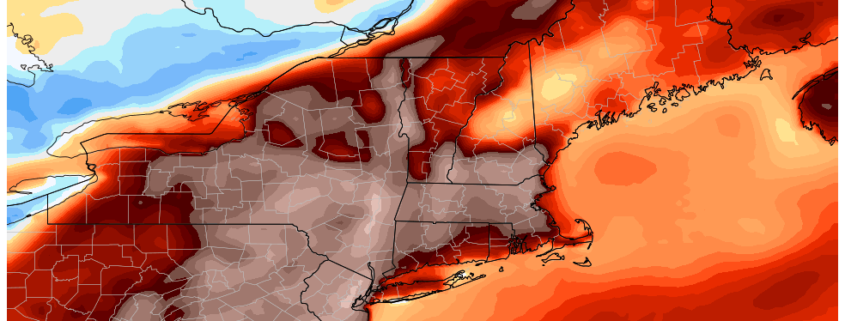
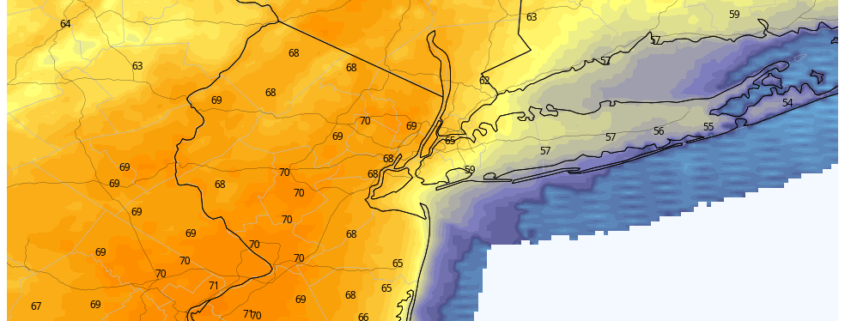
Unseasonably cool temperatures and calm conditions have continued to remain firmly in place over much of the Northeast. While temperatures look to improve into the weekend, we may have to contend with an approaching cold front later in the forecast period.
Good evening!
Today was a transitional day for much of the area, as the remnants of Hurricane Irma and another mid level system congealed over the Ohio Valley, and worked to produce widespread cloudiness and isolated showers today. While this area of showers is mainly concentrated with the main mid-level system over the Ohio Valley, a warm front will be pushing in from west to east as we talked about last time, but looks to significantly slow once it crosses the Pennsylvania/New Jersey area as it feels the leftover high pressure just off the mid Atlantic coast. This warm front will have some small amounts of lift associated with it still, so showers will be possible for the remainder of the evening, with some showers having locally heavy downpours. The overall threat for heavy rain should be mitigated somewhat by residual subsidence and dry air, but any areas that experience these showers should expect a quick 20-30 minute period of at least steady rain. The combined factors look quite poor for any kind of flooding conditions, except for some very isolated ponding on roadways in the absolute heaviest showers.
Regardless, temperatures were able to get into the upper 70’s to lower 80’s across the area, despite some cloud cover in spots. One thing that was quite noticeable this afternoon and into the early evening hours, was the marked increase in low level humidties over the region. This due partly to the large breadth of leftover tropical air that has since collapsed outwards from the remnants of Irma and has since become entangled with the warm front. As we head into the overnight hours, the threat for showers will gradually diminish with time, and it appears the vast majority of the area should remain dry. Due to the increased low level moisture, it appears that overcast conditions and even some patchy fog will be possible, especially inland. Tonight’s conditions will be quite poor for radiational cooling to take place, so expect temperatures to stay in the low to middle 60’s for lows this evening.
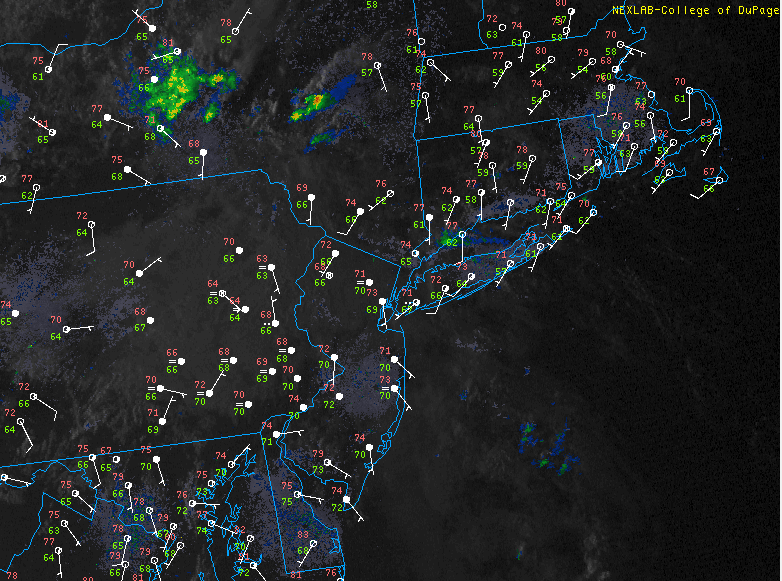
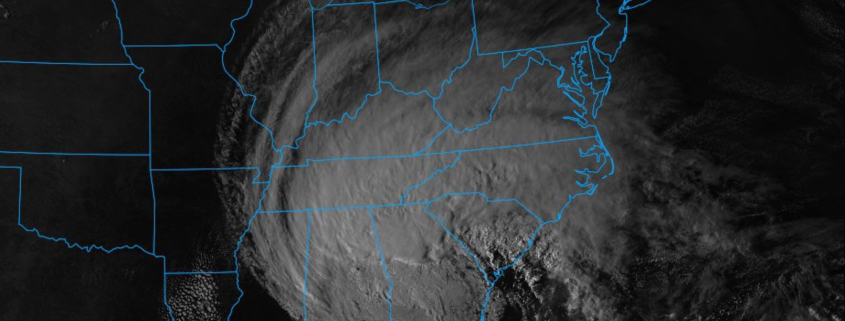
This evenings latest high resolution visible satellite imagery, regional radar mosaic, and surface observations, showing only a few areas of showers lingering over the area (Courtesy of College of DuPage)
Thursday Into Saturday
After meandering and festering over the Ohio valley for over two days, the large mid level trough associated with the remnants of Hurricane Irma will finally begin to lumber on east. This mid level system should continue to increase mid level moisture over the area, with PWATS nearing the 1.5 to 1.8″ range. Depending on how much sunshine the area can get tomorrow, it is possible that the area can destabilize a bit, with 500-1500 joules/kg of SBCAPE possible. With the increased moisture, surface instability, and small amounts of enhanced lift from the mid level system, widespread shower and thunderstorm development may be possible as we head into the early to mid afternoon hours tomorrow. This activity would mainly be focused in a corridor from eastern Pennsylvania, southern New York, and fading into the NYC and Long Island area. Shear will be quite meager with this decaying mid level system, so no severe thunderstorms are likely tomorrow. We may however see some isolated strong showers and thunderstorms capable of producing gusty winds, heavy rainfall, and very small hail. Additionally, these storms are expected to have a low threat of flash flooding due to their modest forward speed and PWATS being on the lower side of what we would want to see for any kind of flash flooding. Storms should reach their peak for the western areas around mid to late afternoon, with the activity translating to the NYC metro by late afternoon and into the evening. By this time, any stronger storms should have begun to weaken considerably at this point. Highs during the day will be in the upper 70’s to lower 80’s once again, with a muggy feel to the day.
Friday looks to be quite similar as the decaying mid level system pushes the last of its energy over the region. This should allow the slow-moving frontal boundary to move directly over the region during the afternoon hours on Friday, leading to more possible shower and thunderstorm development. Daytime heating and instability should pool up to the point where the meager amounts of lift should be able to trigger showers and an isolated thunderstorm to form over the area during the late afternoon hours, into the early evening. At this time, it appears that the greatest coverage for any showers and thunderstorms will be just to the north of the NYC metro area. Highs should once again reach into the upper 70’s to lower 80’s over much of the area, with lows ranging from the lower to middle 60’s.
By Saturday, a weak area of high pressure is expected to form over the area, providing an opportunity for warmer and drier conditions to take hold. Most of the Northeast should remain mostly sunny with light winds and high clouds during the weekend, possibly lasting into the early portions of next week.
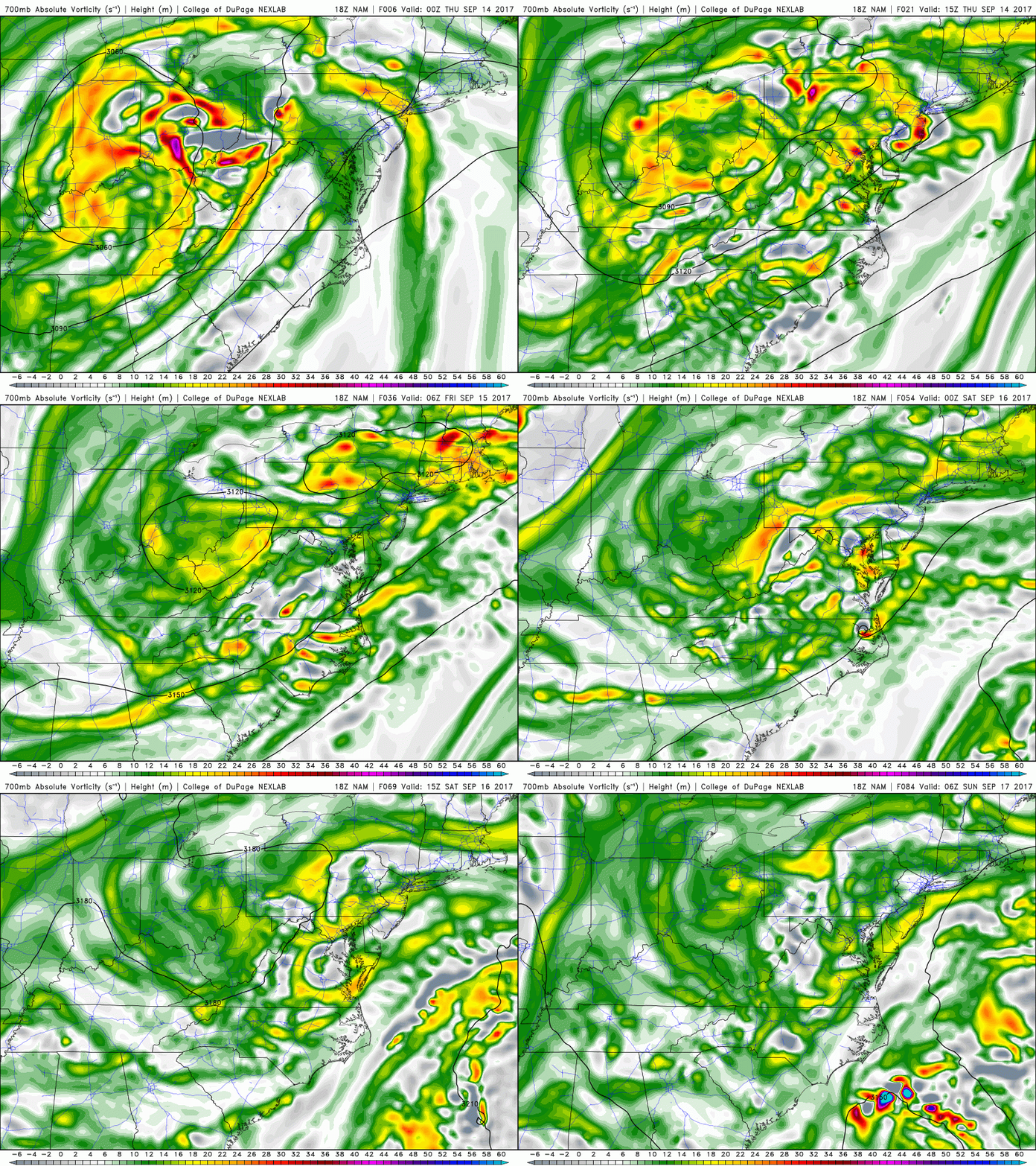
NAM model showing the decaying mid level trough moving over the area, potentially sparking a few round of showers and thunderstorms
Hurricane Jose
Jose is still meandering over an area between Bermuda and the southern Bahamas. Jose currently has winds of around 75 mph, just barely making it a hurricane. The system is still experiencing some strong vertical wind shear, separating the mid level center from the low level center, which is inhibiting any kind of strengthening, and should continue to do so until it can find a more favorable environment, if it ever does. Jose has completed a cyclonic loop and should begin to head off to the North starting tomorrow. The vast majority of the models take Jose well out to sea, but there have been some model runs showing an area of high pressure developing over Jose as it tries to escape out to sea. Instead of continuing north, the system slows down and begins to head westward towards the east coast. This is occurring in the Day 6-8 period on the models, so continuity and reliability is very low, and not much stock is being put into these operational runs. Only a minority of the EPS members show Jose making it to the US east coast, and such a scenario is extremely unlikely. Regardless, we will monitor the progress of Jose over the next few days. We will have an update on the system by Friday afternoon!
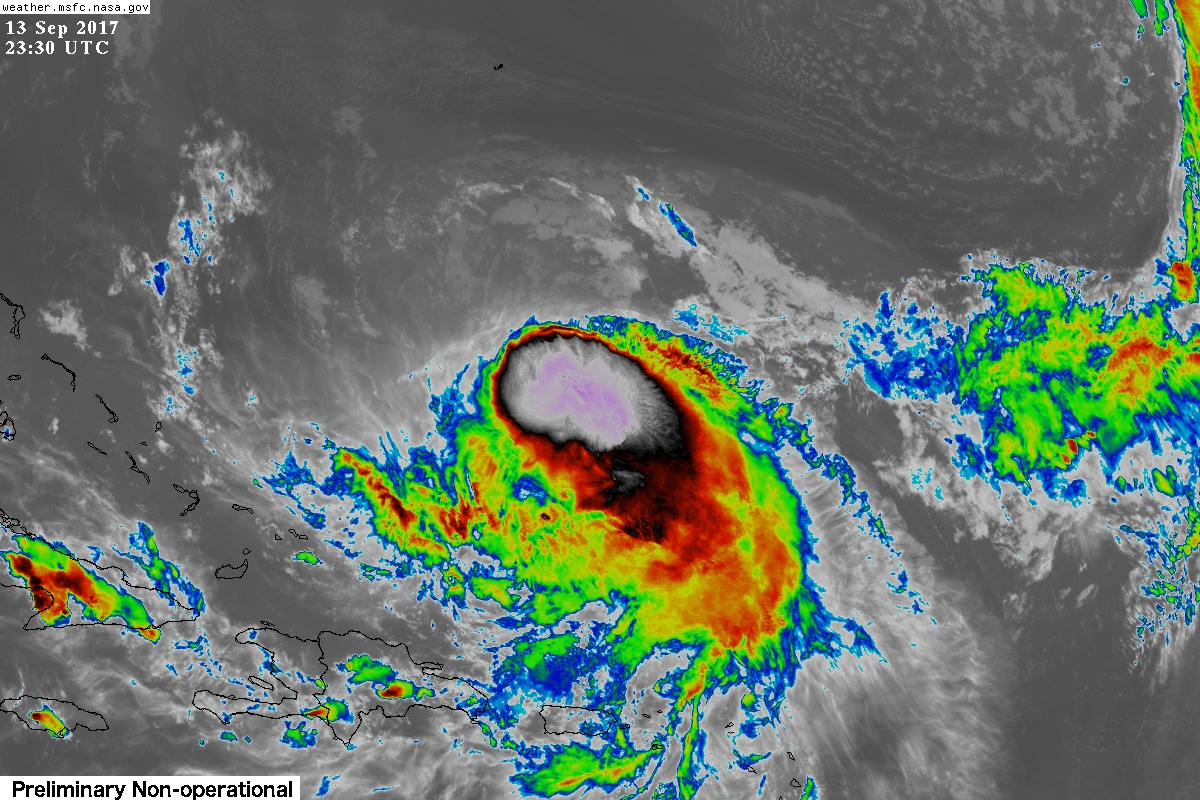
This evenings latest GOES 16 infrared imagery of Hurricane Jose, showing the storm located north of Puerto Rico with very cold cloud tops and a sheared appearance to the system. Jose should track generally north over the next five days or so.
For more information and posts like this one, make sure you sign up for Premium Forecasts — where multiple detailed articles, videos, and interactives are posted each day. Also, come interact with our staff and many other weather enthusiasts at 33andrain.com!
Have a great evening!
Steve Copertino
Good Evening!
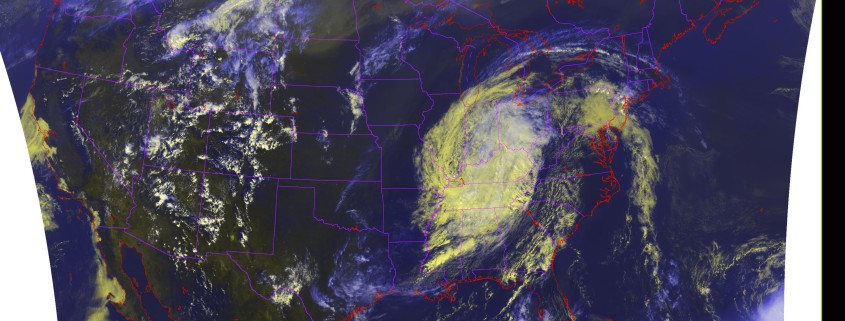
Hurricane Irma battered the Florida peninsula yesterday, first making landfall on the Florida Keys as a Category 4, then again later in the day near Naples as a Category 3. Though information is still rolling in on the extent of the damage in the state, it is pretty obvious that the entire state of Florida has been affected to some degree. After its final landfall in Florida, the storm began to expand its radius of tropical storm force winds quite a bit as the mid level system from Canada began to interact with the hurricane and started some extra-tropical processes. This only worsened the already massive storm surge that the hurricane carried with it during its long trek across the Atlantic. Places as far north as Charleston experienced storm-surge related damage, as well as power outages from Irma’s massive circulation. As is common with many intense hurricanes when they hit land, the amount of momentum that the storm had built up over the past two weeks will take some time to spin down, and that has been very evident today on radar and satellite. If we look at radar images from the south, we can see a large area of rotation associated with the decaying low level circulation of Irma, as well as the more pronounced mid level circulation. This mid level circulation has been responsible for mixing down strong wind gusts to hurricane-force today across portions of the southeast, causing tree damage and numerous power outages.
Irma will continue to weaken over the next day or so, as it makes its way into the Tennessee River valley by Tuesday afternoon. The storm will be fully-extra-tropical (meaning that other process are sustaining the wind and convection and the storm in no longer fed by its warm-core) and quite large in nature. Showers and thunderstorms should extend all the way from Arkansas to portions of the southern Mid-Atlantic states like Virginia and Maryland. Some of the stronger showers and storms may be able to mix down some residual tropical storm strength gusts, and will also be capable of producing tropical downpours which may caused localized flooding of poor drainage areas and perhaps on roads. There is also a risk of tornadoes with any cells coming in from the feeder bands over the Atlantic. There have been some strong signatures observed over water during the past 24 hours, and a tornado watch has been issued for portions of the Southeast.
Please check with your local NWS office to stay on top of any watches or warnings that may be issued once the NHC declares the storm “post-tropical” and hands over the tracking to the folks at the Weather Prediction Center.
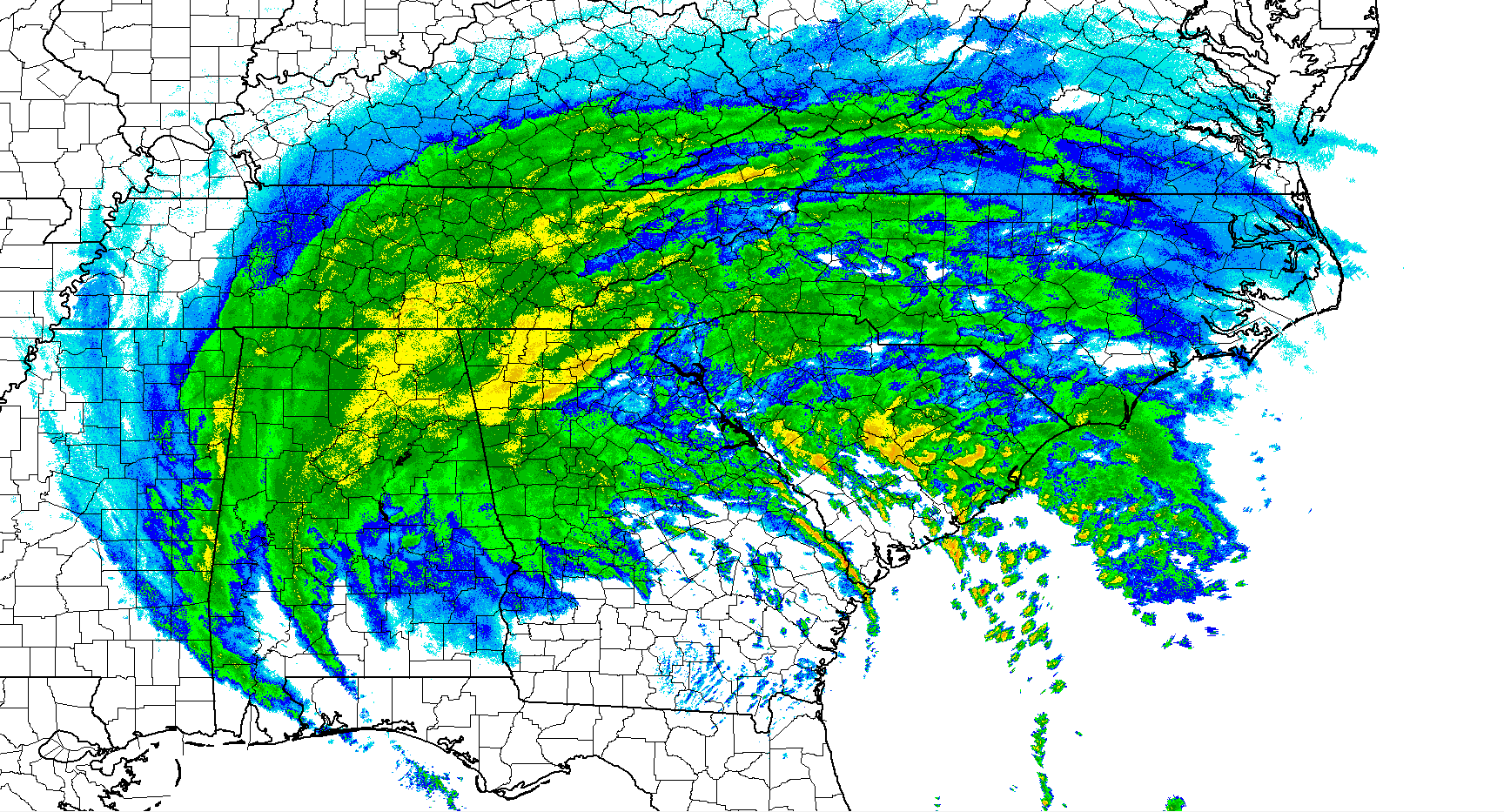
Hi-res Base Reflectivity imagery of the remnants of Hurricane Irma over the Southeast US
As Irma winds down late Tuesday and into Wednesday as the low begins to fully occlude and fill in, a warm front will progress from west to east over the Mid Atlantic states, and eventually into the Northeast. This front will begin to slow as it moves through Pennsylvania on Wednesday, due to the residual high pressure system just off the coast of the Mid Atlantic. This will cause numerous showers to form over the area, but as tropical moisture begins to fade, these showers should be on the more typical side, with steady rain and generally cloudy conditions expected.
As of right now, the most unsettled day across the eastern half of the nation appears to be on Thursday, when a little more surface heating may take place just ahead of the main area of mid level energy, and this could create a marginally unstable air mass supportive of weak thunderstorms and isolated downpours. Friday may feature more showers and possibly some thunderstorms over much of the Mid Atlantic and Northeastern states, but the overall area of coverage will depend on just how strong the mid level energy remains as it meanders over the next few days. Dry conditions may return this weekend, as an area of high pressure begins to build in from the west, which should kick the remnants of Irma out of the area and allow for more stable and clear conditions.
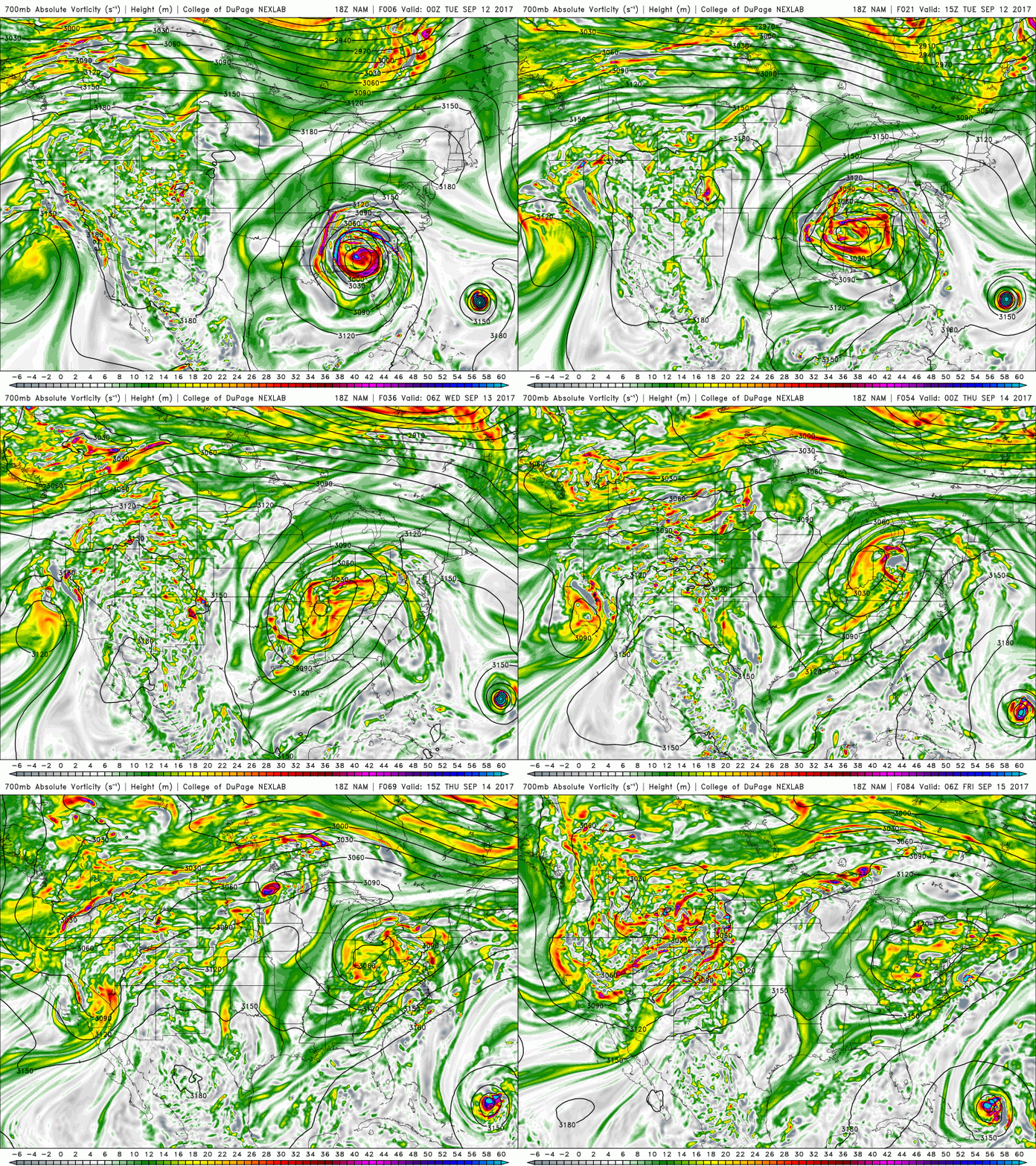
Evolution of the mid level remnants of Hurricane Irma over the next few days as it meanders across the eastern third of the country
Hurricane Jose Wandering Over the Open Atlantic
Hurricane Jose is still out and about over the Atlantic, located to the north of Hispaniola and Puerto Rico. Jose has been experiencing significant wind shear due to the very rapid expansion of Irma’s outflow once it began to undergo an extra-tropical transition. Even in the face of this shear, the storm has been able to maintain hurricane intensity, and currently has winds of around 100 mph. The storm may continue to weaken as it begins to execute a very complex loop over the next few days due to a break-down of the steering currents from the remnants of Irma. This pattern is forecast to last until Friday or so, when the hurricane will once again be located just north of the Bahamas. It is at this point that the models begin to diverge significantly. Some models have the storm taking a hard right and heading out to sea, and others have Jose maintaining a more westerly motion by this weekends, which would put it uncomfortably close to the southeast US. This scenario would result in the storm also encountering more favorable conditions for re-intensification as an upper level high would be allowed to rebuild overhead.
While it is much too early to say what the overall outcome will be, there is plenty of time to watch this storm as it churns over the open waters of the Atlantic, with the only concerns being increased wave action and rip-tides. We will have more on this storm regardless if it becomes a legitimate threat to the east coast over the next few days!
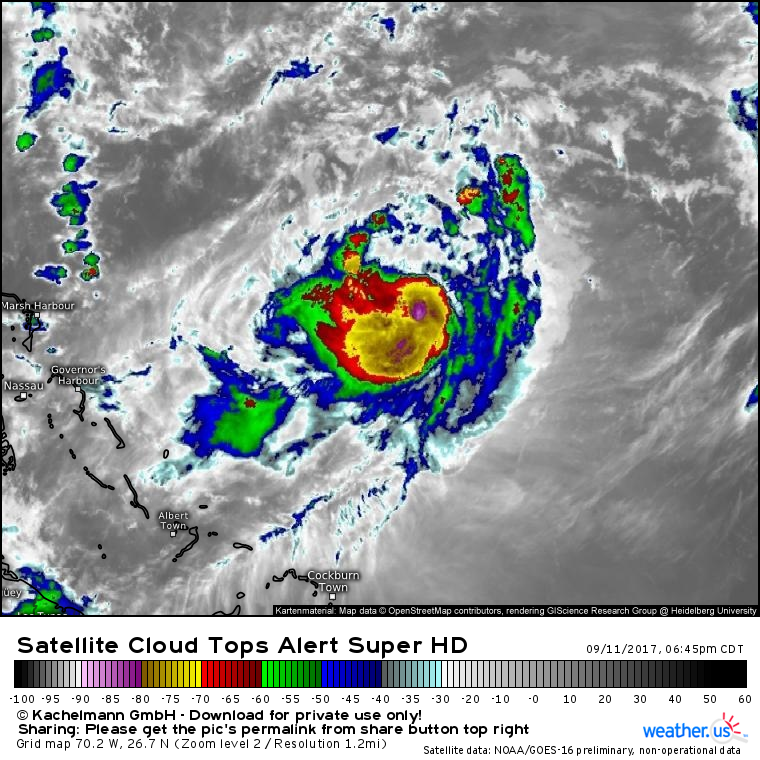
Latest GOES 16 IR imagery showing Jose getting beaten up by shear from now Tropical Storm Irma’s outflow (courtesy of weather.us)
For more information and posts like this one, make sure you sign up for Premium Forecasts — where multiple detailed articles, videos, and interactives are posted each day. Also, come interact with our staff and many other weather enthusiasts at 33andrain.com!
Have a great evening!
Steve Copertino