Posts

How the North Pacific Ocean offers winter clues in November

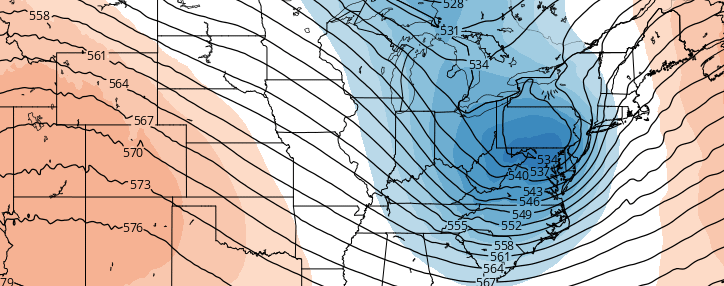
With Autumn very obviously and officially underway (have you been outside this morning?), questions have begun to surface regarding the upcoming winter — and if the Autumn pattern will foreshadow it. Unfortunately, it isn’t quite as simple as “A cold October means a cold winter” or ” A warm November means a warm winter”. If that were the case, we’d have long range forecasting figured out by now, and there would be much less urgency to winter outlooks. Instead, meteorologists use “drivers”, analogs, teleconnections, and ensemble guidance to help with seasonal forecasts. When used together and properly weighted, these tools provide a higher probability of success in medium to long range forecasting. These methods are far from perfect, but can help offer us clues as to how the coming season will play out.

One major piece of the Winter’s puzzle can be found in the form of “clues” in the North Pacific Ocean. Meteorologists use different oscillations to measure the pattern in the North Pacific over time. The pattern in the Eastern Pacific Ocean is represented by the aptly named “East Pacific Oscillation” (EPO). Like the North Atlantic Oscillation (NAO) the EPO has certain generally predictable outcomes when it oscillates from positive to negative phases.
Read more

April likely to begin with a shot of cold air

The irony of this post, as we write it, is the fact that temperatures are currently surging into the upper 60’s and lower 70’s. A warm airmass is in place, and even behind some rain which fell this morning, highs will reach well above normal. Playoff hockey is just a few weeks away, as is opening day in Major League Baseball. Mother nature, however, has other plans — and she doesn’t seem ready to cooperate with the calendar just yet, as it flips to April.

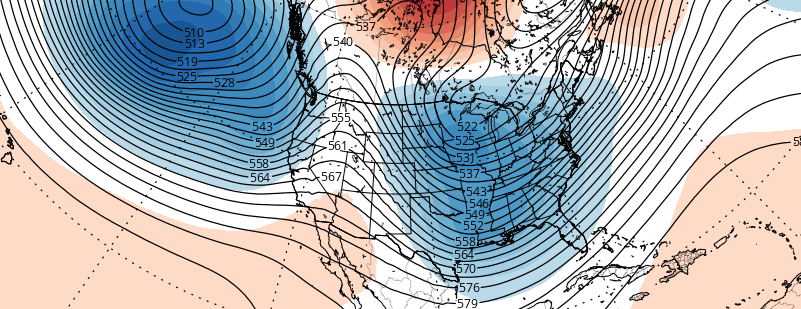
A major transition in the atmospheric pattern throughout the northern hemisphere will begin next week. On Monday a fairly weak and fast moving storm system will move through the area, with some rainfall anticipated. Behind this storm system will be a Canadian airmass with temperatures perhaps slightly below normal for Tuesday. Model and ensemble guidance indicate a -EPO ridge developing over the Northeast Pacific and Alaska region for middle on next week. This ridge will cause energy to dig and cut over the Southwest United States. Heights will build over Central and Eastern United States with fair weather in local region Wednesday and Thursday. Temperatures will likely rise to above normal levels again during the later part of next week.

Read more

(Premium) Long Range: Winter may take one final stand

While visions of 80 degree temperatures still dance in the heads of many after the warmth which surged into the area last week, old man winter many have been conjuring up one last surprise for us all.

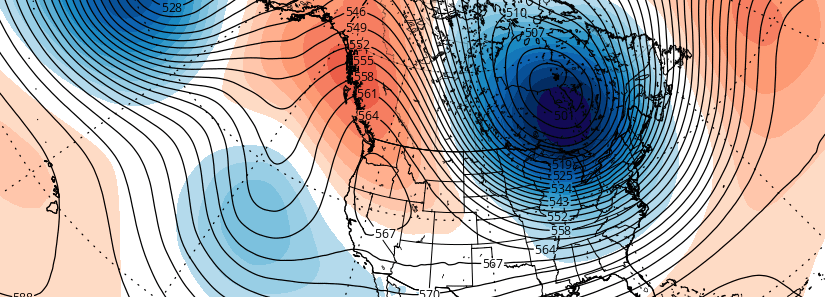
It is, after all, still March. Calendar winter continues until the 20th of the month. With the atmospheric pattern undergoing major changes over the next few days, the record-breaking warmth will become a memory. Instead, colder high pressure to our north, the return of a ridge near the West Coast of the United States, and an incoming piece of atmospheric energy will become the main headlines. And yes, the teleconnections involved in the pattern could support wintry weather.

Read more

Despite two disturbances, winter weather unlikely this weekend

In our previous article, we discussed some of the features in the upcoming hemispheric pattern that could support a winter weather event. These features were particularly evident during the period from January 16th to 20th. As we have gotten closer to this time period, forecast models have come into much better agreement on exactly how these features will evolve.

Read more