New, major meteor shower possible May 23-24

Meteor showers come and go annually, often timed with the seasons. The Leonids, Perseids, and Quadrantids are staples in the calendar. Accordingly, many have become accustomed to not only the meteor showers timing — but the rate at which meteors fall (per hour) during each shower. Some even are able to recognize and remember where in the sky, or the constellations, from which the meteors radiate from. But what happens when an entirely new meteor shower comes into the picture, with the potential to reach “storm” level?

Enter: The Camelopardalid Meteor Shower, peaking on the night of May 23 – 24 2014

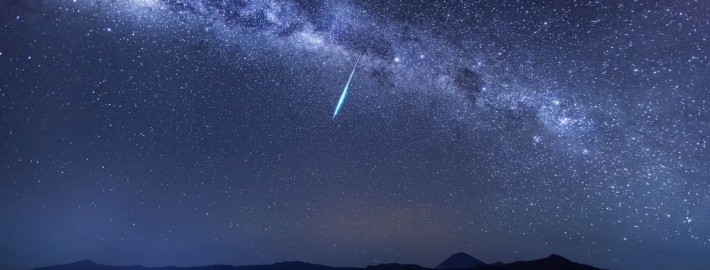
Doesn’t quite roll off the tongue. The new meteor shower was discovered and timed by scientists last year — and was known to be possible before that. It is occurring, as most meteor showers do, due to the Earth passing through the debris path of a comet.  For instance, Earth has been passing through Comet Swift-Tuttle debris to create the Perseid meteor shower for thousands of years. This time, it’s Comet 209P/LINEAR which is causing the meteor shower — and Earth has never crossed paths with its debris before. (Featured image, meteor captured during the Eta-Aquarid meteor shower in 2013 by Justin Ng.)
Read more

Asteroid to black out bright star during once in a lifetime event

An asteroid will pass directly in front of Regulus, one of the brightest stars in our night sky, next Wednesday — briefly blacking out the star in what astronomers are calling a “once in a lifetime” event. Better yet, New York City falls directly within the viewing path which is literally paper-thin on the earths scale. The event is so small, and so brief, that it will only be visible over a sliver of area. And this area happens to encompass millions of people in New York City, Northeast NJ and Long Island.

Late Wednesday Night March 19 (or early Thursday morning March 20) at 2:06am, the asteroid Erigone will very briefly pass in front of Regulus, the first magnitude star which shines bright enough in the sky to be noticeable even in the metropolis of New York City.

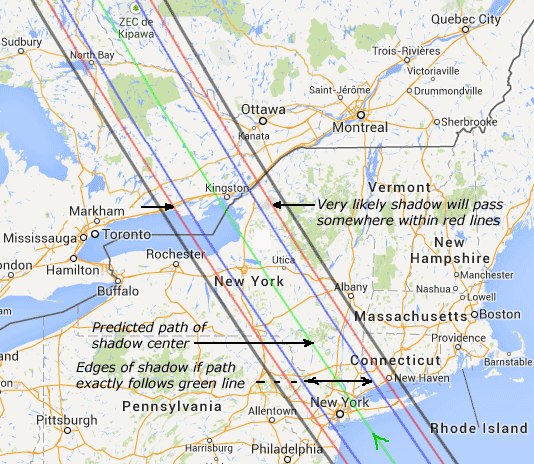
The predicted path of the eclipse of Regulus as the asteroid passes in front of it. Image credit: Geoff Hitchcox / IOTA / Google Maps.

The predicted path of the eclipse of Regulus as the asteroid passes in front of it. Image credit: Geoff Hitchcox / IOTA / Google Maps.

Read more

Two fireballs seen in the Northeast since Sunday

The skies have been active in the NYC/NJ areas over the past several days. Multiple reports of a bright fireball were received on Sunday evening, from Vermont to New York. Observers reported the fireball “streaking through the sky, brightening and then dimming in only 10 seconds”. An additional fireball was reportedly seen on Monday night in much of the Northeast US including New York and New Jersey. Jersey Shore Hurricane News reader JP Dunne reported “I’m located in Oceanport, and it occurred directly south. Someone else had to see it.”\

Not surprisingly, the American Meteor Society has received hundreds of reports from both events — so we can almost certainly say that the events were not isolated or a hoax. The AMS uses a public submission form so that observers of meteors can submit their reports time, location, brightness and other information. You can view the reports from each event (and others throughout the United States over the past several days, weeks and months) at the AMS report page right here.

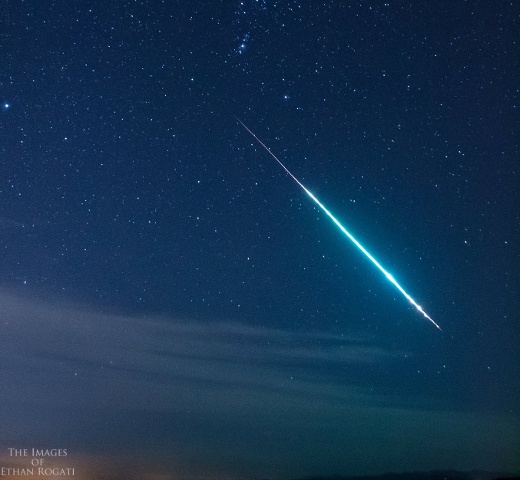
Most interestingly of all, the Sunday meteor had a little bit of luck involved. Ethan Rogati was taking long-exposure photographs of the sky in Vermont when the meteor flew directly through his field of view. The incredible photograph he captured is below. Although there have been a few meteors spotted in the Northeast US over the past few days, there is no meteor storm or shower currently occurring. Astronomers don’t anticipate a continued uptick in meteor activity.

Sunday's meteor as captured by Ethan Rogati.

Sunday’s meteor as captured by Ethan Rogati in Sand Bar State Park VT. 

Read more

R.I.P Comet ISON

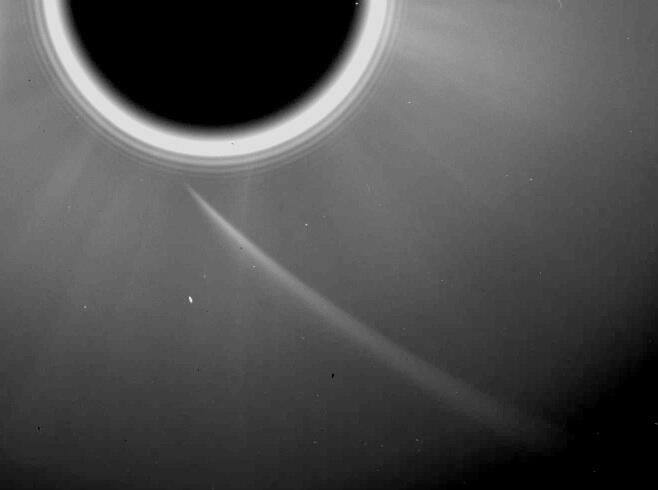
Comet ISON, the sungrazing comet which grabbed the attention of millions when it was discovered in September 2012, reached the end of its five million-year long journey towards the sun today. Unfortunately, for all parties involved, the Comet did not make it around the sun in one piece. ISON brightened dramatically yesterday, but then was seen to become less bright and elongate this morning. As it dove towards its perihelion, high resolution imagery showed no visible nucleus — and athe brightest part of the comet was in its tail. A steady dust trail also signaled the eventual demise of the comet, as its nucleus fragmented and apparently disintegrated just an hour or less before perihelion. As of now, ISON has not appeared on the other side of the sun on any of the handful of NASA cameras pointed at the sun specifically to observe it today.

The result of Comet ISON evaporating just prior to perihelion will be disappointing for all on the ground — as Comet ISON will never be able to be observed again. The tail of Comet ISON still remains dragged out towards the sun, a haunting remnant of its entrance into the suns very harsh environment. But the emptiness of any light on the other side of the sun tells the true tale — as ISON was never able to make it out. Over the next few days, scientists and amateur astronomers will certainly analyze the incredible amounts of data that were collected on ISON’s approach.

So, for the record. Sun: 1 Comet ISON: 0.

Stay tuned over the next few days for additional information.

Comet ISON dove towards the sun on November 28 2013, but never made it out on the other side.

Comet ISON dove towards the sun on November 28 2013, but never made it out on the other side.