

African dust expected to reach US coast next week
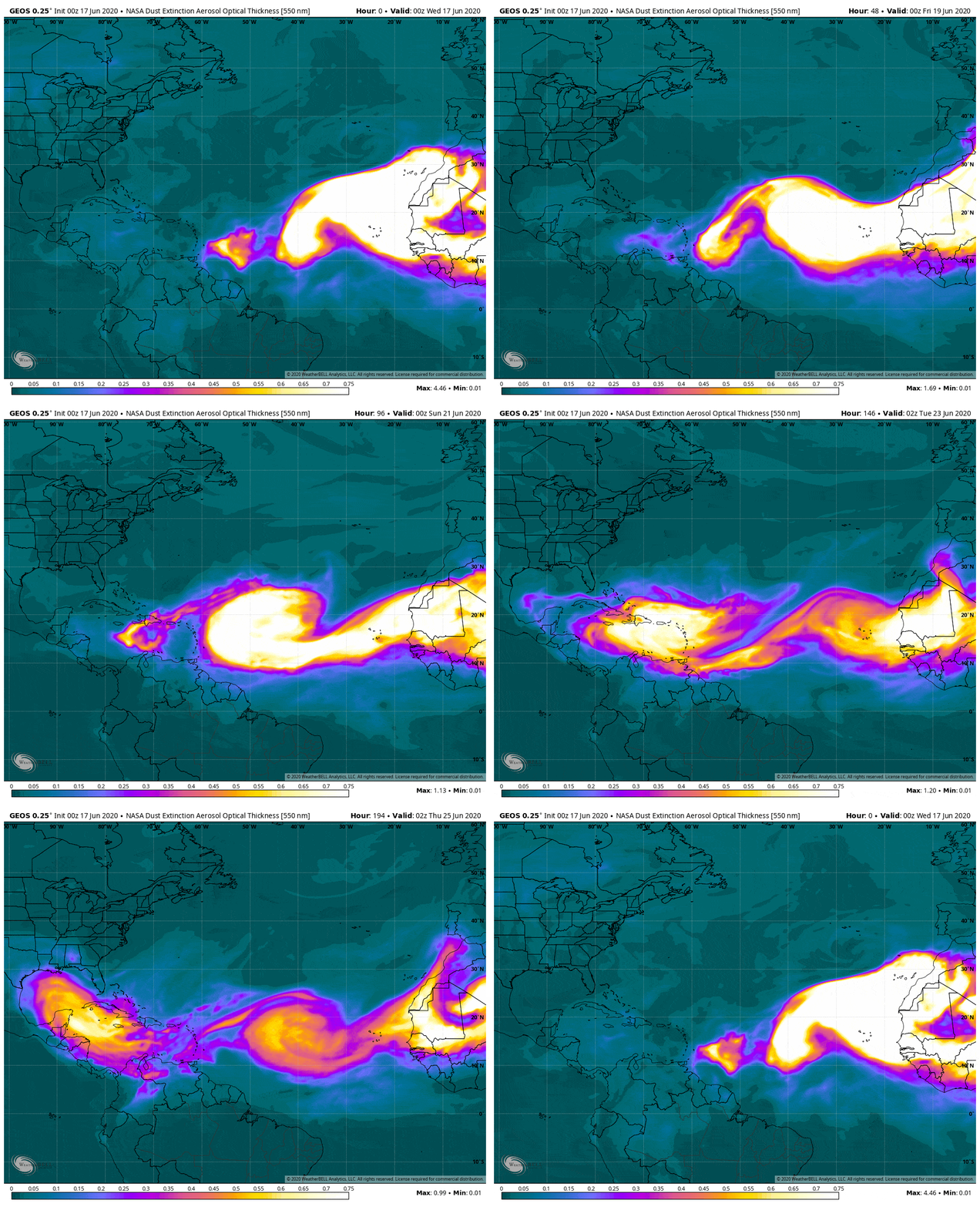
An outbreak of dust originating in Africa will spread westward across the Atlantic Ocean in the next few days, reaching the United States coast by next week. The dust is expected to first head towards the Gulf Coast, but could spread elsewhere depending on how the weather pattern evolves.
This layer of dust is often referred to as the Saharan Air Layer, or SAL. It finds its origins in the Saharan Desert, where it functions as the dominant atmosphere, before moving or being advected westward. The SAL itself is a layer of hot, dry and dust-filled air typically between 500-850mb, or 1500-5000 meters above the surface. As this air is driven westwards from Africa into the Atlantic, it is lifted above the cooler marine air of the Atlantic Ocean.
Because the SAL is often warmer and drier than the surface of the Atlantic Ocean, it functions as a temperature inversion – rising temperature with height. It also acts to suppress the development of convection and thunderstorms. For this reason, SAL outbreaks have often been associated with quiet periods of tropical activity. This one will be no different.
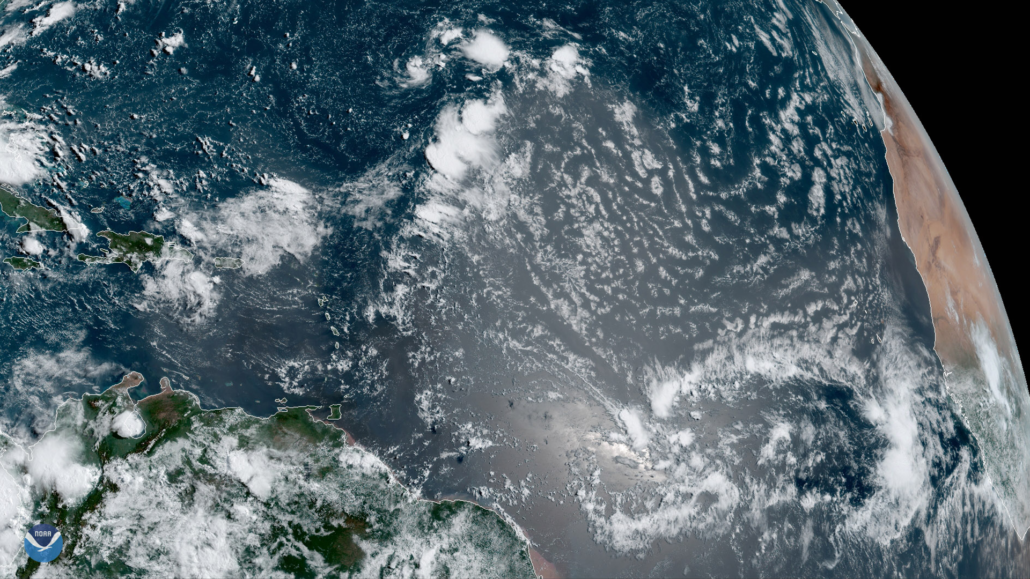
SAL outbreaks, and the movement of dust from Africa to the Atlantic Ocean and United States, are not uncommon. What makes this case interesting, and unique, is the density of dust and the way it is forecast to advect westwards. Recent visible satellite imagery shows that the outbreak of dust is already underway, and is quite impressive. This outbreak of dust is being driven by the synoptic weather pattern over Africa and the expansion the African Easterly Jet (AEJ).
Forecast model guidance suggests that as the dust moves off the coast near the Cape Verde Islands, a large and expansive high pressure system will build over the Central Atlantic Ocean. This high pressure system will aid in the development of an easterly jet stream in the mid levels of the atmosphere, which will in turn help accelerate the movement of the dust.
As a result, forecast models suggest the outbreak of dust will advance quickly westwards. It is expected to reach the Caribbean within a few days, and the United States coast (particularly the Gulf of Mexico) by the early to middle part of next week.
What does the dust do?
The main known impact of the SAL is to suppress convection in the Tropical Atlantic via atmospheric capping (warmer air aloft) and downdraft production. It has also been known to help fertilize soil in the Amazon River Basin (good) and enhance toxic algae blooms (not good).
In a recent outbreak of dust that reached the Southeast United States in 2019, vivid sunsets were observed. The presence of dust in the mid and upper levels of the atmosphere creates and airmass that is more dense, and more apt to scatter red and orange light rays at sunset, leading to vivid sunsets.
Health effects from Saharan dust remain uncertain and research thus far has been inconclusive. Dr. Ty Asha Nichols was investigating the health effects of the dust on children with asthma in the Caribbean. Nichols said research on its effects on asthma there have been inconclusive.
As far as the NYC Area goes, we don’t expect a visit from the SAL any time soon. I suppose we can count that as one thing we’ve managed to avoid in the past few months.
Leave a Reply
Want to join the discussion?Feel free to contribute!