
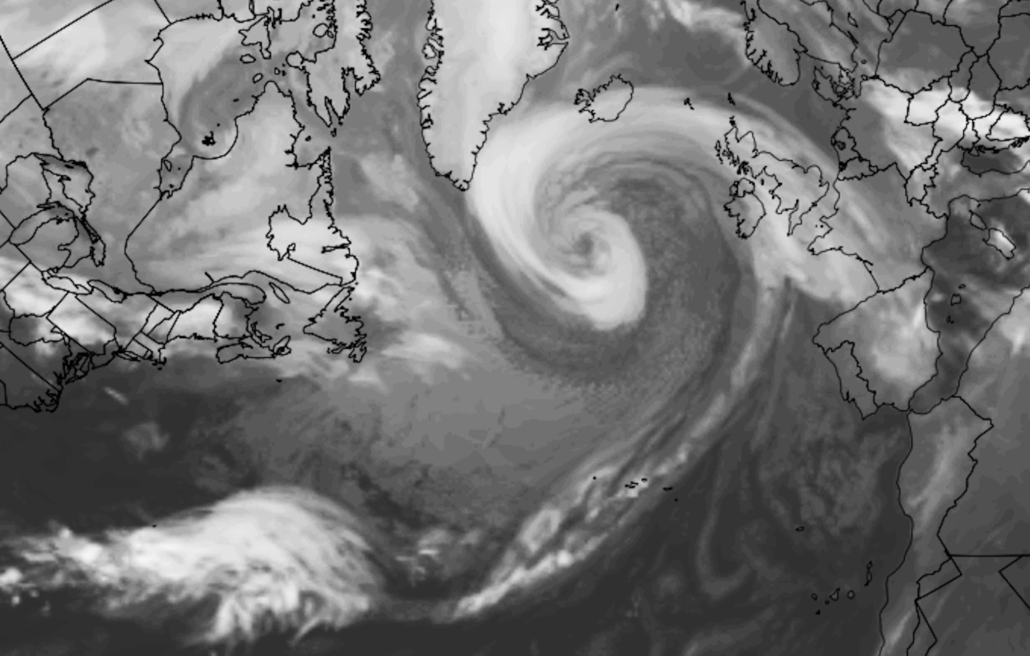

Epsilon could become a major North Atlantic storm next week
Hurricane Epsilon strengthened to a major hurricane today, and now has maximum sustained winds of 115 miles per hour according to the National Hurricane Center. The hurricane will pass east of Bermuda in the next few days before turning into the North Atlantic Ocean. Epsilon is the second straight major hurricane, following Hurricane Delta which moved into the Gulf of Mexico a few weeks ago.
The 2020 Atlantic Hurricane Season continues at a record-breaking pace. Epsilon is the 26th storm of the season – the fastest we have ever gotten to that number – and the second greek-alphabet major hurricane. 2005 holds the record for the most tropical systems, but the formation of just one more tropical cyclone in 2020 would tie that record.
Epsilon will pass within a few hundred miles of Bermuda this week, but impacts will be limited relative relative to a direct strike. Tropical Storm Warnings have been issued for parts of the island. Bands of heavy rain on the outskirts of the system will reach the island. In addition, high surf and wind will lead to hazardous weather conditions as the storm makes its closest approach.

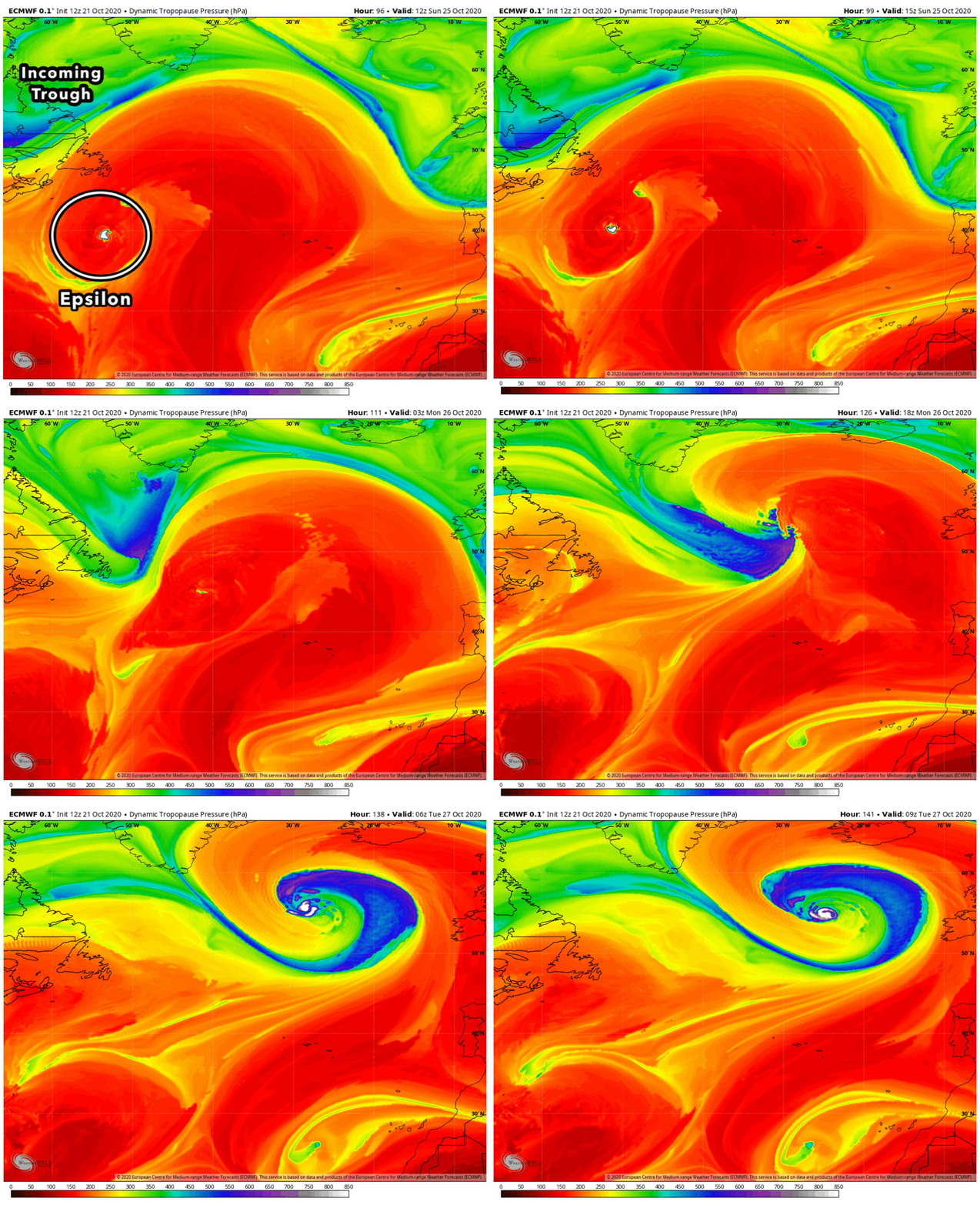
The future of Hurricane Epsilon becomes more interesting after the system moves into the North Atlantic Ocean. Lingering back to the west will be a strong disturbance over Canada. Most notably, this disturbance is a piece of the tropospheric polar vortex, which exists at all times of the year. This disturbance will surge eastward and eventually interact with Epsilon in the North Atlantic Ocean early next week. For more on the polar vortex, and what it means, check out our piece here.
As the disturbance approaches the North Atlantic, it will eventually phase (merge) with Hurricane Epsilon. As this interaction occurs, the release of latent heat and the expansion of tremendous atmospheric dynamics could lead to quite a spectacle.
The phase between the tropical (or extra-tropical) Epsilon and the strong disturbance associated with the tropospheric polar vortex will lead to explosive deepening of the cyclone. Forecast model guidance suggests the storm could undergo bombogenesis, rapidly deepening to pressures near 930hPa and quickly expanding in size. Strong winds and tremendous waves could expand hundreds of miles away from the storms center.
The latest European ensemble data suggests that the storms pressure could fall below 930hPa. The ensemble mean (the average of all 51 members) suggests a pressure near 940hPa which is extremely impressive. Several individual members show pressures as low as 915hPa.
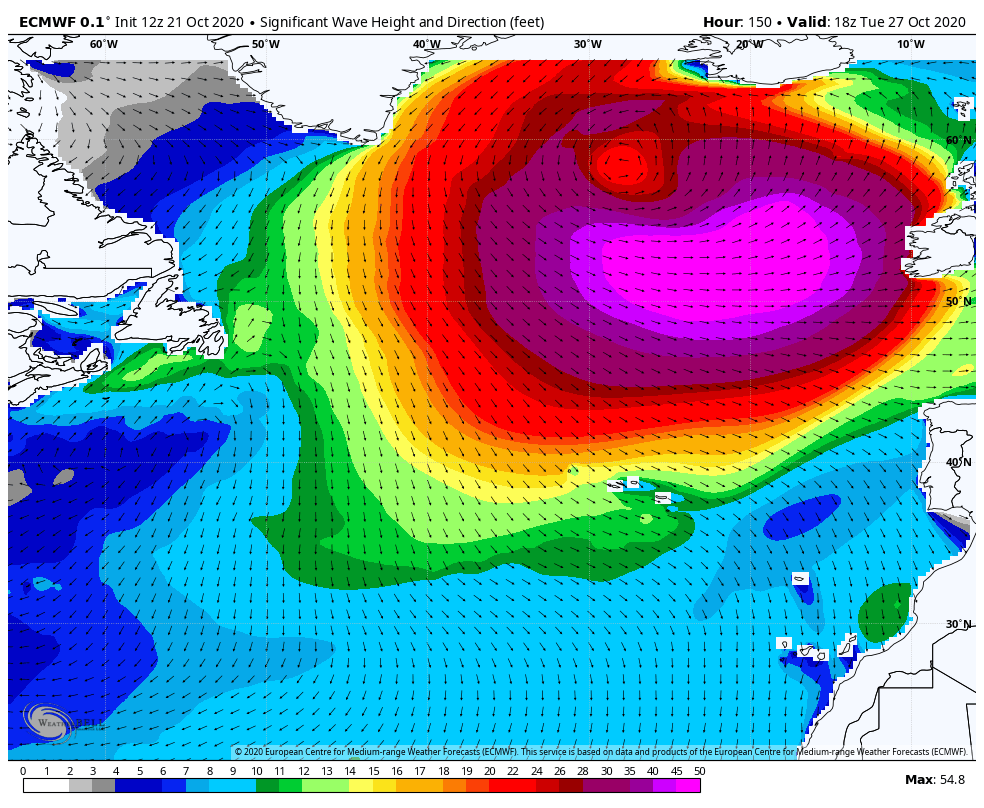
The expansion of the storm and its wind field will lead to high surf and the possibility of major waves. North Atlantic storm systems are notorious for producing significant waves, but the advertised phase of Epsilon could produce widespread wave heights over 50 feet and perhaps locally much higher.
The one piece of good news regarding the eventual phase of Epsilon will be its distance from land. Guidance suggests that the most severe impacts will occur over the open waters of the Atlantic Ocean. Still, strong winds and high surf could push towards parts of Ireland and the United Kingdom.
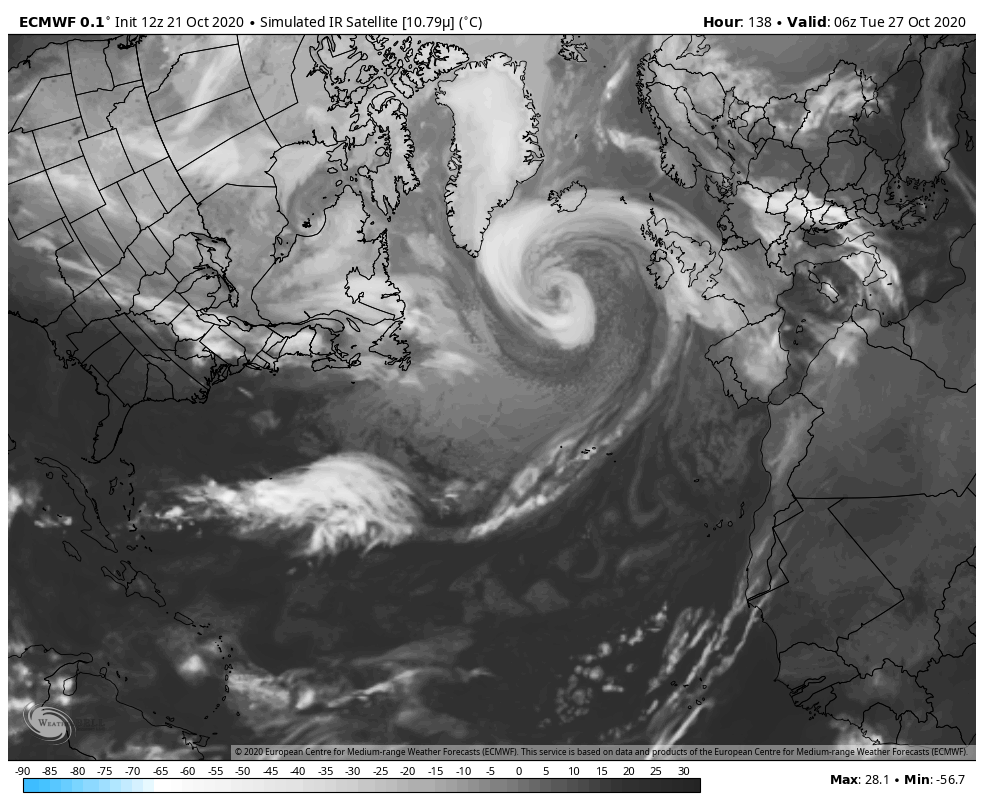
Regardless of specifics, the system is likely to put on one heck of a show as it strengthens and expands in the North Atlantic Ocean next week. We aren’t expecting any impacts in the NYC Metro Area, but all of our weather eyes will be peeled on satellite and observational data as the system begins to strengthen and expand next week.
One more fascinating tidbit: The strengthening and expansion of Epsilon could lead to the redevelopment of high latitude blocking in the Arctic after next week. Believe it our not, this could impact the weather here in NYC sometime down the road. We’ll be watching carefully!
magnificent points altogether, you just gained a {logo new|a new} reader. What may you suggest in regards to your put up that you made a few days ago? Any certain?