NASA imagery captures massive CME

As benign and inactive as the weather pattern has been the last several days in the NYC Area, the sun has been conjuring up some major developments. And it’s acting up again. On Monday a corona mass ejection, otherwise known as a CME, occurred on the edge of the sun. CME’ s are common during the suns more active periods — one of which we are heading into. The more active solar cycle has been underwhelming thus far, but NASA was able to capture Monday’s CME with an incredible high resolution video. Attached below, the video shows the CME erupting off the sun in a rolling wave — shooting billions of tons of particles into space at millions of miles per hour.

Read more

Comet ison could light up the sky in late 2013

Comet ISON is expected, by many scientists, to pass near earth from October 2013 through January 2014. It could be brighter than a full moon in the night sky.

Comet ISON is expected, by many scientists, to pass near earth from October 2013 through January 2014. It could be brighter than a full moon in the night sky.

Que the dramatic post title. Really we’re sorry, but it’s true. Big time astronomical events like solar eclipses. planetary alignments, and comets only come around every once and a while. I’m willing to bet you remember some of the more memorable ones (Haley’s comet, anyone?) and the experience you had checking it out. Space, astronomy for that matter, is mesmerizing in many ways. How quickly you can go from feeling big to small, with just one single thought about the relative size of earth in our solar system, and the relative size of our solar system in space. Recently, big time astronomical events have generally avoided the New York City Area (no solar eclipses in several years). That being said, if all goes well, 2013 could bring an astronomical event of a lifetime that will be remembered forever.

The Oort cloud is a  cluster of frozen rock and ice that sits in space some 50,000 times farther away from the sun than earth does. What does that have to do with us, you ask? It holds the secret to our potential 2013 event. Every once and a while, a frozen rock will be “bumped” from the suns gravitational pull, out of the Oort cloud. It will then begin a long journey of orbit around the sun, just like any other rock or planet.

That’s where Comet ISON comes in. Last September 21st, two Russian astronomers spotted what looked like a comet in their 16-inch telescope. The name, ISON, comes from the name of the network which provided the telescope which enabled the astronomers to view the comet, the International Scientific Optical Network (or ISON). After some further work and analysis, the researchers were able to confirm that comet ISON would, in fact, pass fairly close to Earth in 2013. It’s path, remarkably, is similar to a comet which passed near Earth in 1680. Records from that comets passage reported a brightness so dramatic that its tail could be seen in broad daylight.

Scientists suggest that as Comet ISON approaches, and the sun vaporizes the ices in its body, a spectacular sight — including a bright burning comet and tail — will be visible from Earth’s night sky with the naked eye. Even more exciting is that the event could last from October 2013 through January 2014. “Comet ISON could be the brightest comet seen in many generations – brighter even than the full moon,” wrote British astronomer David Whitehouse in The Independent.

It’s not all locked in place, though. Comet ISON will be vaporized as it approaches the sun, that much we know. If it breaks apart as it does so, the show will be far less dramatic than expected. I think its safe to say that we will all be watching carefully. The last comet to pass brightly near Earth was Comet Hale-Bopp in 1997.

Favorable viewing conditions for annual Orionid meteor shower

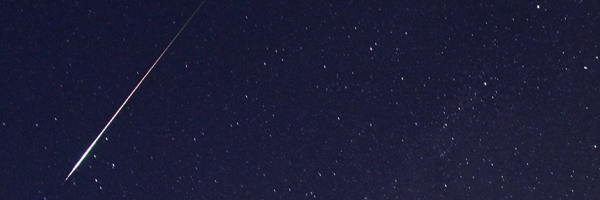
Meteors will streak across the night sky (up to 25 per hour) from Saturday Night October 20th into the morning of October 21st during the annual Orionid meteor shower.

Up to 25 meteors per hour can be viewed this Saturday Night through the pre-dawn hours of Sunday morning as the annual Orionid meteor shower peaks. The Orionid shower results as the remnants of Haley’s comet, and returns each October to bring shooting stars to the night sky. However, each year is different and the viewing conditions can change dramatically. Last year, for instance, featured a very bright full moon which obscured most of the meteors aside from the brightest ones. This year will be a much better viewing year — with a dull moon and plenty of opportunity to view even the more faint meteors which will streak through the sky at the highest rates after midnight on Saturday Night/Sunday morning. The clear skies are expected to provide perfect outdoor viewing conditions as well. It is expected that up to 25 meteors per hour can be viewed with the meteor shower — not the most prolific amount, but decent.

Where are the best spots to view? Anywhere away from the bright lights of New York City. The city lights make it nearly impossible to view any but the brighest, biggest meteors. Head to the suburbs of Long Island, New Jersey, New York, or Connecticut. Even the immediate interior suburbs of Union, Essex, Bergen, Westchester/etc will do. If you’re looking for the most prolific show, head to the mountains of Northwest NJ or the far interior of Southeast New York. If you’re feeling really ambitious, head to New England for even better viewing.

What time is the best to see the most meteors? Any time after sunset on Saturday, technically. But the ideal time is between 11pm on Saturday night and 5am on Sunday morning. Not only will the moon be dull and the skies clear, but the actual meteor shower reaches peak intensity at that exact time. So you’ll be treated to the best show at that time.

We’ll be updating our Twitter account with more information on the meteor rates per hour during the event — and of course, send us your observations and pictures if you have them.

2012 Transit of Venus: Astronomical event of a lifetime

An incredibly rare astronomical event, known as the Transit of Venus, occurs later this afternoon as Venus passes over the evening sun (at least here

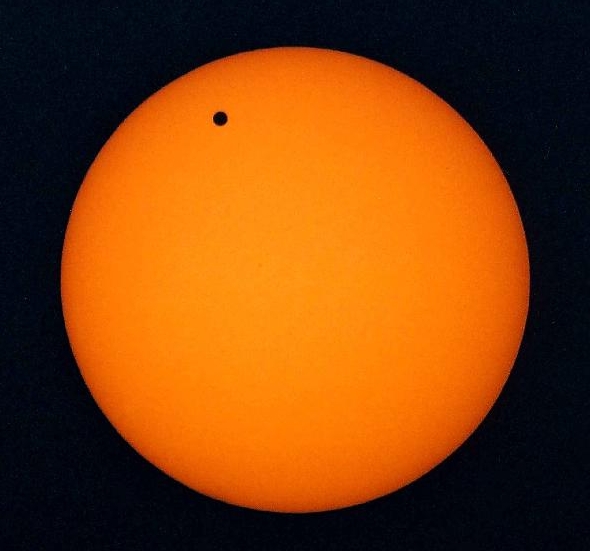
The Transit of Venus across the sun involves the gaseous planet passing between our orbit and that of the suns. The event won't occur again for 105 years. (NRAO)

on the East Coast of the United States). The event last occurred in 2004 and, get this, won’t occur again until 2114. This is, literally, the chance of a lifetime for astronomers and space enthusiasts alike to witness an incredible event. The event occurs as Venus, a gas planet lying between the Earth and the Sun’s orbit, passes directly over the sun. With the right tools, anybody on Earth can observe it as a small black dot, progressing over the suns light. If you plan on viewing the event, however, experts suggest that you wear solar eyeglasses or dark, polarized lenses for safety and better viewing. It will  be nearly impossible to view the event by looking directly at the sun with the naked eye — and you can actually hurt your eyes fairly severely by doing so.

The forecast, however, is less enthusiastic about the once in a lifetime event. Forecast models are indicating the potential for clouds across almost the entire area (70% chance of clouds across some areas, to as low as 40% across others). Such a forecast, more often than not, means the event won’t be viewable. That being said, if you happen to be lucky enough to grab some clear skies and sun this evening, the transit occurs at 6:04pm EST. So get your specialized glasses ready!

Looking to view the event in NYC? Various sources report that astronomy specialists and enthusiast groups have set up viewing sites around New York City, including areas near Riverside Park, Union Square, the High line, and 125 Street in Harlem.  Stay tuned to our Twitter account for more updates throughout the day on the cloud situation.