Nantucket now has awesome slush waves

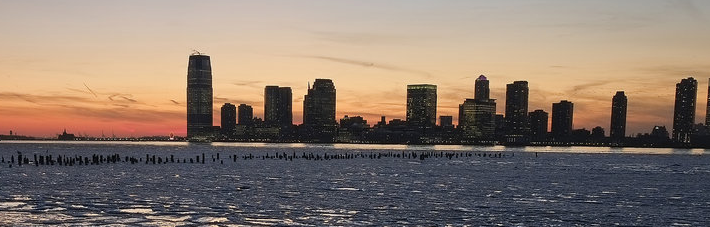
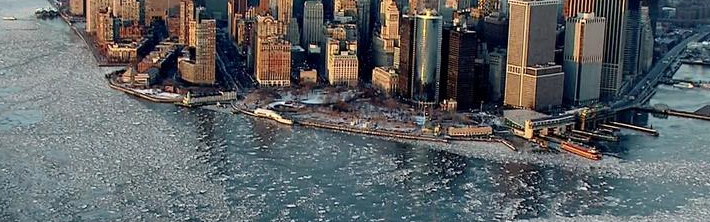
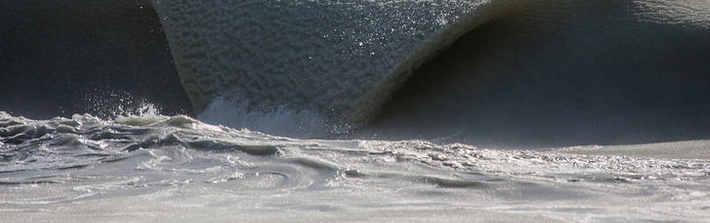
It’s so cold, the ocean is freezing over! No, not really. But parts of it are, especially shallower areas and the top layer of the water near the beaches of Nantucket. This phenomena hasn’t been seen in many years since, well, it hasn’t been this cold in many years. But the prolonged record breaking cold air which settled over the Northeast US over the past 30 days has brought some incredible sights. The Hudson River has large masses of ice floating down it, and now the beaches of Nantucket have “slushy waves” crashing onto the shore.

These waves are the same as any other ocean wave, except for the fact that the surface of the ocean is covered with slushy ice. The top layer of the ocean waters are very close to freezing over — but the temperature of the water isn’t quite supportive of that especially given continued water movement and the waters depth. So what you get is a layer of slush and pockets of icy water on the top, creating an amazing scene as the waves crash ashore. These are known in the area as “slushy” or “slurpee” waves.
Read more

PM Update: More cold, but what about snow?

After another Arctic day yesterday, today feels tropical in comparison with temperatures in the mid 30s. Is this a sign that winter is losing its grip? Not quite yet.

Several more low temperature records were broken yesterday. For more perspective on how cold it has been, check out the article we published this morning. While widespread record cold is likely done, we may have another night or two left of single digit cold, which is still truly remarkable for this time of year. Overall, below average temperatures and chances for snow will continue for the next 7-10 days.

The first chance for snow comes tomorrow. A snowstorm is developing in the deep south, and is expected to give parts of North Carolina and Virginia up to a foot of snow. Usually, snowstorms of this variety do not come far enough to hit our area, and this is expected to be the case. Having said that, storms that develop near the Gulf  tend to come in a bit further north than forecast (see the cold, 3-5″ of fluffy snow we got last Monday night into Tuesday). These southern waves tend to pump up a lot of heat and moisture which give a feedback effect to amplify the pattern for them to come a bit further north than they normally would.

Read more

A flicker of light at the end of the tunnel

The ice still crunches on your way out the door as brutal arctic cold hits your face. A hard reminder of the fact that we still are, truly, in the heart of a historic winter. The audible sounds of spring so far, while increasingly present, have been muted by the noise of one of the harshest winters in recent memory. The cold wind still blows, ice scrapers are still heard on car windshields, and the distant intermittent beeping of a snow-plow in reverse still serves as a background to each morning. But, if one were to listen closely, there are sounds of change in the air. Beyond the sounds of the winter are the increasingly audible chirping of seasonal birds, the dripping of melting snow, and the sounds of water on the area roads from melted thick ice.

The change continues to build, and it is not limited to sensible meteorology effects. Playoff hockey is only months away, pitchers and catchers are pitching and catching in Tampa, radio shows are discussing whether the Mets will finish last or second to last in the National League East this season. Our seemingly weekly “Winter Storm Possible” post hasn’t gone up this week, because there is no need for it yet. The sun angle is changing, and sunsets are later — almost to 5:45 now. In just one month, the sun won’t go below the horizon until 7:20pm.

Read more

Here’s how cold the cold has actually been

It gets to a point where the actual temperature doesn’t truly matter anymore. Whether it’s 5 degrees or -5 degrees, the cold seems to bring the same type of painful sting to your face. Your car still takes just as long to start up, and your coffee still loses its heat just as quickly. But this February’s cold has been more impressive than anything we have seen recently. While, by and large, we have been able to dodge the prolific snowfall that has buried New England, our area has not been able to escape the cold which has entrenched the Northern 1/3 of the United States.

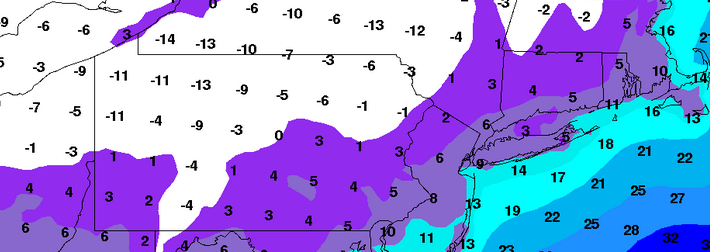
Quantitatively, the cold looks even more impressive. While New York City’s Central Park didn’t get below zero (it fell to 2 degrees last week), the intensity and duration of the cold has brought the monthly data to near record numbers. The Hudson River has frozen over in many spots. As the locals will tell you — that’s how you know it’s really cold. Monthly temperature averages are currently hovering between 10 and 15 degrees below normal throughout New York City and New Jersey.

Read more