Forecast Soundings and Radiational Cooling

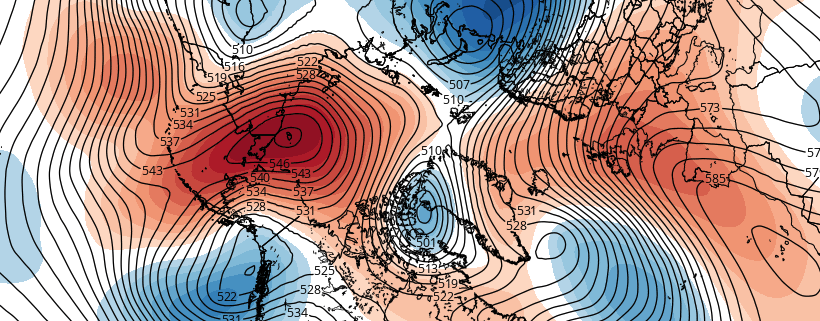
850mb temperatures are only around average or slightly below average. There is a large Southeast ridge with positive 500mb height anomalies. The previously large North Pacific block that generated our cold and snow last week has been replaced by negative height anomalies, cutting off the US from any cold airmass. So why is it so cold tonight? What it essentially comes down to is surface high pressure and radiational cooling.

On the heels of the piece of the Tropospheric Polar Vortex that got sent towards the US from the aforementioned North Pacific block was a very large surface high pressure system with Arctic origins. While the Polar Vortex quickly retreated back into the Arctic and the US was being replaced by a much warmer airmass aloft, this surface high pressure system was massive enough and had enough initially very cold source regions to deposit incredibly cold air into the US. The coldest temperatures were to our west in the Central Plains, where places in Texas dropped from the low 80s to the upper 30s within one hour! This cold air got modified somewhat as it headed east, but it still packed quite a cold punch on Monday, as temperatures in NYC did not get out of the 20s during the afternoon.
Read more

Premium Weekly Outlook: A Look into Christmas and Hanukah Weekend

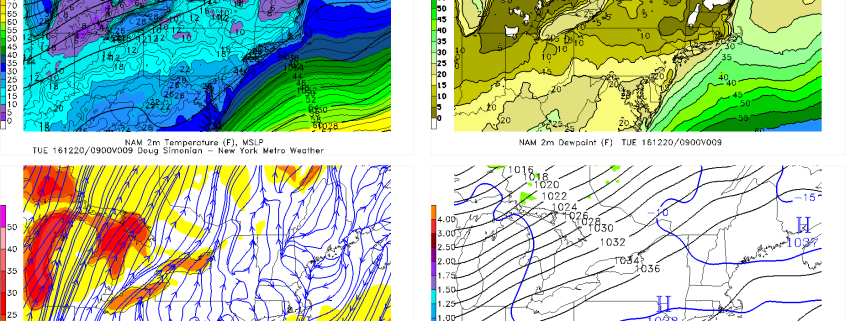
After brief mild surge in the 50s over much of the region yesterday, another artic airmass has moved back over the region today. Despite only some high cirrus filtering sunshine, temperatures for the rest of this afternoon will likely only reach the lower 30s. This is airmass is not cold as last week. But it’s another reminder that we are still only in December.

Another very cold night is store for tonight. High pressure building over the region, will result in mostly clear skies and calmer winds later tonight. This will allow for more radiational cooling, especially for the suburbs.  The only cavet for ideal radiation cooling conditions will be with more high clouds early tonight with a weak shortwave trough passing through. But these clouds should move out overnight.  Temperatures will likely drop well down into the teens and lower 20s over the much of the region. Some of the interior valleys and the Pine Barrens may drop into the signal digits, if skies clear out enough.

Read more

The importance of a cross polar flow and Aleutian ridge in December

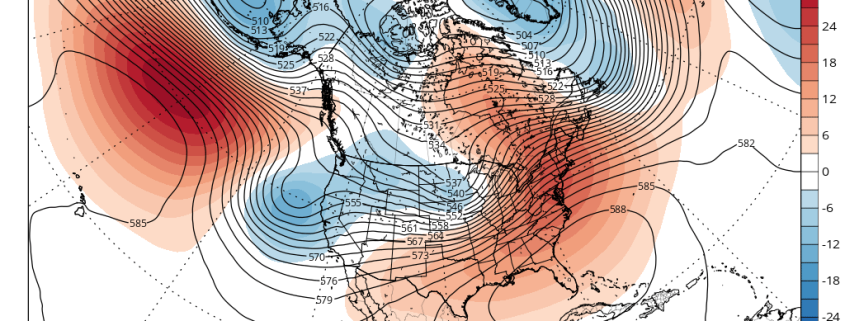
Multiple ensemble guidance indicate a major pattern change over the Pacific region. A ridge will builds near Aleutians then poleward into the Bering Strait and the Artic Ocean next week. This will cause cross-polar flow to finally setup over the North America.  All the anomalous cold air that is has been over much of Eurasia for the last several weeks with finally see an open gateway into North America. Temperatures departures are forecast to between 10 to 20 below average over parts of the Rockies and Northern and Central Plains over next weeks.

Read more

Premium Weekly Outlook: Heavy Rainfall Likely Tuesday and Wednesday

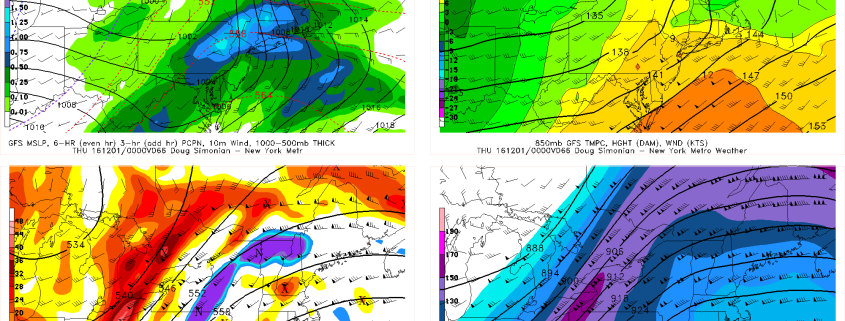
The region has under moderate to severe drought conditions for over past several weeks. But a expansive, complex storm system centered over middle of part of the county, will impact the region Tuesday through Wednesday night, with more widespread, heavy rains likely. A closed upper-level low embedded within larger tough will be moving from the Upper Midwest to Great Lakes. This will cause a mid-level ridge to build over the Eastern US with a mild, moist southerly flow. A couple disturbances with a frontal boundaries will be rotating around the closed upper-level low and trough, causing two rounds of significant rainfall over the region.

Read more