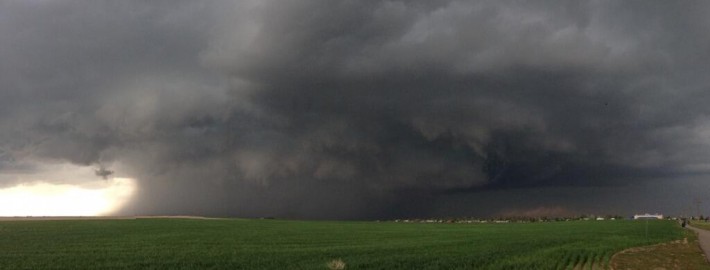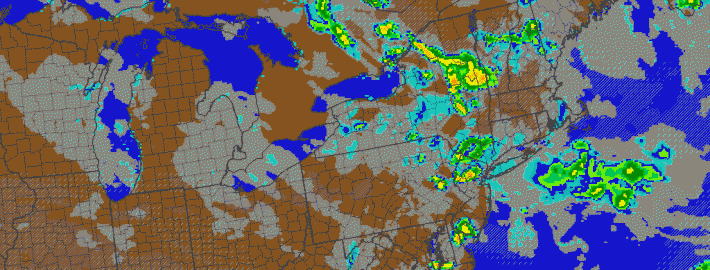

Thunderstorms with gusty winds, downpours Thursday
Update: The Storm Prediction Center has placed our area in a Slight Risk for severe thunderstorms today (Thursday). Stay tuned for further updates and information including a live blog post.
As a mid level disturbance moves toward the area on Thursday, a frontal boundary and convergence zone will shift near the area during the late morning to afternoon hours. The combination of the two, when juxtaposed with daytime heating and some instability, will lead to sufficient lift to develop thunderstorms during the afternoon hours. Accordingly, the Storm Prediction Center has placed parts of the area in a “Slight Risk” for severe thunderstorms.
The threat for strong to severe thunderstorms is likely to be focused west of the area beaches and shores, but heavy downpours and thunderstorms are still possible there. Farther west, over the interior parts of New Jersey and New York, more focused instability and southerly winds are more likely to work with marginally favorable wind fields to help develop thunderstorms. These storms will be capable of producing very heavy rain, frequent lightning and possibly even some small hail and gusty winds.