Arctic front on the way, heavy rain possible on Wednesday

If you thought today was chilly, just wait until tomorrow. The much-advertised Arctic cold front is on its way, which will bring bitterly cold temperatures, and strong northwest winds. There may be a few scattered snow showers or snow flurries associated with this front, especially north and west of the city.
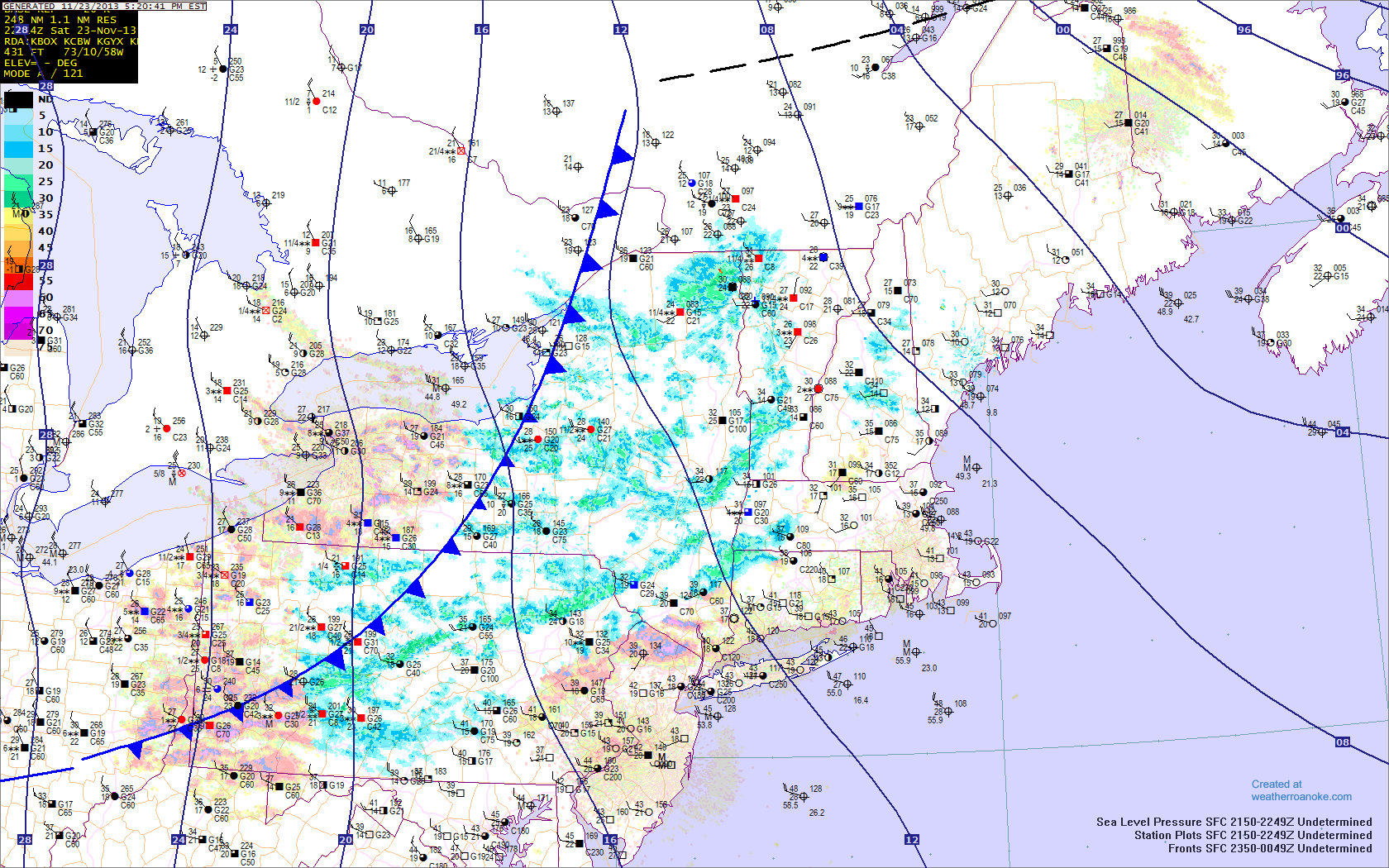
The Arctic front is approaching the region and will be crossing over the next few hours. Temperatures will plummet behind it. Image credit goes to weatherroanoke.com

The Arctic front is approaching the region and will be crossing over the next few hours. Temperatures will plummet behind it. Additionally, snow showers can be found, indicated by the blue patches. Any snow showers should primarily remain north and west of the city. Image credit goes to weatherroanoke.com

Any snow showers should primarily remain to the west of the city, given that precipitation tends to dry out once it heads east of the Catskill and Adirondack mountains in a northwest flow. That being said, do not be surprised if a stray snow shower or two does survive a bit further east. Areas in NW Jersey may see a brief period of steady snow covering the ground and reduced visibilities, so any motorists should take caution if they run into this band of snow. Winds will also be gusty, further contributing to any loss in visibility.

Temperatures will drop quickly this evening through the 30s, and our high temperatures tomorrow will actually be occurring at midnight, when temperatures will be in the mid 30s at midnight, and around 30 north and west. They will fall into the upper teens by morning north and west, with wind chills in the single digits, and mid 20s along the coast, with wind chills in the teens. Winds will be sustained between 20-25 miles per hour, with gusts around 35-40 miles per hour. Tomorrow, highs will only be in the upper 20s to lower 30s across the region, as seen in the image below.
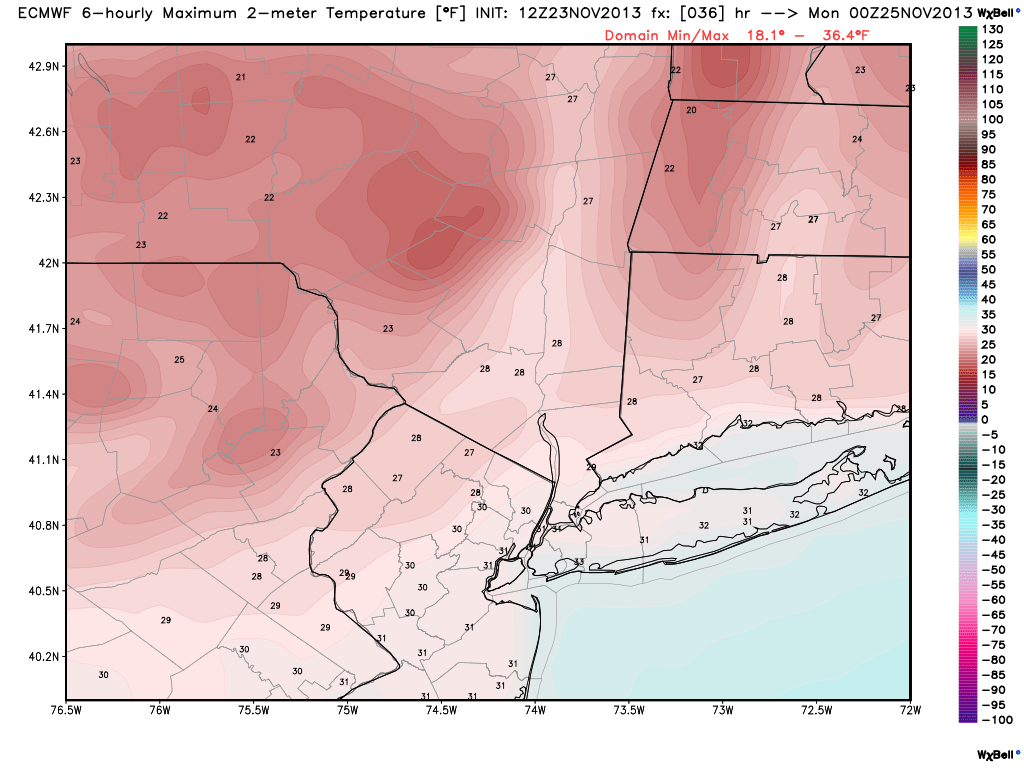
Today's 12z European model shows temperatures remaining below freezing tomorrow afternoon. Image credit goes to weatherbell.com

Today’s 12z European model shows temperatures remaining below freezing tomorrow afternoon. Image credit goes to weatherbell.com

Winds will become even stronger tomorrow during the day, with winds sustained between 25 and 30 miles per hour, with gusts as high as 40-50 miles per hour. This will keep wind chills in the teens throughout the entire day. Make sure to bundle up!
Read more

Arctic plunge Sunday, potential storm near Thanksgiving?

Good afternoon! After a period of moderation in temperatures over the next couple of days and perhaps a few scattered showers on Friday and Saturday, an Arctic cold front will be crossing the area sometime on Saturday. This will lead to plunging temperatures on Saturday night and Sunday.

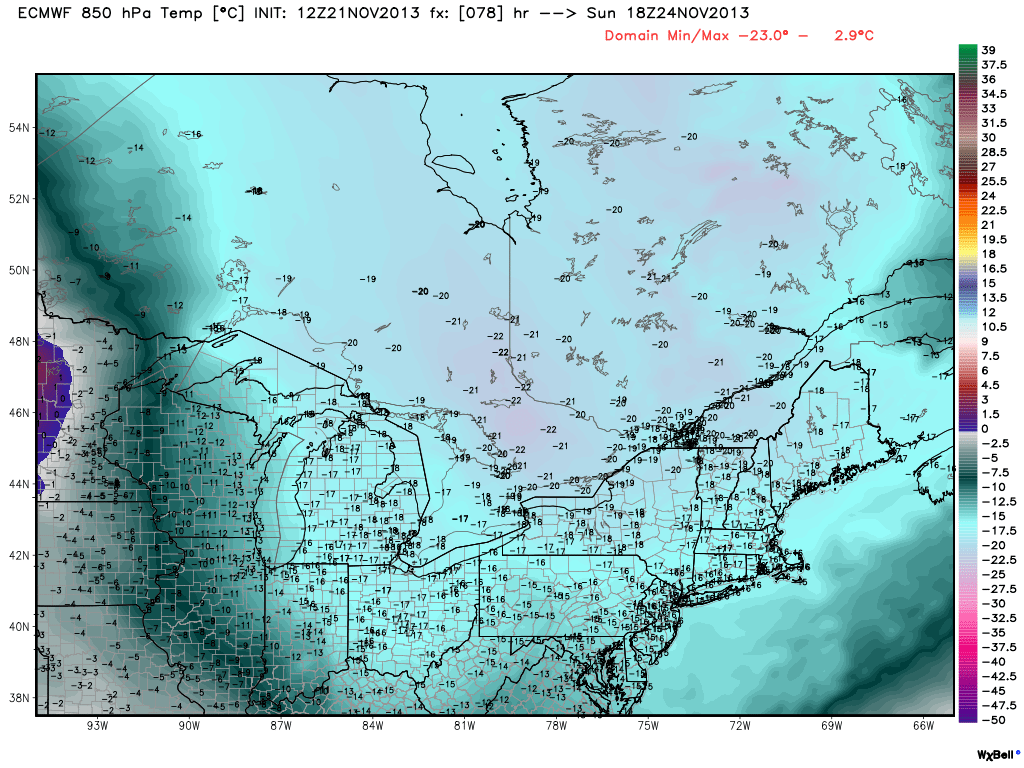
Today's 12z European Model valid for Sunday afternoon shows 850mb temperatures in between -15C and -18C. This supports temperatures not getting above freezing. Image credit goes to weatherbell.com

Today’s 12z European Model valid for Sunday afternoon shows 850mb temperatures in between -15C and -18C. This supports temperatures not getting above freezing. Image credit goes to weatherbell.com

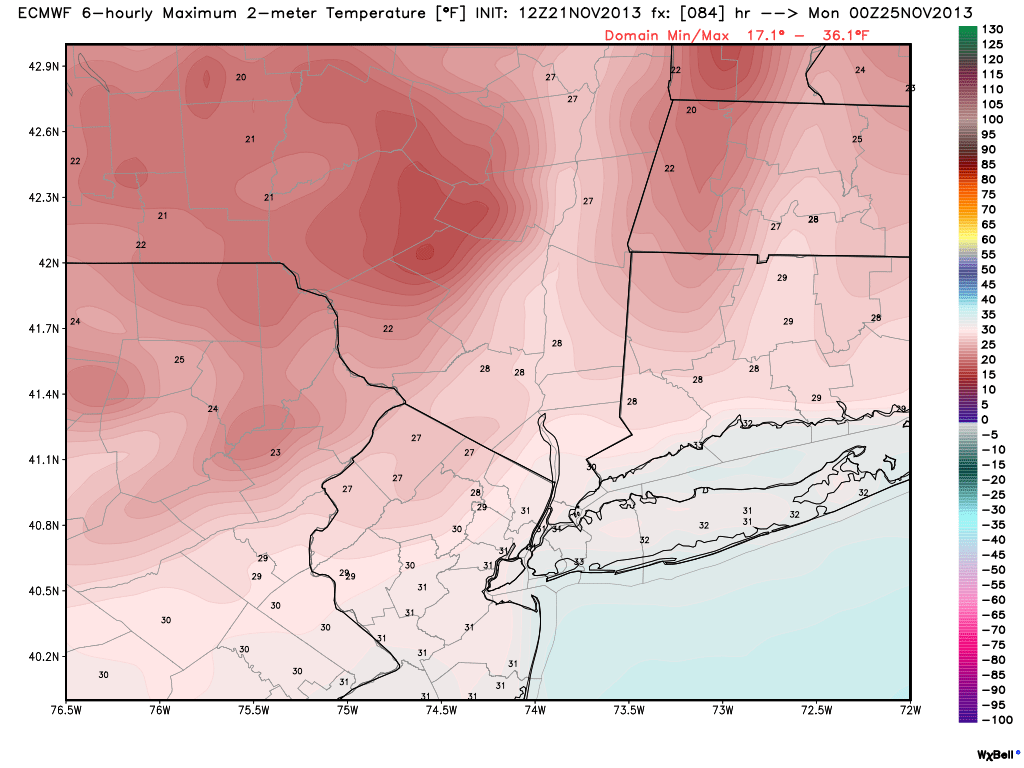
850mb temperatures are expected to drop to between -15C and -18C. With full sunshine, you can normally add around 15C to that temperature to get what is expected at the surface; thus supporting highs in the upper 20s to low 30s on Sunday, as seen in the image below.

place-holder

Today’s 12z European Model shows maximum temperatures not getting above freezing for most locations on Sunday afternoon. Image credit goes to weatherbell.com.

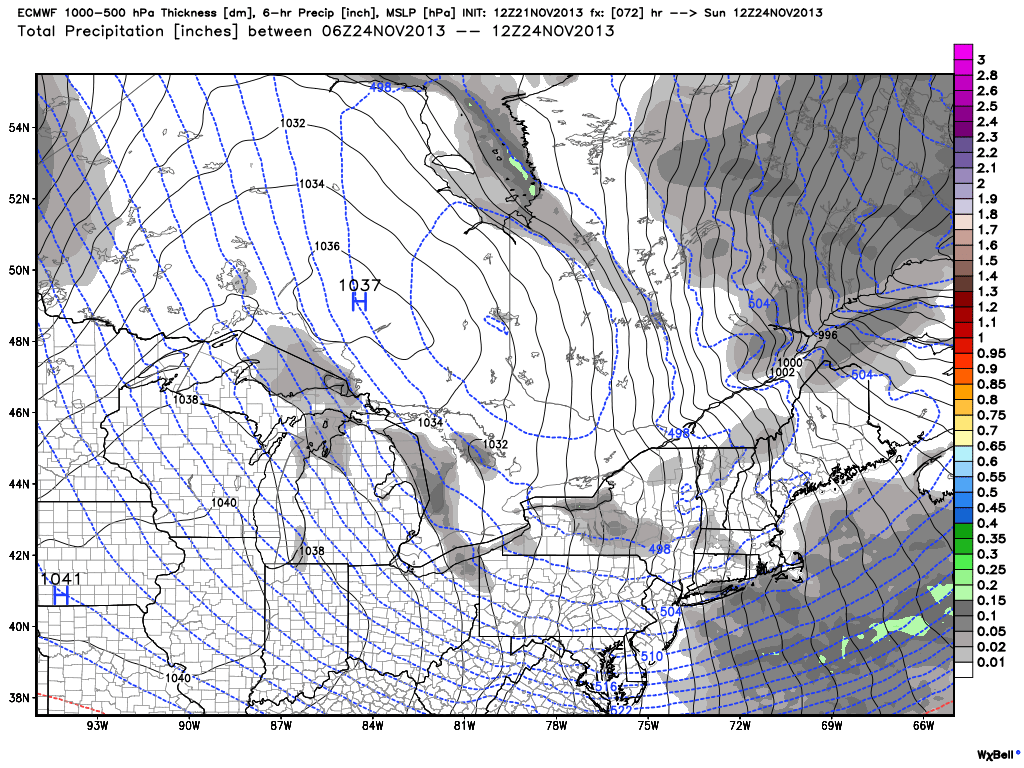
Today's 12z European Model valid for Sunday morning shows 1000-500mb thicknesses approaching 504dam. This supports temperatures not getting above freezing on Sunday. Image credit goes to weatherbell.com

Today’s 12z European Model valid for Sunday morning shows 1000-500mb thicknesses approaching 504dam. Image credit goes to weatherbell.com.

Additionally, the 1000-500mb thicknesses will be quite low as well. This supports the theme of a very cold pocket of air aloft. This cold pocket of air aloft will yield an unstable atmosphere, capable of producing very strong winds. It is possible that winds could gust between 30-50 miles per hour on Sunday, leading to wind chills potentially staying in the teens throughout portions of the day. It’ll truly feel like winter. Sunday night will be cold, with widespread lows in the upper teens and lower 20s.

Read more

Winter Outlook 2013-14

Disclaimer: Long range outlooks continue to be a work in progress, and although our understanding of meteorological processes has grown, the nonlinear, chaotic nature of weather makes this task a very difficult one. With that being said, We will provide meteorological reasoning for what we believe the upcoming winter’s patterns will be!

Primary variables of examination:

  1. El Nino Southern Oscillation (ENSO),
  2. North Atlantic Oscillation (NAO),
  3. Arctic Oscillation (AO),
  4. East Pacific Oscillation (EPO),
  5. Pacific North American index (PNA),
  6.  Sea surface temperature anomalies (SSTA) in the Pacific and Atlantic

Other factors examined but may or may not be mentioned: Pacific Decadal Oscillation (PDO), Atlantic Multi-decadal Oscillation (AMO), Quasi-Biennial Oscillation (QBO), Stratospheric trends and temperature anomalies, Solar trends, specifically geomagnetic activity, solar flux, and sunspots, Pattern persistence, Analog years (years with similar patterns to the current year)

Short Description of Variables:

We will be utilizing the above abbreviations of teleconnection indices throughout the outlook. These variables reflect the atmospheric circulation patterns for certain geographical areas. The AO refers to patterns within the Arctic circle, the NAO in the north Atlantic, the PNA in the western part of North America, and the EPO in the northern/eastern Pacific, Alaska and western Canada. If you are a cold / snow lover in the Eastern US, you generally want to see the above indices in their negative phase, except for the PNA, which is more favorable in its positive phase for Eastern cold. Negative AO, NAO, and EPO generally correlate to enhanced blocking and high pressure to our north, and to balance it out, low pressure and troughs usually form underneath in the middle latitudes (our area). In contrast, positive AO, NAO, and EPO generally yield low pressure and less blocking to our north, and as a balance, we experience high pressure and more ridging. There are exceptions to the rules, but most of the time, if you like cold / snow, the preferred index phases are negative AO, NAO, EPO, and positive PNA.

Read more

NYC Forecast: Moderating, big arctic surge looms

It was quite a cold start throughout the area this morning, likely made to feel more alarming due to the warmer weather which we experienced over this past weekend. But the progressive weather pattern which has become dominant throughout much of the United States over the past month continues to dominate, and colder air poured into the area on Monday and Tuesday. Today will be another cold one, with highs only in the 40’s to maybe near 50 in the warm spots. It will feel a hair warmer thanks to the lack of blustery winds, which took real-feel temperatures for a tumble on Tuesday afternoon.

Moderating temperatures are expected to continue on both Thursday and Friday, as highs will warm into the 50’s. The progressive nature of the pattern, despite continuing, seems to be becoming a bit more anomalous with time. And after the 60’s to near 70 this past weekend, an arctic plunge is forecast for the weekend ahead of us. Behind a cold front (which will move into the area on Saturday), the coldest air of the season thus far is forecast to move into the Northeast US. 850mb temperatures, for comparison, are near -3 degrees C today. By Sunday, forecast models show 850mb temperatures of -16 C or colder.

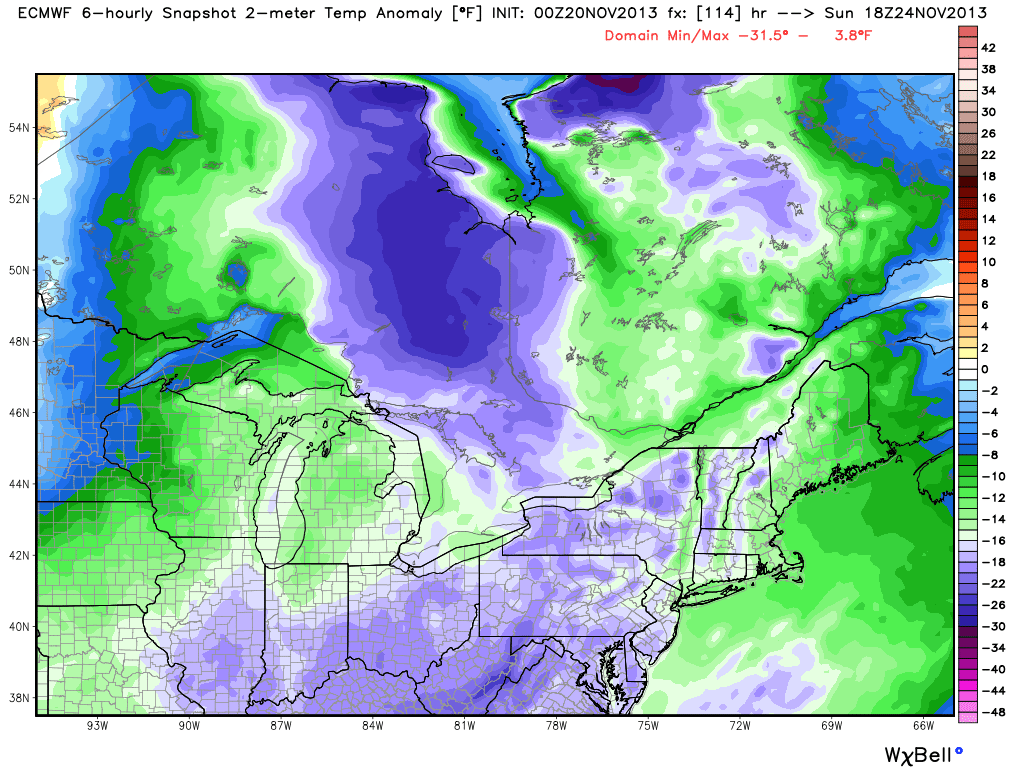
Surface temperature anomaly forecast for Sunday on the European model, showing well below normal temperatures.

Surface temperature anomaly forecast for Sunday on the European model, showing well below normal temperatures.

Read more