Forecast: Quiet Monday, potential significant storm mid-week

We kick off the new work week with a rather calm and benign weather day on Monday, with plenty of sun despite cool temperatures. Our area remains underneath an upper level low that has weakened, but between two disturbances. The result is continued northwest winds and cool air, but less clouds and dry weather with little chance of precipitation. High temperatures in the upper 30’s to low 40’s will be common throughout the area. Overnight, clear and breezy conditions are expected to continue with lows falling into the 20’s to near 30 in the city and near the coast. Much of the same is expected on Tuesday, although high temperatures could be a few degrees warmer as the airmass modifies a bit — with some areas reaching the low to middle 40’s by afternoon. The main story, however, will be a potentially significant storm system which will be brewing to our south by late Tuesday.

Today: Mostly sunny, brisk, cool. High temperatures in the upper 30’s to lower 40’s. Northwest winds keeping things blustery…around 10 to 15 miles per hour.

Tonight: Clear and cool, but still a noticeable northwest wind around 10 miles per hour. Low temperatures falling into the 20’s and 30’s throughout the area.

Tuesday: Mostly sunny, with some increasing clouds later in the day. A bit warmer, with highs in the upper 30’s to mid 40’s. Winds shifting from northwest to east throughout the day.

Midweek Uncertainties: The forecast becomes increasingly complicated by the middle of the week. A very strong storm system moving through the Plains and Tennessee Valley will move towards the Mid-Atlantic States by Tuesday. As it
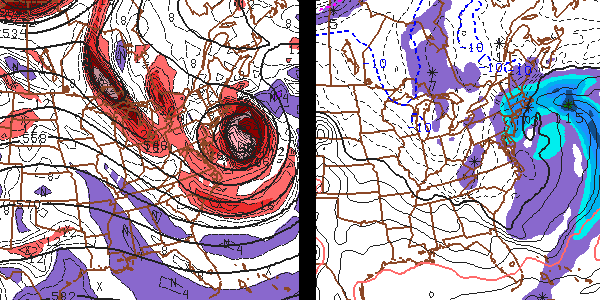
GFS Model showing a significant storm impacting our area Wednesday Night into Thursday morning with rain, snow, and strong winds.

GFS Model showing a significant storm impacting our area Wednesday Night into Thursday morning with rain, snow, and strong winds.

heads towards the coast, and interacts with several different pieces of energy to the north, forecast models are struggling to pinpoint where the surface low will head off the coast — and whether or not heavy precipitation will reach our area. If it does, precipitation type looks to favor rain and snow along the coast and mostly snow inland. If not, light rain is possible everywhere as the storm moves offshore. In addition to the threat for precipitation, high winds would be likely along the beaches and shores if the storm tracks farther north. We are continuing to monitor the situation very carefully through today. We expect to have a new Hazardous Weather Briefing out around 2pm, with a Storm Alert posted by tonight if necessary.

Wednesday: Mostly cloudy with a 50% chance of rain and snow. High temperatures in the upper 30’s to low 40’s throughout the area. Blustery northeast winds from 20 to 25 miles per hour are possible.

Thursday: Mostly cloudy and breezy with a 50% chance of rain and snow early. High temperatures in the upper 30’s to low 40’s. Blustery north winds from 20 to 25 miles per hour.


Unsettled, but dodging showers into the weekend

GFS Model showing the upper level low meandering over the Northeast US on Friday February 28th. The above image shows heights, winds, vorticity and temperature at 500mb.

GFS Model showing the upper level low meandering over the Northeast US on Friday February 28th. The above image shows heights, winds, vorticity and temperature at 500mb.

An unsettled pattern, owing to the presence of a persistent upper level trough over the Northeast, will continue through the end of the week. Steady and heavy rain won’t be a threat, but the potential for isolated showers and clouds will remain in the forecast through the first half of the weekend. The upper level trough is in no rush to leave, as it meanders over the Northeast United States. Small disturbances (shortwaves) will rotate around it, kicking off clouds and isolated showers at times on both Friday and Saturday. Some more sun should find its way through the clouds each day, but temperatures will cool off over time as well..with high temperatures falling into the upper 30’s low 40’s by later this weekend. Low temperatures on Thursday, Friday and Saturday nights should be fairly uniform, in the upper 20’s inland to the low to mid 30’s near the coast and in the city. No periods of steady or heavy rain are expected, though, so overall it should average out to be a fair end of the week and weekend. The official forecast is below…

Friday: Mostly cloudy, with high temperatures in the mid to upper 40’s near the coast, and colder inland (upper 30’s to low 40’s). Northwest winds around 10 miles per hour.

Friday Night: Mostly cloudy, with low temperatures in the upper 20’s to lower 40’s, warmer near the coast and in the city. Northwest winds around 10 miles per hour.

Saturday: Partly cloudy, with a slight chance of showers in the afternoon. High temperatures in the middle 40’s. Northwest winds around 10 miles per hour.

Stay tuned to our Facebook and Twitter accounts for more up to the minute details on the forecast!

Meteorological Spring Approaches, But Spring Weather Does Not

As many of you know, Meteorological Spring begins on March 1, which is this Friday. However, in both the short term and long term, the weather will not be cooperating. After this current storm system that has given us our clouds and rain over the past few days moves away, colder weather will be ushered in for Friday and beyond. Temperatures will generally represent average highs and lows for early February, rather than early March.

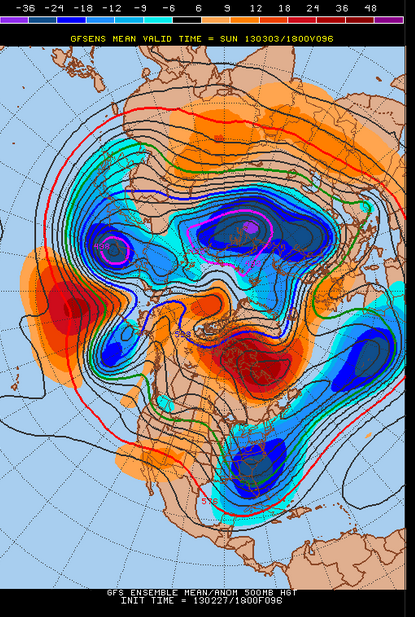
The 18z GFS ensemble mean, valid for the afternoon of March 3rd, shows a very strong negative NAO block, which favors the development of a strong storm system.

The 18z GFS ensemble mean, valid for the afternoon of March 3rd, shows a very strong negative NAO block, which favors the development of a strong storm system.

What’s responsible for this? For the first time this winter, we are going to see sustained NAO blocking. The 18z GFS ensemble mean forecast for 96 hours out, which is valid for the afternoon of March 3, shows a huge closed off positive anomaly of geopotential heights south of Greenland. This is classified as a strong negative NAO event, and these events often lead to very strong storm systems affecting our area, such as Hurricane Sandy. These negative NAO blocks help to force a trough on the east coast, providing sustained, cold air, along with storm systems that can slow down, strengthen, and take tracks just off of our coastline.

So, do we have any storm systems to look out for? Initially, some models were indicating a threat for the March 3 time period, but the problem for that time period is that the trough axis is too far east and too positively tilted. There was a positive PNA ridge on the west coast, but a disturbance moves onto the west coast, which flattens that ridge, represented by that little blue area in Washington State. It also pushes the flattened ridge eastward, pushing our trough eastward. The NAO block will prevent the trough from scooting out to sea, but it cannot keep the trough axis far enough west for a storm system to bring us precipitation. Additionally, and arguably the bigger problem is the upper level low pressure system that is elongated to the southeast of our NAO block. That keeps the flow out in the Atlantic pretty flat, preventing any storm from being able to turn up the coast. Thus, this time period is not favorable for a storm.

However, will this change? Potentially. When?

Read more

Forecast: Unsettled weather approaching by midweek

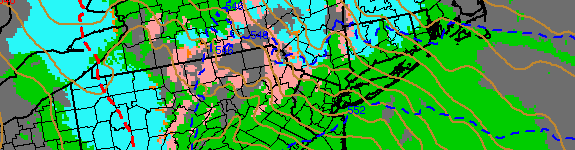
Above, the NAM model showing mixed precipitation affecting the area Wednesday morning. Mainly rain is expected near the coast, with a period of snow or sleet possible in the interior suburbs.

Above, the NAM model showing mixed precipitation affecting the area Wednesday morning. Mainly rain is expected near the coast, with a period of snow or sleet possible in the interior suburbs.

Pleasant weather has not come easy lately, thanks to a very active weather pattern which has settled into the area this month. Much of the same will be true this week, with Monday and Tuesday averaging out to be “pleasant”, but the forecast taking a downward turn by Tuesday evening into Wednesday. A storm system approaching from the Central United States will drive precipitation from the Mid Atlantic states into the Northeast US, bringing a moderate rainfall event to much of the coast as well as the potential for some wintry precipitation across the interior.

Forecast models are continuing to struggle with handling the cold air in place as the storm approaches — so the forecast remains uncertain across the interior, where a colder outcome could mean a prolonged period of snow, sleet or freezing rain. In the city and near the coast, any frozen precipitation should quickly flip to rain. Temperatures will warm up even behind the precipitation on Wednesday, as the cold front drifts just to our west. Highs could approach the middle to upper 50’s across Central NJ Wednesday afternoon before dropping rapidly behind the front.

Colder air is expected to filter back into the area by the end of the week, with a large upper level trough keeping colder air around through the weekend and possibly lingering thereafter. Stay tuned to our Facebook and Twitter accounts for up to the minute updates on the area’s weather!