(Premium) Will May Be Cooler and Wetter Than Normal?

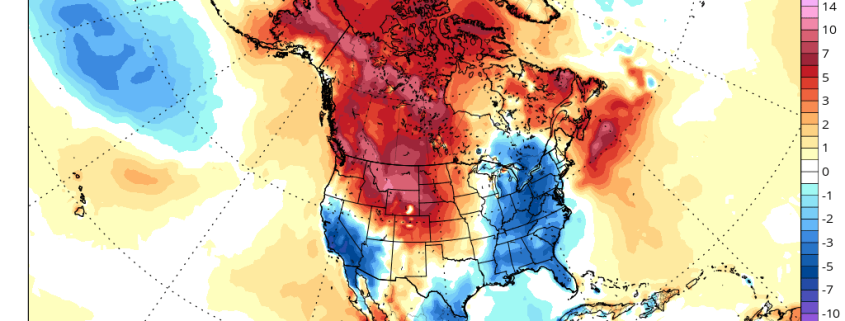
High-latitude blocking returned this week. After a warm start early this week, confluence from an upper-level over Southeast Canada forced a frontal boundary south of the region. This produced cooler than normal temperatures for the rest of the week. As a result, April will likely finish near or slightly below normal on average. It appears that May will start not only cool, but also wetter. So will May also be a cooler and wetter month as a whole? Or will a warming, drier trend occur again later in the month?

For next week, high-latitude blocking over the AO and NAO regions will start to weaken and an upper-level low moves out of Southeast Canada.  But an active split flow pattern with Pacific energy undercutting the West Coast ridge remains into next week. This pattern will keep a succession of troughs moving over the Central and Eastern United States for the next week or two. These troughs will supports airmasses coming down from Canada with mostly below normal temperatures. There is still the potential for backdoor cold fronts and cut-off lows with this pattern as well.

Read more

Cool & Unsettled Weather into This Weekend

While we ponder over today a stunning new report on the Blizzard of 2016, we’re also looking at the weather over the next few days.  It appears that we are entering a cooler and unsettled pattern going into this weekend and beyond. Although we are not looking at any complete washouts yet–at least through Saturday.

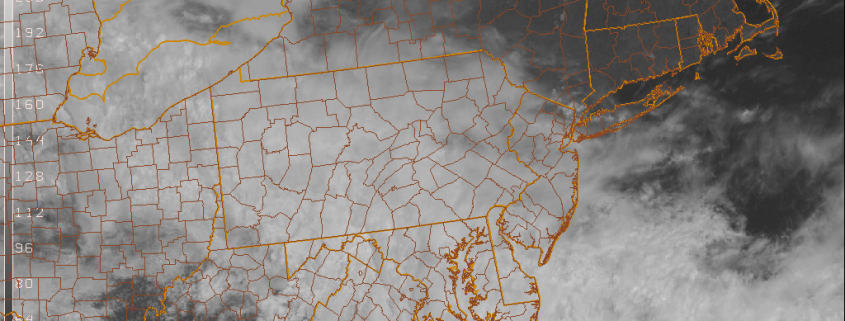
For the rest of this afternoon, sunshine will gradually fade behind increasing and thickening clouds. This happens as a wave of low pressure moving east over the Mid-Atlantic region causes the frontal boundary lift northward.  Strong confluence underneath an upper-level low over Southeast Canada will keep this frontal boundary south of the region. But some showers will spread north over parts the region later today and early tonight. Generally, light rainfall amounts are anticipated. Temperatures should reach the upper 50s to lower 60s for highs this afternoon.

Read more

3 months later, Blizzard of ’16 becomes largest in NYC history

Three months after the last snowflake from the prolific Blizzard of 2016 fell, it has ascended to become the #1 snowfall in New York City’s recorded history. The storm passes February 12th, 2006 which was the previous record holder. The announcement comes after weather enthusiasts and professionals were left disappointed by a 26.8″ measurement which brought the snowfall total just 0.1″ short of the February 2006 record. But a new publication from the National Weather Service says the total will be changed to a whopping 27.5″, adjusting the total well higher and making the Blizzard of 2016 the largest in the city’s history. 

It wasn’t additional snow that fell a few minutes after a measurement, or a last minute snow band that was added on to the snowfall total. It was, apparently a “miscommunication between the NWS WFO and Central Park Conservancy”. Or, more likely, a disturbing lack of communication between the two offices at all. The report also says that the Central Park Conservancy, which measures snowfall officially for Central Park, provided a worksheet with snowfall totals which was deemed “accurate”. The official worksheet recorded 0.2″ of snow on January 22nd, 27.3″ of snow on January 23rd, and a trace of snow on January 24th. How a snowfall total of 26.8″ was reported on the night of January 23rd, then, becomes a real head scratcher.

Read more

Thunderstorms this afternoon may be strong with gusty winds

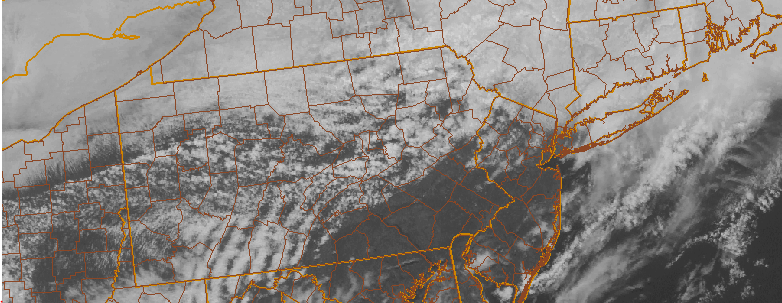
A warm front, associated with a wave of low pressure system over Northeast PA, has situated itself across the area this afternoon. Warmer temperatures exist to the south of the front, over Southern and Central New Jersey, where temperatures have already surged into the middle to upper 70’s. Farther northeast, colder marine air remains in place where temperatures are in the 50’s over New England. This warm front will serve as a focal point for the development of storms later today, as an upper level disturbance approaches the area.

Some of these thunderstorms may be strong to severe this afternoon, especially over Central and Southern New Jersey where stronger instability will develop. The Storm Prediction Center has issued a Slight Risk of severe thunderstorms for those areas. Meteorologically, this threat is supported by both kinematic and thermodynamic evolutions. Instability, on the order of 500-1000 j/kg of mixed layer cape, will support storm development once the upper level disturbance approaches. Mid level lapse rates may limit the threat of widespread severe weather (between 6.0 and 7.0 C), but steeper low level lapse rates in Central and Southern New Jersey, juxtaposed with favorable 0-6km bulk and speed shear may lead to some organized storms. The main threat with these storms, which will drop southeast through NJ and NY later today, will be damaging winds and hail. A weak tornado isn’t impossible, especially near the warm front with backing low level winds.

Read more