Public Analysis: Unsettled Weather Along a Series of Frontal Systems

Good afternoon and Happy Friday!

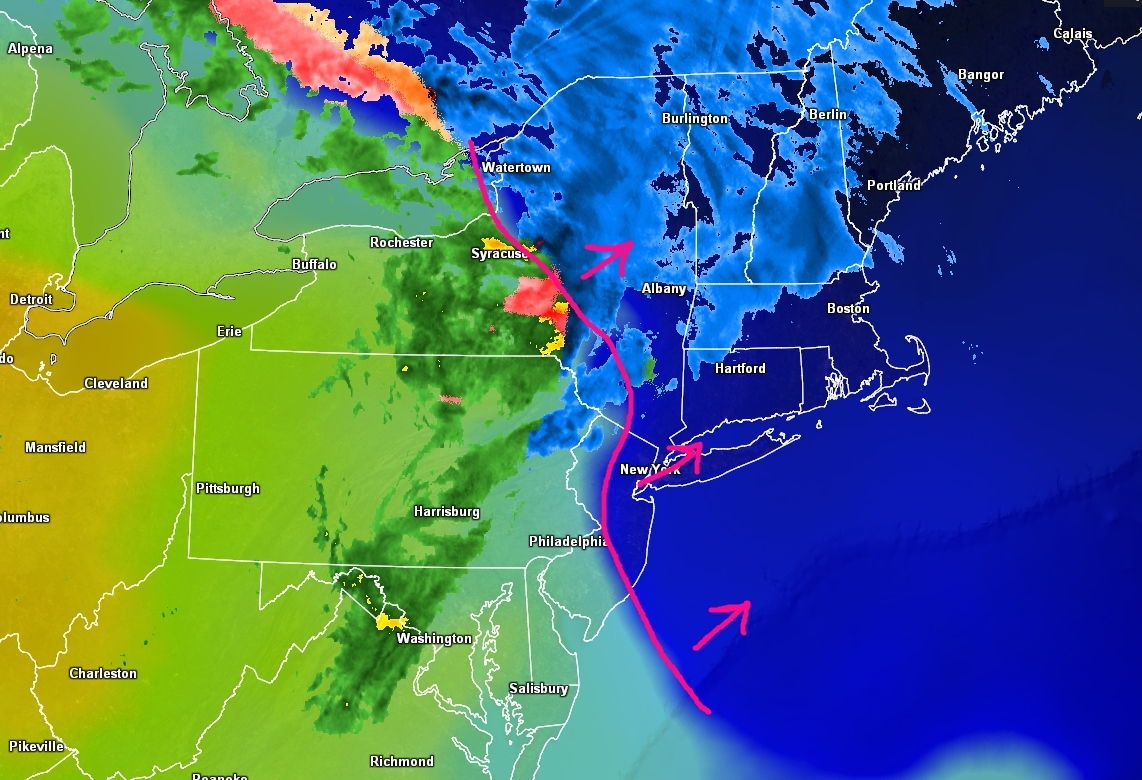
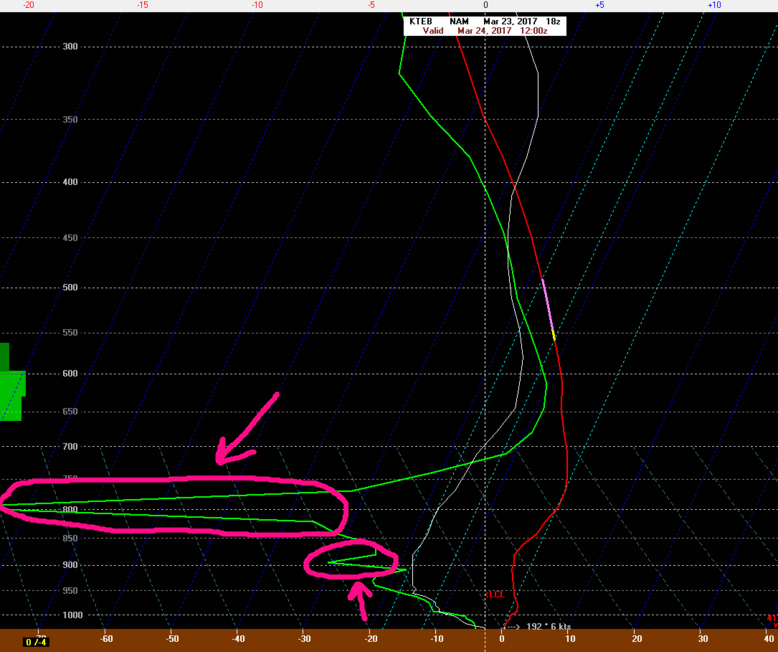
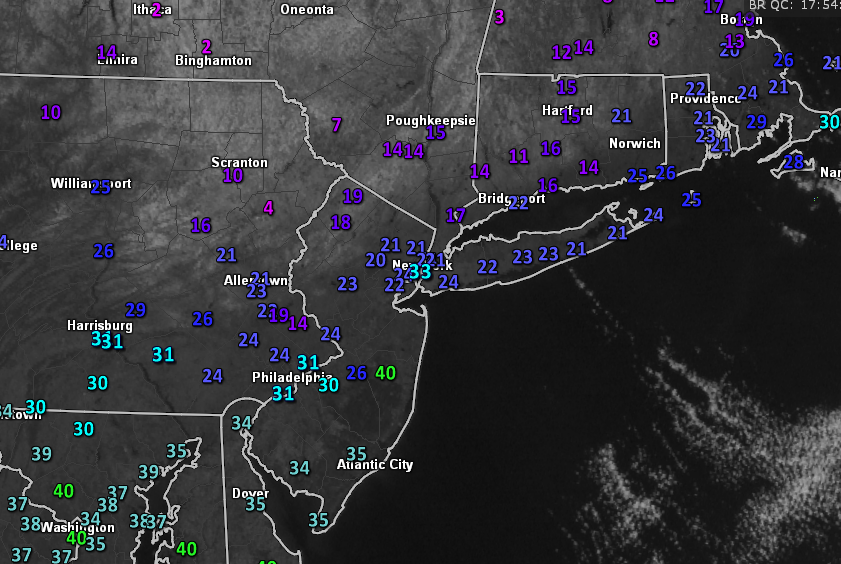
Earlier this morning we saw some light showers pass over the northern sections of the NYC metro with some localized reports of light sleet/freezing rain mixing in. This precipitation was associated with the passage of a mid-level warm front that passed through the region at around 9am this morning. Colder air near the surface allowed localized areas to see some very limited mixed precipitation, but while the radar this morning may have shown some areas of heavier rain and/or mixing, most of this was not able to reach the surface due to a very dry wedge of air  in the lowest few thousand feet of the atmosphere.

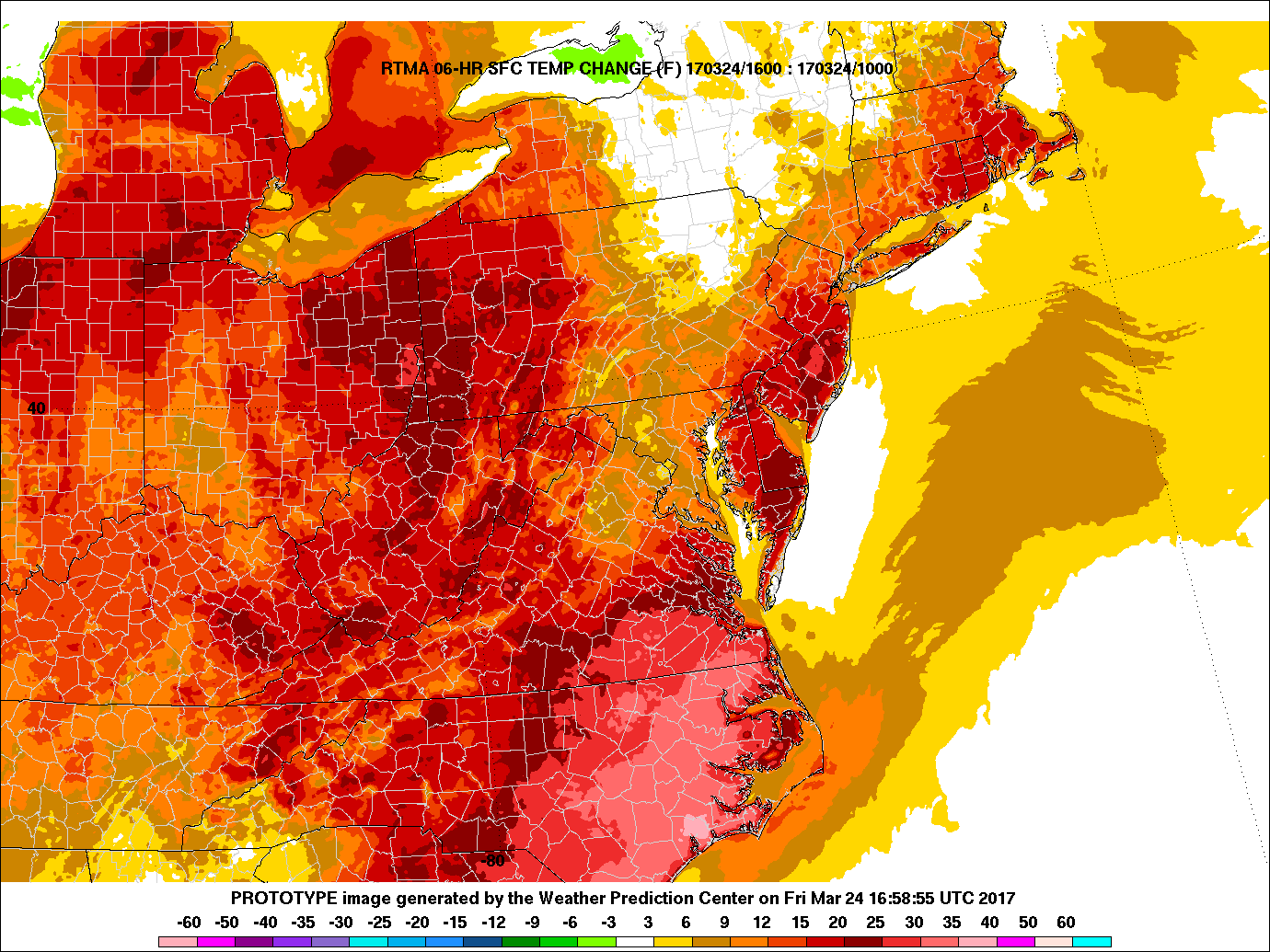
As the lower levels began to warm to above-freezing levels across the entire area, precipitation became predominantly rain, except for elevated locations in Connecticut and Massachusetts. Temperatures have warmed a good 12-15 degrees after the mid-level warm front, in conjunction with southwesterly winds have brought in a much more seasonable airmass for this time of year. Even though we have warmed quite a bit over the past few hours, there is still a pretty stark temperature gradient over the region, with portions of southern New York and Connecticut remaining in the upper 30’s, while the NYC metro area and locations to the south are in the mid 40’s and lower 50’s as of 1pm.

Any remaining light rain should begin to taper off as the front that triggered this precipitation quickly exits off to our north and east. With clouds likely lingering throughout the rest of the afternoon, temperatures shouldn’t be able to rise all that much from where they are right now, so expect highs to be generally in the lower 40’s to mid 50’s, with the higher temperatures being located to the south.

As we head into the evening hours, not much clearing is expected as another frontal system approaches the area with increasing clouds ushered in by a stout southwesterly flow. Due to the amount of warm air being pushed into the area overnight, we may see temperatures increase throughout the evening hours, possibly into the mid-upper 40’s. Some showers are also possible into the early morning hours as moisture advection also begins to steadily increase.
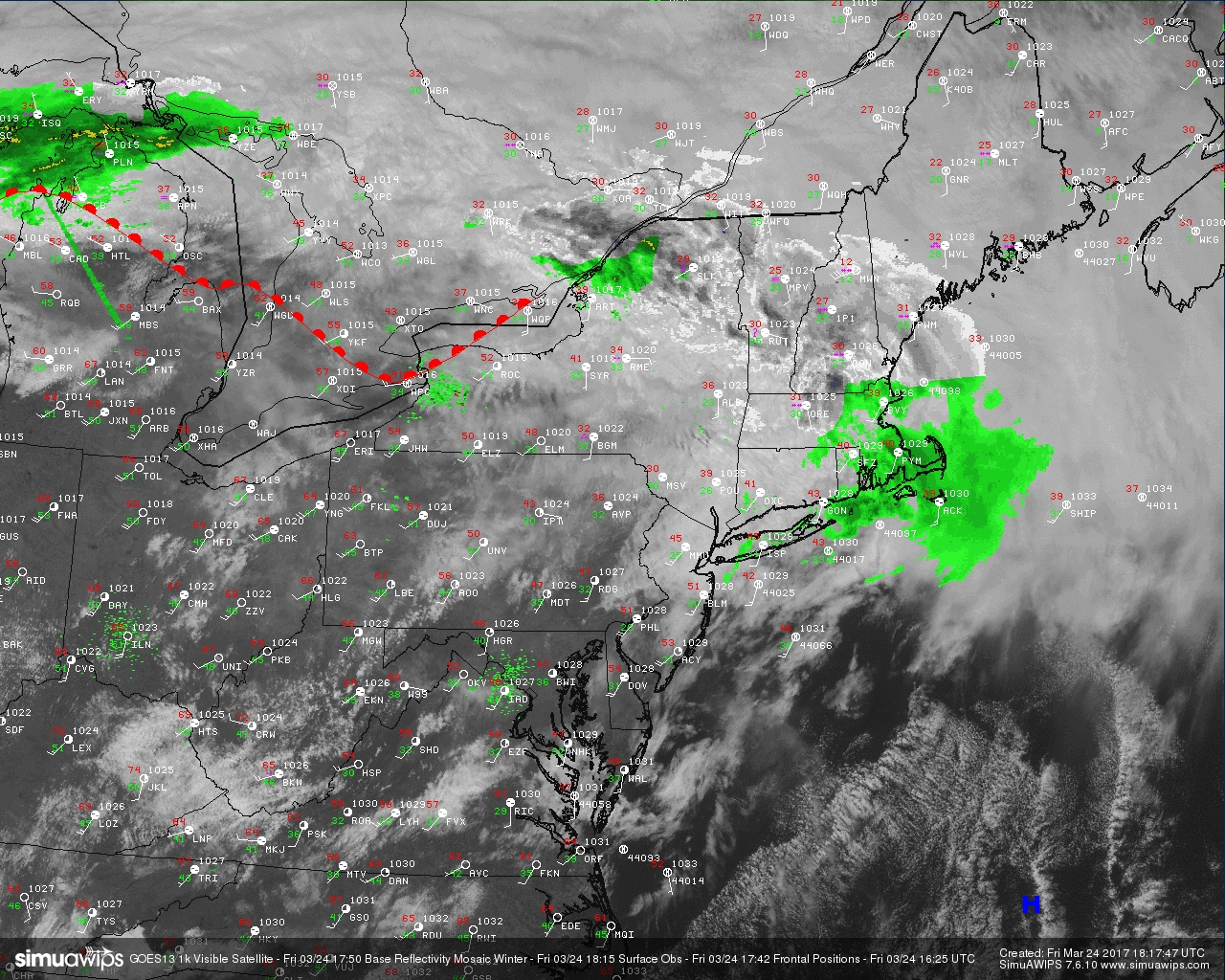
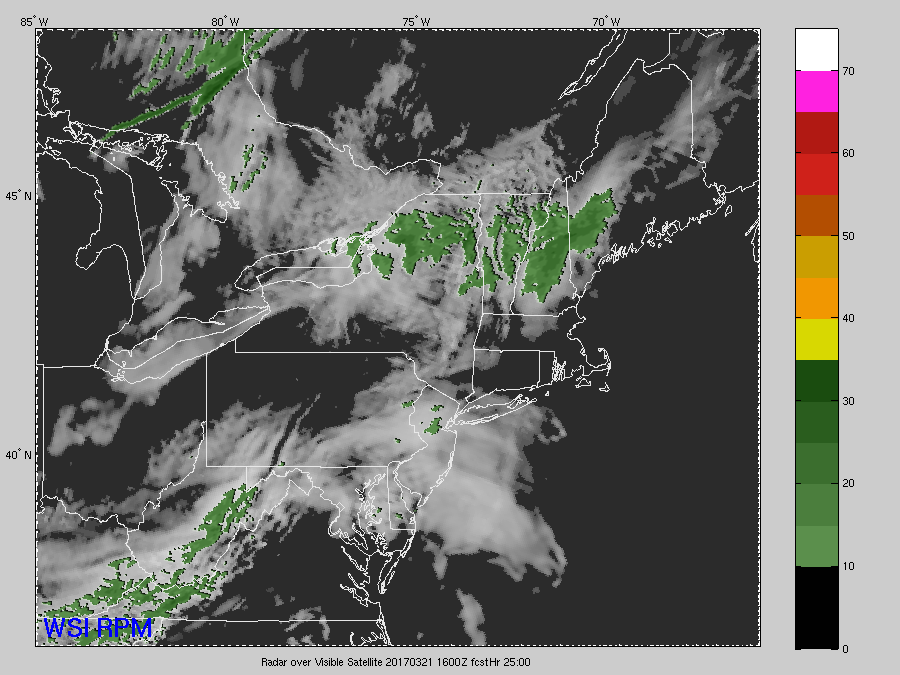
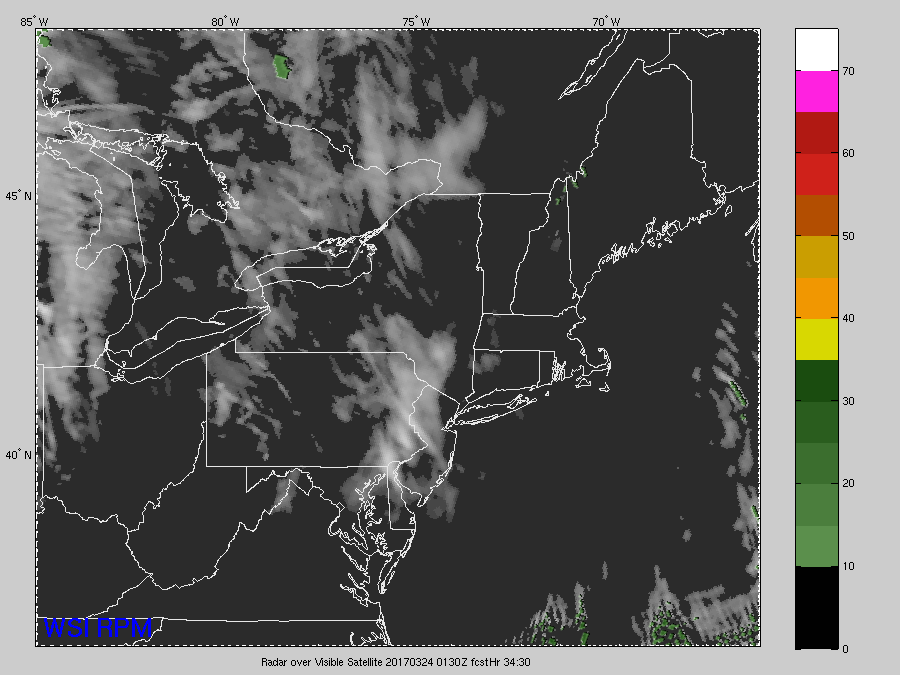
Current view of radar, surface observations, visible satellite imagery, and frontal positions over the Northeast. (Courtesy of Simuawips)

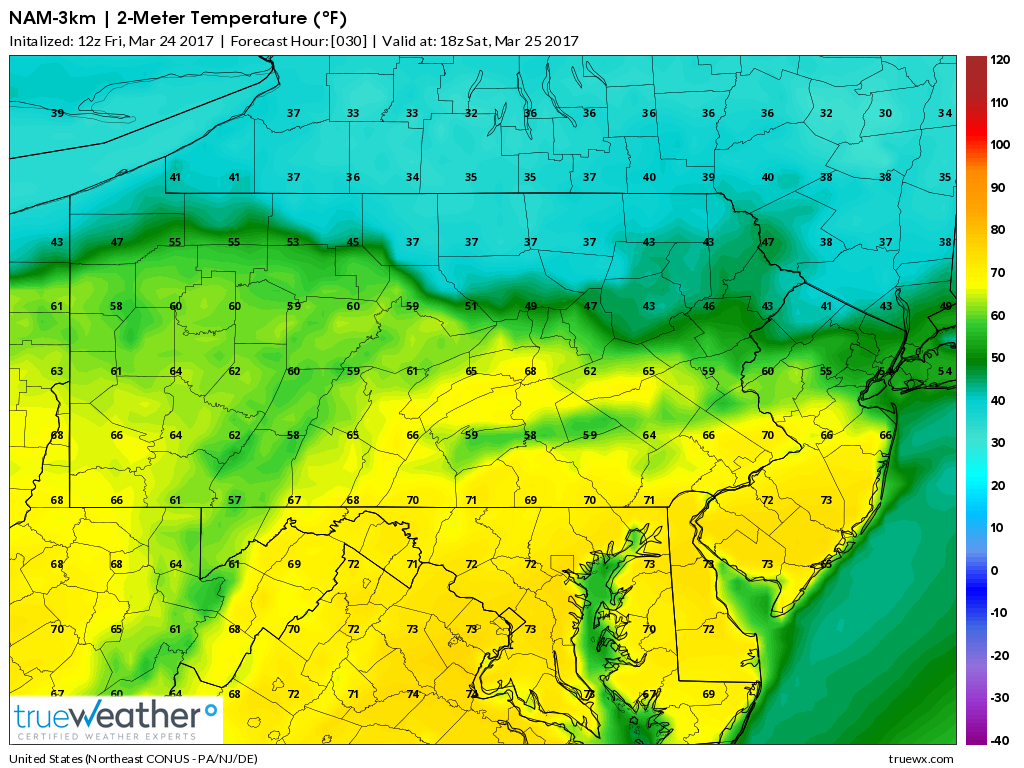
As we move into tomorrow, a complicated gradient will begin to take place as the frontal system that will be responsible for this evenings temperature rises begins to lift to the north and eventually stalls out. Where the frontal system decides to stall out will be crucial in determining just how warm temperatures get tomorrow. The latest computer model guidance is indicating that temperatures should be able to rise into the upper 50’s and the lower 60’s across much of the area by early tomorrow afternoon. As will be the theme over the next few days, locations like SE PA and Central and Southern New Jersey all have a better shot of reaching the mid to upper 60’s tomorrow-with lower 70’s possible in some locations. As mentioned, this will create quite a temperature gradient with areas south of the front seeing Spring-like conditions, and those to the north seeing much cooler temperatures in the 40’s.

The aforementioned frontal system will then have the potential to sink back to the south by the mid-afternoon hours tomorrow as a strong Canadian high pressure system strengthens and introduces a backdoor cold front. This front will continue to sag south as the cold, dense Canadian air brings temperatures back down to the 30’s and 40’s tomorrow evening.
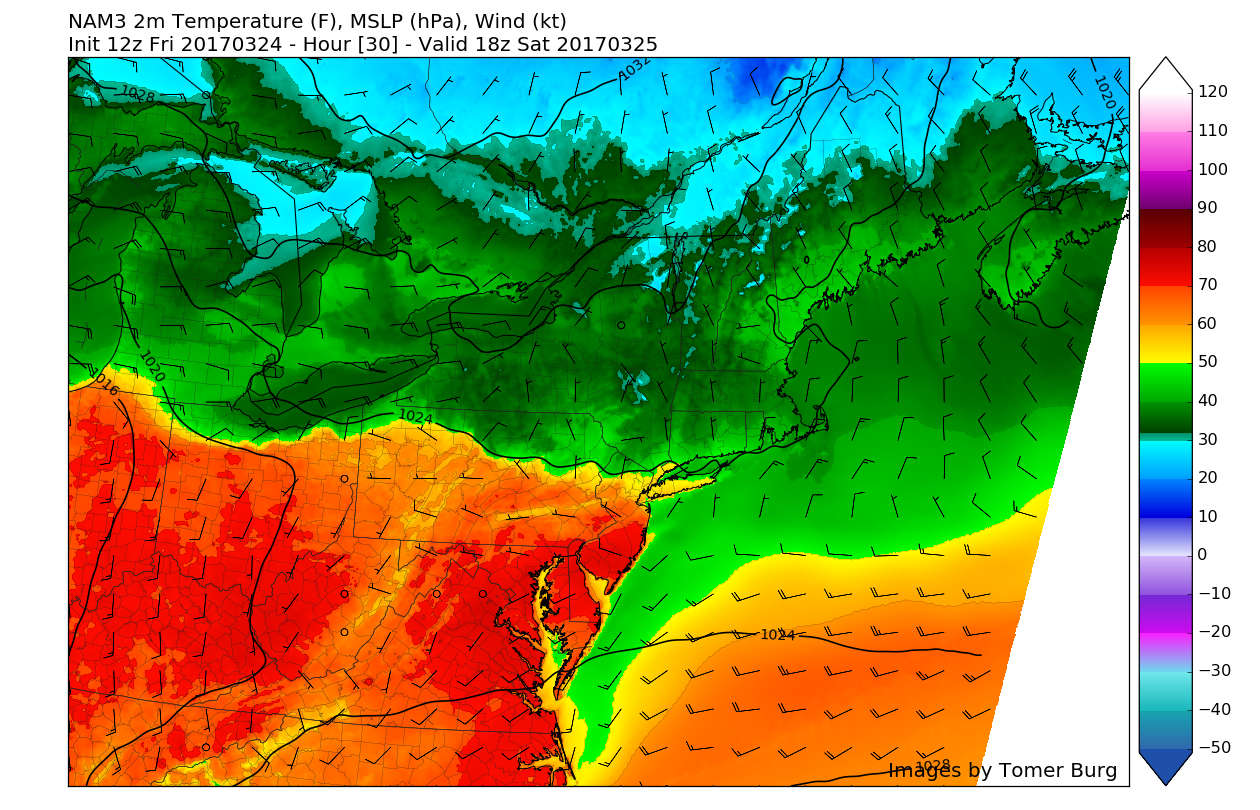
3km NAM valid tomorrow afternoon showing the stalled frontal system over SNY, with cool temperatures to the north and much warmer temperatures to the south of the front

3km NAM valid tomorrow afternoon showing the stalled frontal system over SNY, with cool temperatures to the north and much warmer temperatures to the south of the front

This cold front will then stall out over southern Pennsylvania and Maryland on Sunday morning, so this will allow the colder Canadian air mass to block any warm, maritime tropical air that lies just to our south. Unfortunately, it looks like Sunday will be a more dreary and unsettled day. with the potential for showers and mostly cloudy skies existing throughout the day. After finally getting some above-average temperatures again on the board, we should drop down to at least 10-12 degrees below-normal by Sunday afternoon. So be prepared for tomorrows warmth to be very brief and enjoy it while you can!

This frontal boundary should remain draped over the region on Monday as well as Tuesday, as a few waves of low pressure begin to move along the front. Each one of these waves will bring some chances at some more steady rain threats beginning on Monday morning. Temperatures should remain quite variable as the front lifts north, and then eventually sags back to the south as each impulse of low pressure moves over the area.
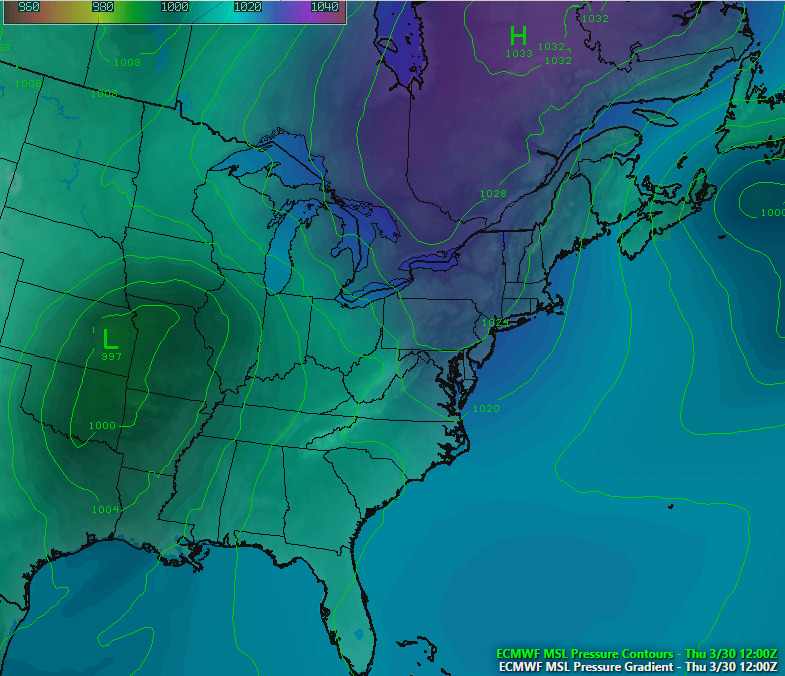
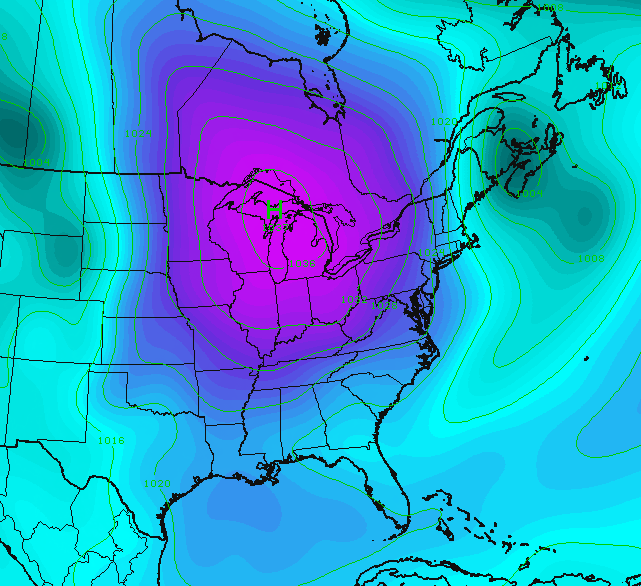
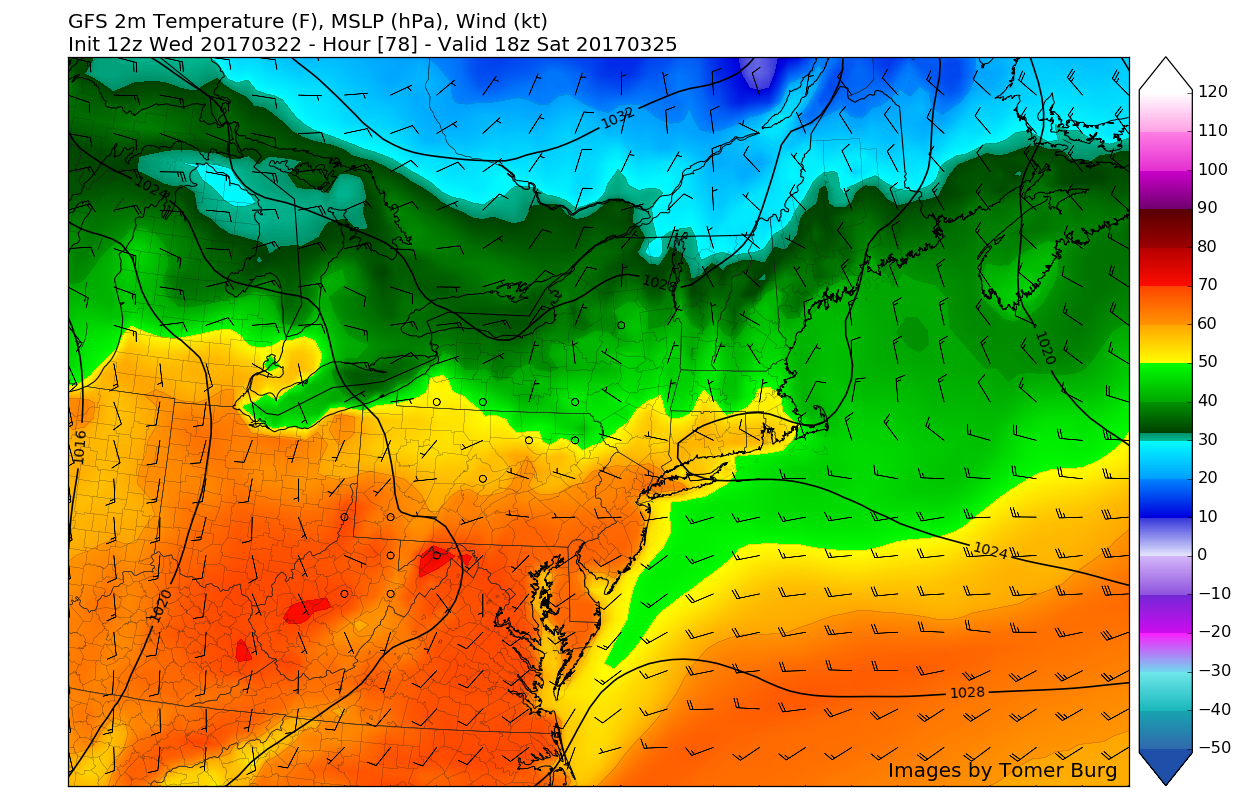
12z ECMWF model showing a more stable pattern later next week as a Canadian high pressure system dives to the south (Valid Thursday morning)

12z ECMWF model showing a more stable pattern later next week as a Canadian high pressure system dives to the south (Valid Thursday morning)

Finally, things looks to stabilize later in the week as another Canadian high pressure system is forecast to take over and clear out any pesky leftover frontal systems. This high pressure system should be able to usher in more seasonable, or even slightly below-normal airmass before an active storm track to our south and west takes over by Friday and into Saturday.

We will have more on these upcoming systems and make sure to check in over the next few days for updates as these frontal systems can change quite quickly!

For more information and posts like this one, make sure you sign up for Zone Forecasts — where multiple detailed articles, videos, and interactives are posted each day. Also, come interact with our staff and many other weather enthusiasts at 33andrain.com!

Have a great weekend!

Steve Copertino
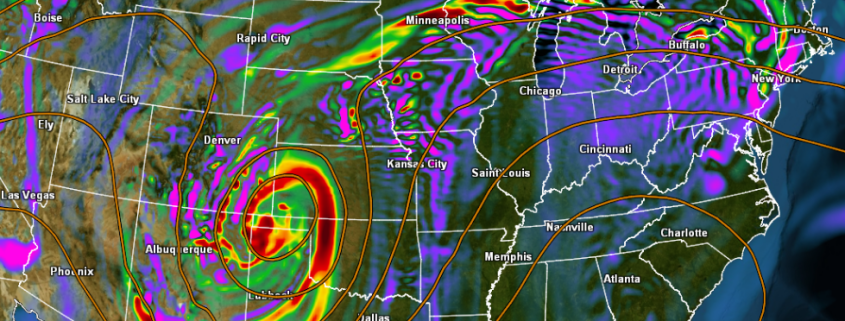
3.23 LR/AG: Active pattern with multiple severe weather chances

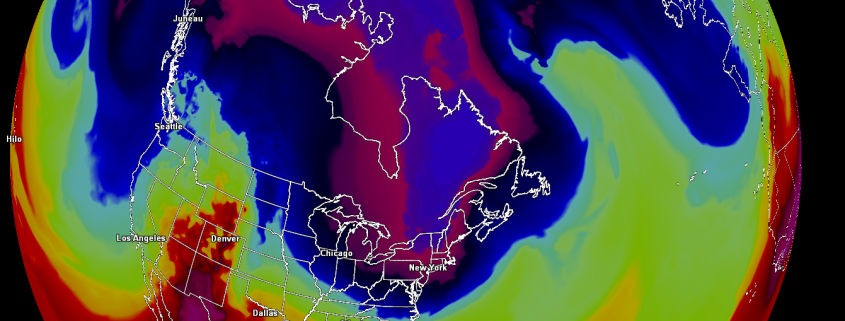
A happy Thursday evening to you all! We hope you’ve had a wonderful day and are sitting down to read and chat with us regarding the upcoming long range weather pattern. We’ve got a lot to cover and will do our best to lay it out in an understandable and explanatory format. For a few weeks now, our forecasters have been discussing a change to the atmospheric pattern across the Northern Hemisphere during the end of March. These changes are still likely to occur and will lead to a much different weather pattern than the one we’ve been observing over the past few weeks.

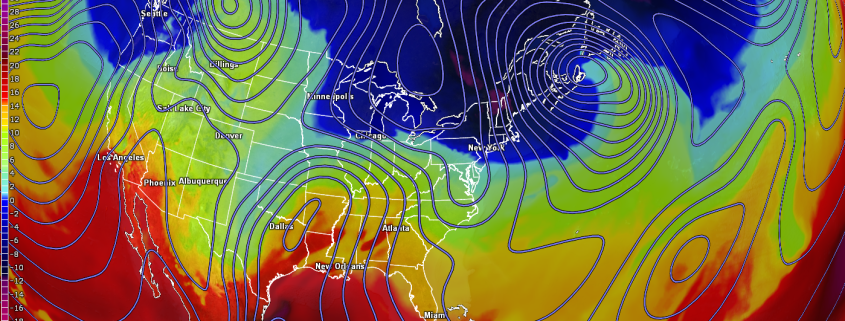
From early March up until today, the pattern over the Northern Hemisphere has been essentially altered by the presence of high latitude blocking. This is better defined as the presence of ridging, or “blocking” high pressures in the atmosphere across parts of Canada, Greenland, and the Arctic. These are critically important because they alter the atmospheric flow in those regions and dislodge cold air, usually bottled up north, further south into the USA. The presence of this blocking has resulted in a colder pattern, particularly across the Northeast, in March.

Things are about to change.

Read more

Public Analysis: The Wild Ride of Two Seasons Continues On

The wild roller coaster ride of temperatures that we are currently experiencing has taken another deep plunge-as promised. Though, this wild ride will continue as we make our way back up the tracks to much warmer temperatures by this weekend. The question is, will there be another rapid drop back down to winter-like temperatures? Find out below!

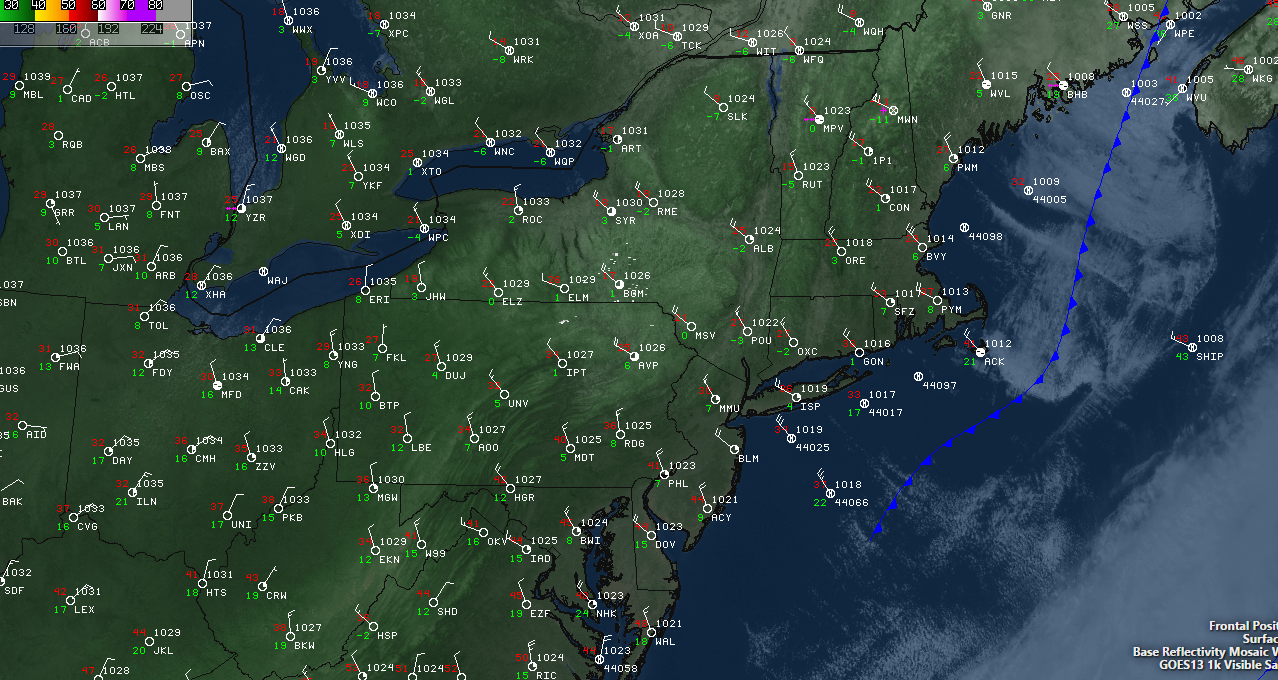
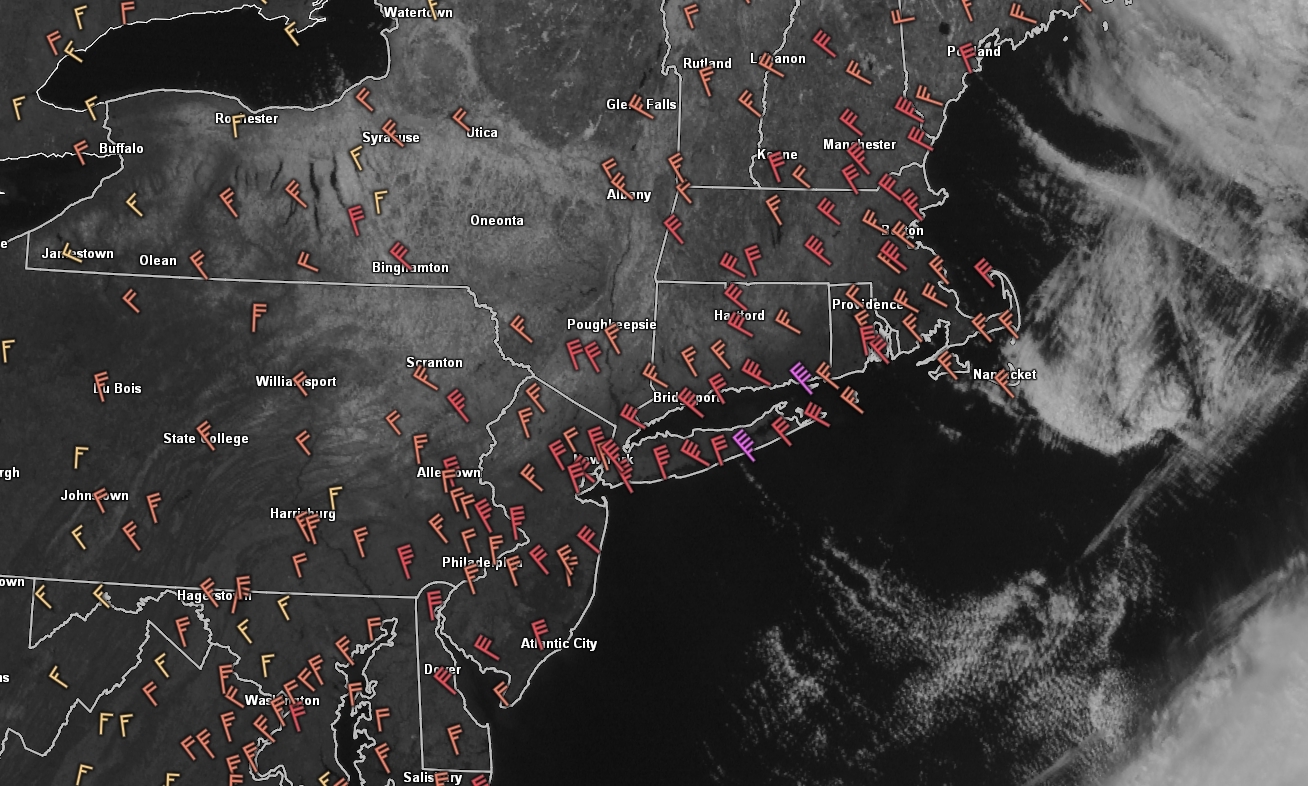
The brief warmer weather we saw earlier this week where temps made it into the 50’s just yesterday, was violently replaced with a fresh injection of Arctic air this morning. This Arctic airmass was ushered in by a strong cold front associated with a large and impressive high pressure system centered over Great Lakes region as of this afternoon. This has caused temps to plummet to the upper 20’s to mid 30’s across much of the area, with some locations in Southern New Jersey in the low 40’s. For the northern sections of the area, this is a good 20-25 degrees colder than it was yesterday. Things become even colder when you factor in the current wind chills across the area, which are ranging from the low 20’s, teens, and even single digits across some of the northern sections!

The aforementioned large area of high pressure and a deepening low pressure system over the Canadian maritimes and Nova Scotia are working together to create a tight pressure gradient over the Northeast-which is making for a very gusty afternoon. These gusts have been responsible for numerous reports of downed tree limbs, localized power outages, and even some delays at Newark and La Guardia airports. We anticipate wind gusts to remain in the 40-50 mph range for the rest of the afternoon, with some isolated gusts of up to 60 mph possible (especially along the shores of Long Island and Connecticut where tree and roof damage has been reported)  There is currently a Wind Advisory from the NWS in effect for the NYC Metro area until 6pm for the potential for downed tree limbs, some trees, and power lines.

As we continue through the afternoon, only streams of high clouds are expected as the atmosphere remains extremely dry, with the only source of moisture for clouds/precipitation being the Great Lakes. As we get closer to sunset, the winds will begin to settle down as the high pressure system starts to envelope the area. The combination of light winds, very cold upper levels of the atmosphere, and clear skies will lead to near-perfect conditions for what is called “radiational cooling”. Since the water vapor in clouds tend to trap heat quite efficiently, when we remove the clouds and wind, we allow the temperatures to “radiate” back into space since there is no longer a barrier holding them in. This means that tonight is going to be a very cold night for the entire area, with temperatures dropping into the teens and single-digits.

One thing to mention is that those who still have snow cover need to be extremely cautious of black ice tomorrow morning as any water from melted snow will quickly freeze this evening and potentially cause very slippery conditions tomorrow.

Latest surface observation, radar, visible satellite, and frontal positions over the Northeast this afternoon (Courtesy of Simuawips.com)

Latest surface observation, radar, visible satellite, and frontal positions over the Northeast this afternoon (Courtesy of Simuawips.com)

As we move into tomorrow, high pressure will be in control of the weather once again. Relatively clear skies and light winds will be likely across the entire area for yet another day. Thursday shouldn’t be as cold as it was today as we should see highs in the upper 30’s and lower 40’s across most of the area just ahead of a building upper-level ridge. Later in the day and into tomorrow evening, some high clouds should begin to move in ahead of a warm front that will be situated over the Ohio Valley. Lows should still be cool Thursday night, with temperatures hanging into the mid to upper 30’s across most of the area.

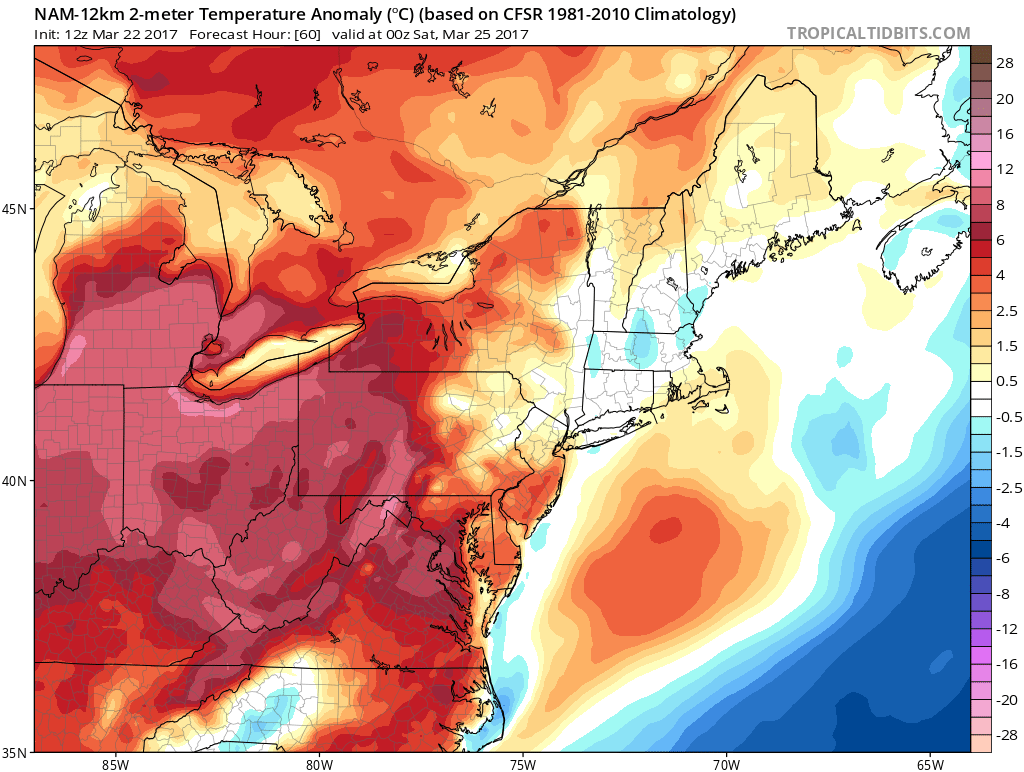
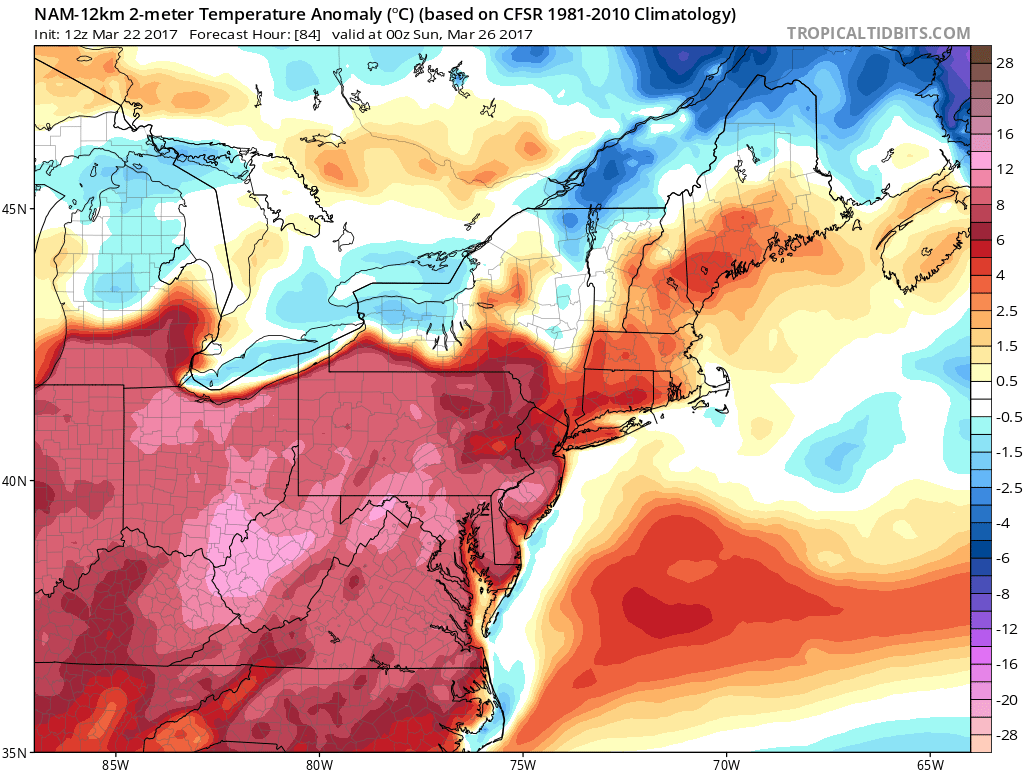
As the ridging that we mentioned earlier begins to build in on Friday, the high pressure that has been in control for today and tomorrow will begin to exit off to the east. Once off the Mid Atlantic coast, this will allow winds from the southwest to move in and usher in a warmer and more moist airmass. Just ahead of this airmass will be a weak warm front that has the potential to bring some light precipitation to the area in the morning hours. There is the possibility that some of the northern locations and higher elevations may possibly see a mix of wintry precipitation in the form of freezing rain and sleet. Otherwise, Friday should be a more seasonable end to the work week as we clear out, and temperatures reach the upper 40’s to mid 50’s by the afternoon hours.

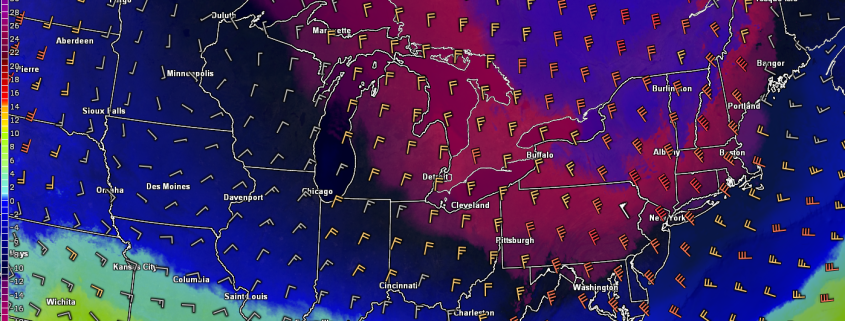
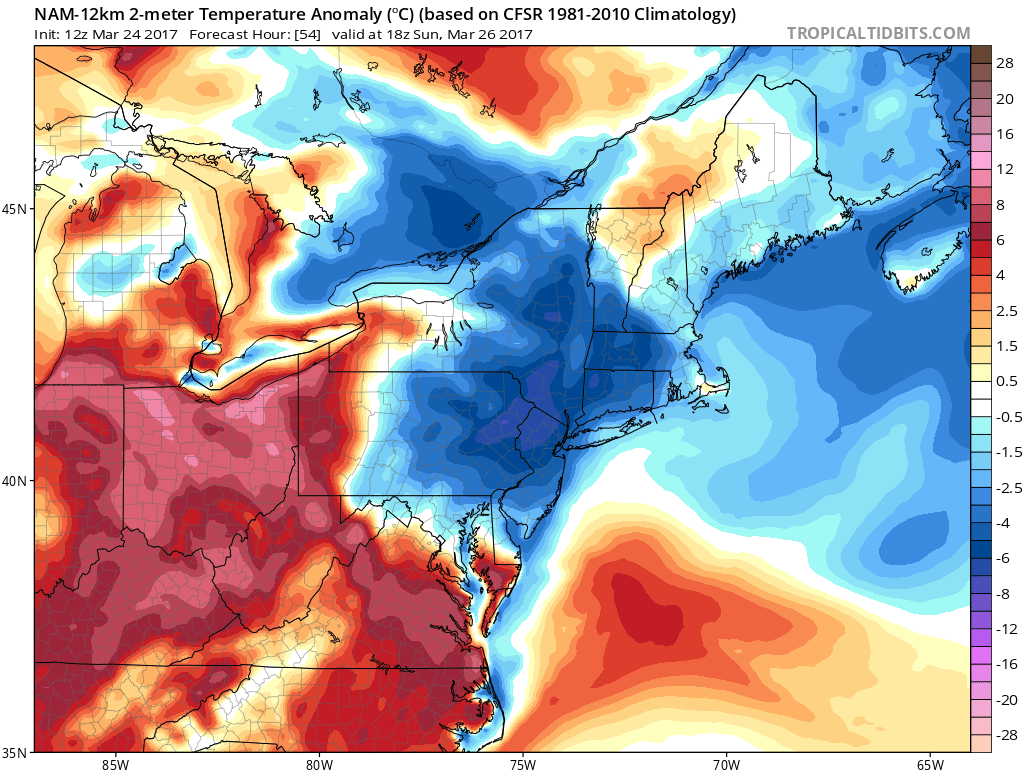
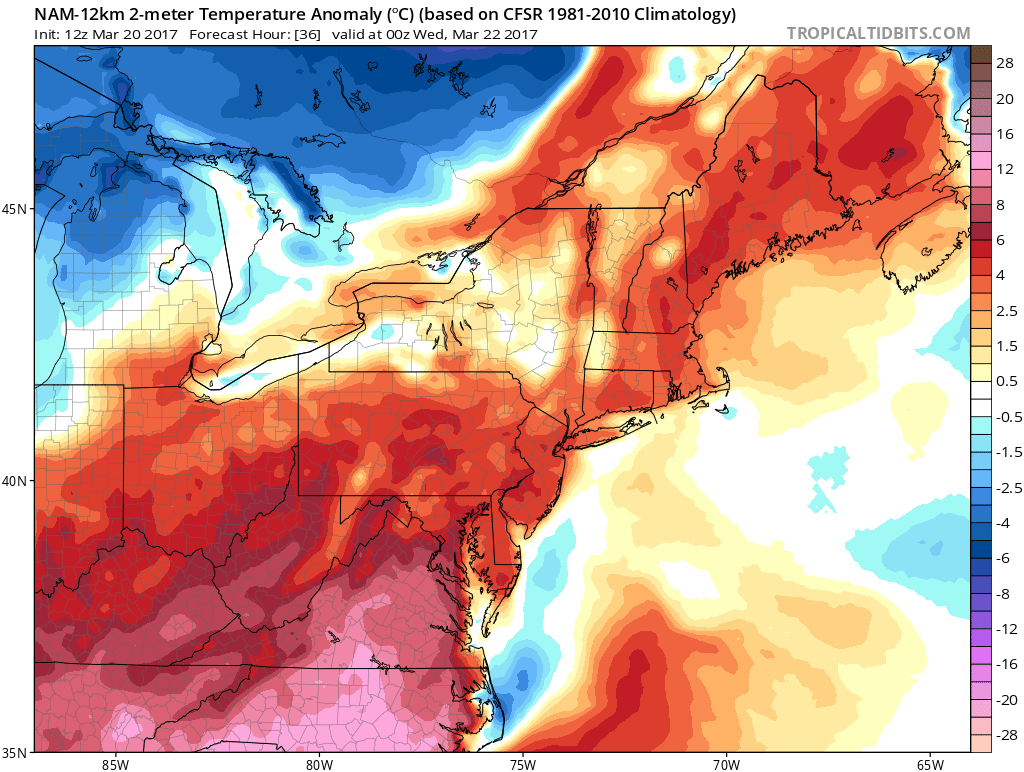
12z NAM 2-meter temperature anomaly showing much more seasonable temperatures across the area by Friday afternoon with warmer air on the way (Valid 8pm Friday)

12z NAM 2-meter temperature anomaly showing much more seasonable temperatures across the area by Friday afternoon with warmer air on the way (Valid 8pm Friday)

By Saturday much warmer conditions are expected as the warm front begins to lift across our region, with winds from the southwest reinforcing the warm air from the much colder temperatures just to the north. With just a few clouds likely and light winds across the area, highs should have no problem getting into the upper 50’s and middle 60’s-with some locations in Southern and Central NJ possibly seeing temperatures rise into the 70’s! By this time, most locations could see temperatures as much as 12 degrees above normal, which will be an amazing contrast to today (Wednesday) 

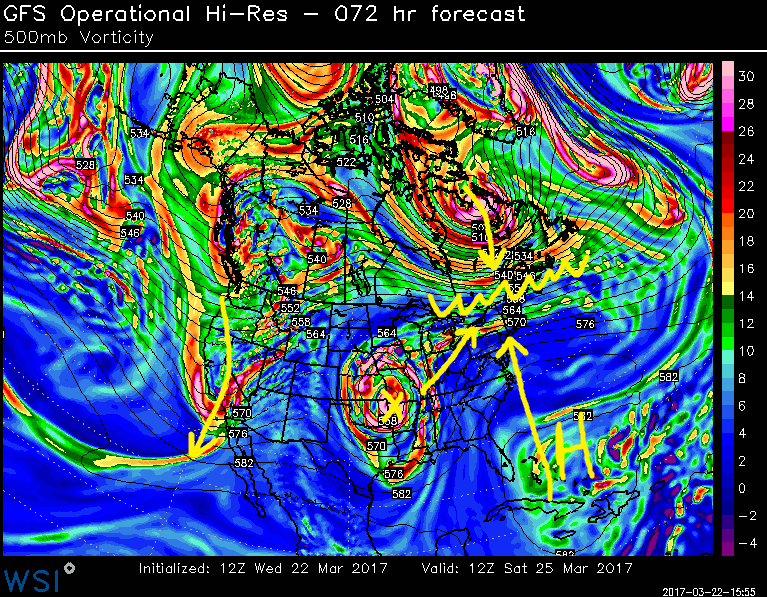
Back on Monday we mentioned the potential for some wintry weather across the area this weekend as a complex situation involving a cutoff low in the Central US, a large upper-level ridge over the East, and another upper-level system in Canada. I mentioned how the upper level system in Canada would have to be able to “press” down hard enough on the ridge over the east coast to create “confluence” that would block the storm system in the Plains from cutting to our west. As of this afternoon, it appears that the upper level system in Canada will not be able to force the confluence far enough south to keep the storm system from cutting to our west through the Ohio Valley on Sunday/Monday. When this low passes to the west of the area, warm air from the mid levels of the atmosphere will surge north and prevent any snow from falling, but with colder air in the lower levels, it is *possible* that some locations in Pennsylvania, Southeast NY, Northern NJ, and New England see some sleet or freezing rain at some point. For now, New York City and points south look to remain all rain. Again, there is still some uncertainty here, so make sure to check back for updates!

12z GFS 500mb map showing the different pieces that have to come together for a very light wintry event for portions of the Northeast (confluence marked by the wavy line)

12z GFS 500mb map showing the different pieces that have to come together for a very light wintry event for portions of the Northeast (confluence marked by the wavy line)

This system will exit the region with more clearing expected by Monday night. Temperatures may warm up again later next week if ridging builds into the Northeast US as some models indicate. However an active pacific jet could keep weather conditions more unsettled over the entire region, with the possibility of one or two more cool shots.

We will continue to monitor this system throughout the rest of this week, so make sure to stay tuned for future updates. Again at this time, we do not feel there is support for significant wintry precipitation this weekend, especially closer to the coast.

For more information and posts like this one, make sure you sign up for Zone Forecasts — where multiple detailed articles, videos, and interactives are posted each day. Also, come interact with our staff and many other weather enthusiasts at 33andrain.com!

Have a great day!


Steve Copertino
Public Analysis: A Tale of Two Seasons This Week

Astronomical Spring has finally arrived even though meteorological Spring has been here since March 1st. The only difference between the two is that meteorological Spring is based on the division of our calendar into four separate seasons, each having three months in each season. This makes it easier for observations and the ability to compare things like seasonal statistics. Astronomical Spring (or the Vernal equinox) is determined by the 23.5 degree tilt of the Earth’s rotational axis in relation to the Earth’s orbit around the sun.

Regardless, today has been mostly sunny across the entire New York Metro area with a few high clouds noted on the latest visible satellite imagery. Temperatures have been able to rise in the high 40’s and lower 50’s across much of the area, which is right around normal for this time of the year-if not a few degrees below normal. Winds are generally calm across the area, but portions of NJ, NYC, and Long Island are seeing some winds in the 10-15 mph range with higher gusts, which are bringing wind-chills into the low 40’s in some locations, so we’re not feeling the Spring weather just yet. As we move on throughout the rest of the day, predominantly clear skies will be commonplace over the area as we await the arrival of a weak frontal system that it currently situated over the Ohio Valley.

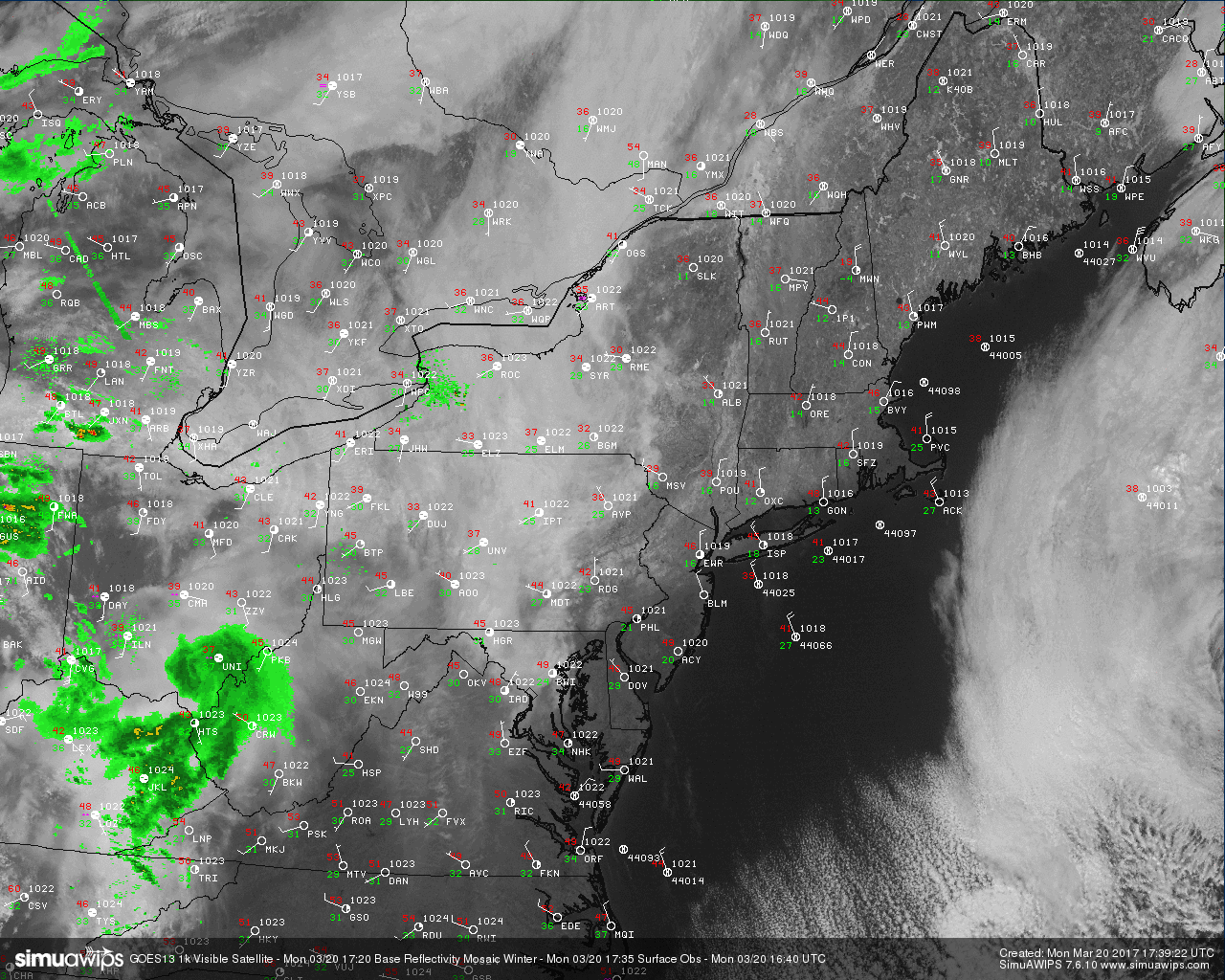
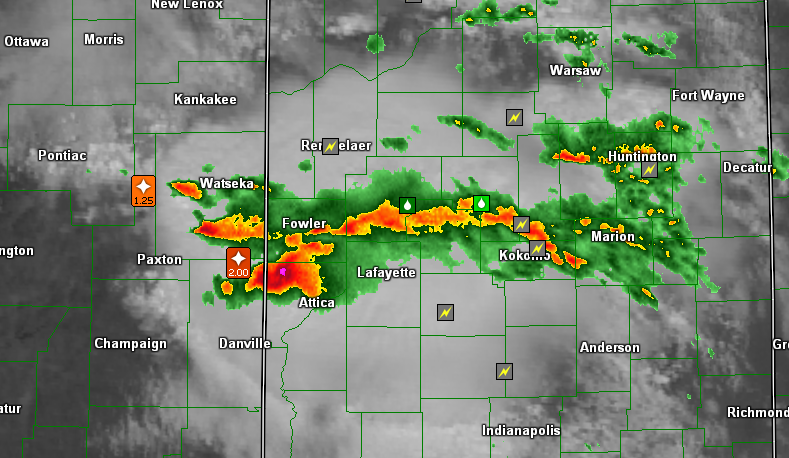
Current visible satellite, surface observations, and regional radar composite for the Northeast US (Courtesy of Simuawips.com)

Current visible satellite, surface observations, and regional radar composite for the Northeast US (Courtesy of Simuawips.com)

This weak frontal system is currently over Indiana, producing some strong showers and thunderstorms which have dropped hail up to 2″ in diameter as they track to the south-east. This area of showers, in conjunction with a very weak mid-level system located southeastern Canada will work towards our area later this evening. While the main area of stronger thunderstorms will die-off quite quickly as they move into a stable airmass, the associated showers and cloudy weather will begin to take over during the overnight hours.

With increasing cloud cover, temperatures will likely struggle to get lower than the mid 30’s to low 40’s for this evening’s low temperatures across the area. This afternoon’s computer model guidance has the bulk of the shower activity from these systems remaining to the south west of the NYC area as a very weak area of low pressure forms along the frontal system that will push through the region tomorrow morning.

After some limited light showers and clouds initially, Tuesday afternoon should clear up quite nicely as winds from the northwest (moving over deep snowpack in NY and PA) usher in drier air. Temperatures should be able to rebound quite quickly tomorrow into the lower to middle 50’s across much of the area by late afternoon, which will be a few degrees above normal.

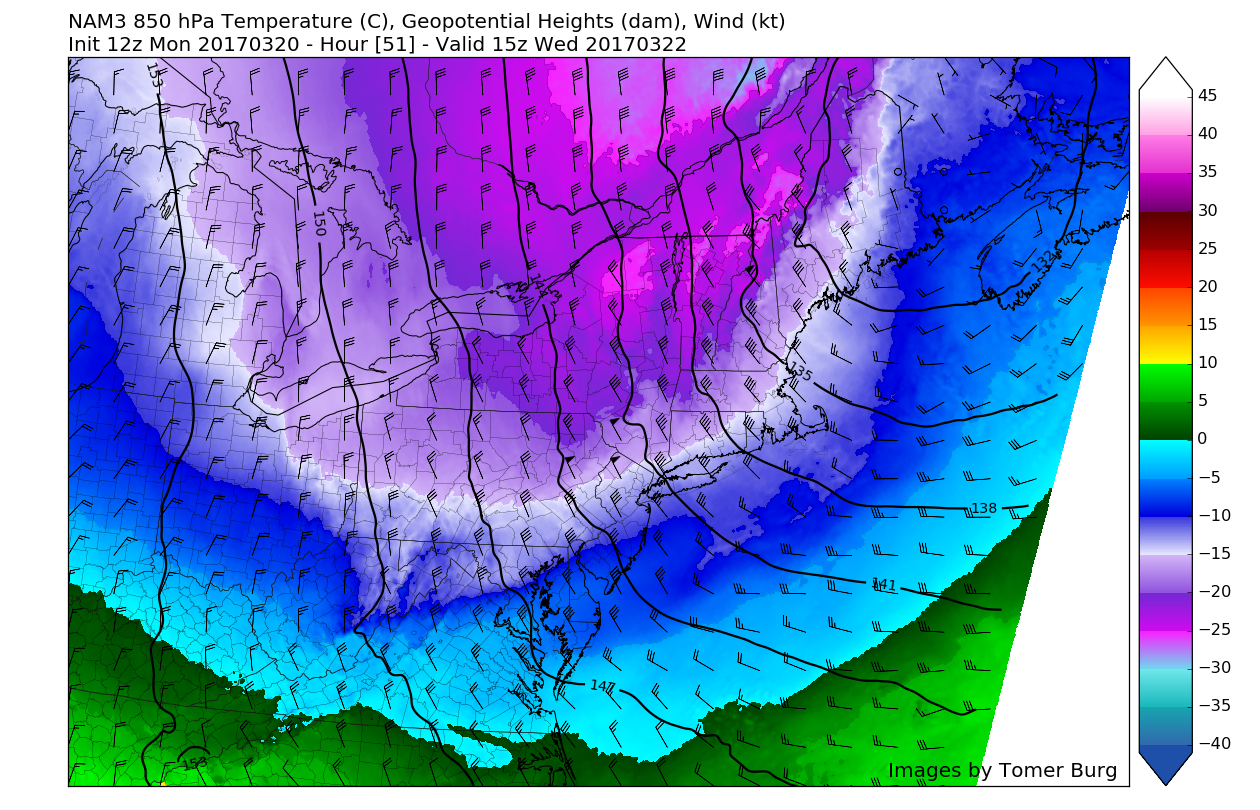
This above-normal air mass will be very short-lived as a stronger cold front associated with a large area of high pressure centered in Canada will slowly make its way towards the Northeast. By Wednesday morning this cold front will be situated right to the north west of the metro area, with winds from the NW steadily increasing. Once the front passes, temperatures will likely struggle to push out of the 30’s across the entire area, with gusty winds making it feel like its even colder in most locations.

3km NAM model showing the strong cold front and its associated winds and temperatures at 850mb or 5,000 feet in the atmosphere.

3km NAM model showing the strong cold front and its associated winds and temperatures at 850mb or 5,000 feet in the atmosphere.

Temperatures should remain 10-15 degrees below normal until at least Thursday, before a large ridge begins to build over the central part of the country and begins to head east. This ridge could possibly bring temperatures back to normal or even back to above-normal conditions by this weekend. However, we are monitoring the *potential* for some possible wintry precipitation across the northern sections of the area this weekend as a very delicate and complicated pattern takes shape.

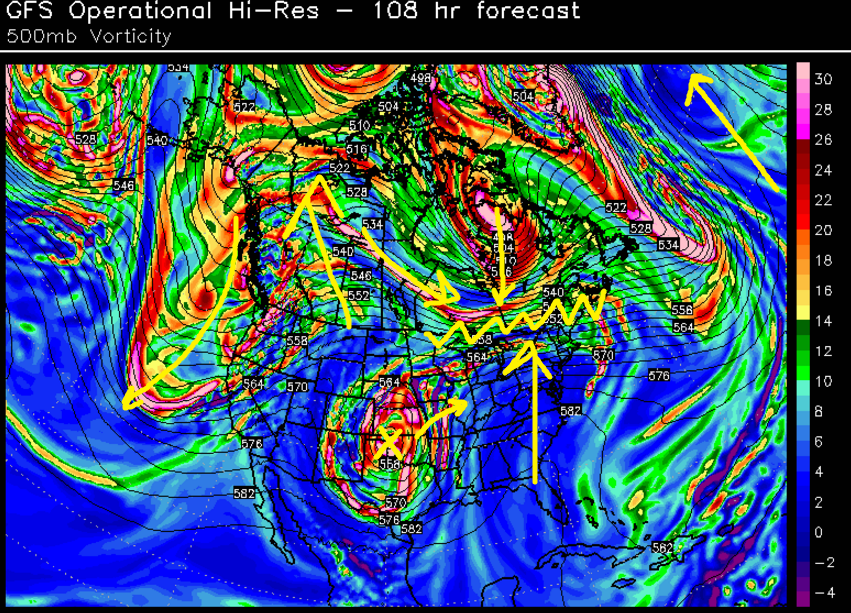
The models at least agree on a cutoff low pressure system developing over the US Plains states by Friday afternoon with a large ridge of high pressure situated over the Southeastern states. With another upper-level system in Canada pressing down on the upper level ridge to its south, this setup would create “confluence” to our north, which would essentially limit the storm system in the Plains from cutting through the Great Lakes like these types of systems usually tend to do. Instead, with a large and cold high to the north, the storm would have the potential to stay underneath that high pressure and track more eastward. While it is getting very late in the season, this setup does have the potential to produce a redeveloping low pressure system off the Mid-Atlantic coast as the initial cutoff low transfers its energy.

500mb map from the GFS showing a very complex situation developing for this weekend regarding any chance for wintry precipitation

500mb map from the GFS showing a very complex situation developing for this weekend regarding any chance for wintry precipitation

We will continue to monitor this system throughout this week, so make sure to stay tuned for future updates. However at this time, we do not feel there is a lot of support for significant wintry precipitation this weekend, especially closer to the coast.

For more information and posts like this one, make sure you sign up for Zone Forecasts — where multiple detailed articles, videos, and interactives are posted each day. Also, come interact with our staff and many other weather enthusiasts at 33andrain.com!

Have a great evening!


Steve Copertino