Building ridge will bring heat, severe wx chances through July

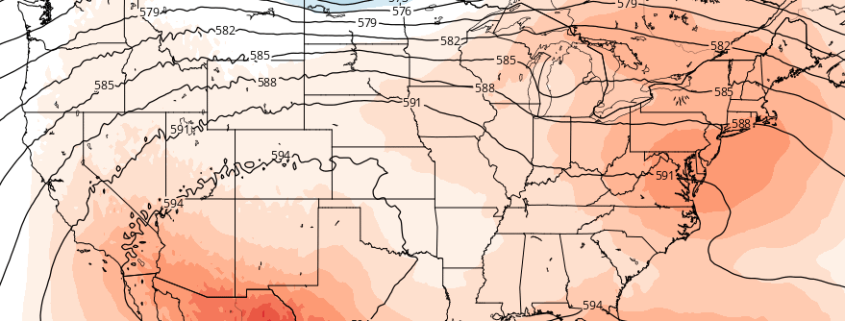
Within a pattern which has been well discussed for a week or more, changes are afoot during the middle to latter part of this week. The troughing and cooler air, which had become a mainstay over the Northeast US over the past several weeks, will be replaced by increased atmospheric ridging. Warmer air and heat, with temperatures over 90 F, is expected to push into the area by the middle part of this week, and last through the weekend.

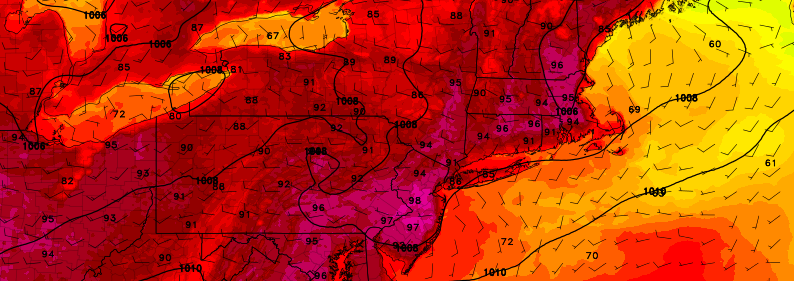
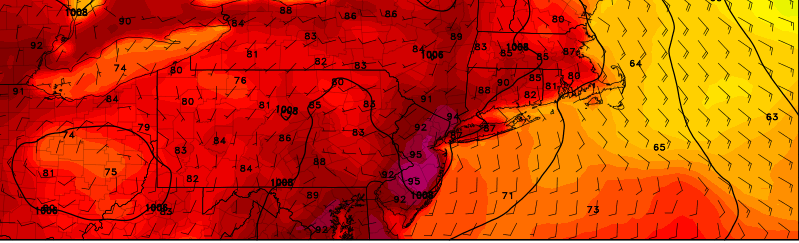
This airmass will be marked by mid level temperatures warming up quite dramatically. Temperatures at the 850mb level, or 5000 feet above the ground, will warm to 20 C or above – often times the “demarcation line” for a heatwave in this part of the country. On both Wednesday and Thursday, 850mb temperatures will approach or exceed this 20 C threshold over parts of the area, and not surprisingly forecast models have indicated temperatures in the mid 90’s on both days.
Read more

Tuesday Overview: After rain, heat builds this week

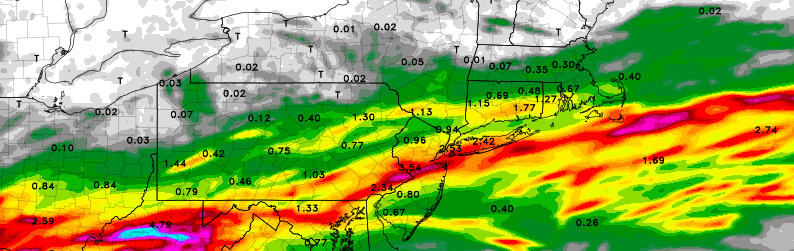
We hope you had a great July 4th weekend! The weather cooperated for most part for outdoor activities over the holiday weekend. But rain with a wave of low pressure moved into the region overnight. Some areas received 0.50″ to 1.50″ of rainfall including parts of Central NJ, NYC and Long Island. Which will only put a small dent in moderate drought conditions in the area. Other areas, especially further north have seen much lighter rainfall.

Rain is now ending from west to east over the region this morning. A ridge building over region will cause skies clear for more sunshine this afternoon. Temperature will rise into in the middle to upper 80s. Humidity levels will remain high. Thus, there is slight chance that that a shower or thunderstorm could still pop up around the region later this afternoon or early evening. However, the ridge will continue build with hotter and humid conditions likely for the rest of the week. Some thunderstorms may also be around as well. Here are some highlights for later this week:

Read more

Major rains possible through Tuesday, may impact fireworks

A well advertised frontal boundary, and associated low pressure system, are forecast to move toward the area from Monday Night into Tuesday — and it may impact fireworks displays. While forecast models have fluctuated a bit with the exact placement of the storm system, the overall signal for heavy rainfall potential has been quite strong. Over the past 24 hours, models have come into further focus in regards to the eventual evolution of the storm system in our area.

A large plume of moisture will move northward through the Southeast States, eventually meeting up with a very pronounced frontal boundary and temperature/pressure gradient from the Ohio Valley into the Mid Atlantic states. Meanwhile, a disturbance moving along this gradient will provide ample lift for precipitation to develop. The juxtaposition of these features will lead to steady rainfall, spreading from the Ohio Valley to the Mid Atlantic on Monday.

Read more

Premium: More heat, storm chances on the horizon

The atmospheric pattern so far, for the majority of Spring and now into the first week or two of calendar summer, has been a bit of an enigma. There have been transient bouts of warmth, with showers and thunderstorms, but cooler periods have followed. For the most part, our area has avoided widespread or organized severe weather events as well. Over the next few weeks, that pattern looks to slowly undergo some changes.

While these changes aren’t expected to be sudden or dramatic, the gradual transition will certainly have an impact on the weather that our local area experiences. In todays premium post, we break down what is driving the changes to the pattern, how we anticipate it will evolve, and what the effects on our sensible weather will be — including temperatures, precipitation, and hazardous weather opportunities.

Since the Spring, the pattern has been dominated by a recurring theme of troughiness in Southeast Canada. While ridging has become established over the Central United States, at times, higher latitude blocking — and, often times, an amplified northern jet stream — has allowed for troughs in Southeast Canada to impede the northward extension of that ridging.

Read more