Rain and wind likely Sunday, winter arrives next week

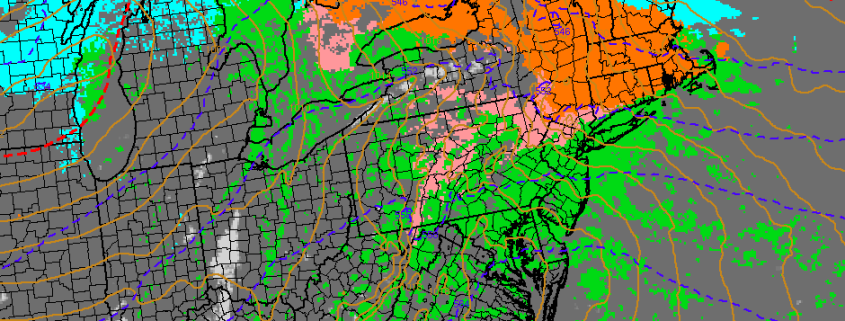
High pressure over Eastern Quebec will cause cold air damming over the region tonight, with cold air funneling toward our area. A mid level shortwave and weak warm front are on their way by Saturday morning, however, with the first light round of precipitation ahead of a significant storm system.  As this disturbance approaches our area, some very light snow, sleet, and freezing rain is expected across the interior and higher elevations. Temperatures there will be hovering below or near freezing — causing the potential for slick roads.

A deepening storm tracking over the Eastern Great Lakes will send a stronger warm front — and then  a cold front — through the region late Saturday night and Sunday. Lifting will be aided by a strengthening southeasterly low-level jet and precipitable water values between 1.00 to 1.50″.  This will cause periods of rain starting late Saturday night, becoming heavy at times during Sunday morning and early afternoon.  An isolated thunderstorm can’t be ruled with elevated instability.
Read more

Does the tropospheric pattern change have staying power?

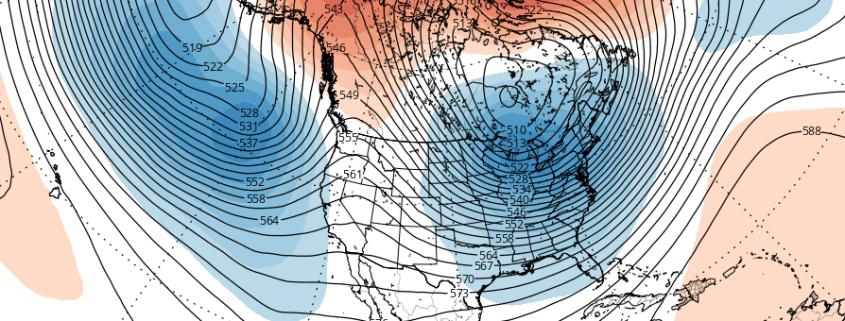
Winter has arrived. The first shot of arctic air in the young winter season will arrive this week — and it will be brutal, with temperatures in the single digits and teens on both Monday and Tuesday. This cold air will be short-lived, however, as temperatures will warm to above average late this week, as a mid and upper level atmospheric ridge starts to build back over the Eastern US.

Subtropical jet disturbances will be ejecting out of the Southwest United States later this week as the pattern ramps up in activity. The first of these disturbance arrives Friday and Saturday. At the surface, the primary low tracks into the Great Lakes region, while another secondary low forms over the Mid-Atlantic. A warm antecedent airmass and a lack of high latitude blocking should put a serious cap on any wintry weather potential; although some frozen precipitation remains possible in the far interior and higher elevations.

Read more

Interior wintry weather expected on Tuesday morning

Skies will remain mostly cloudy through this afternoon and evening, as a cold front approaches from the northwest. Despite the cloudcover, a deep west-southwest flow will help temperatures will rise into the lower to middle 60s. A cold front will slowly move through the region with some scattered showers late this afternoon and early tonight. Precipitable water values near 1.25 to 1.50″ could support some heavy downpours with these showers.

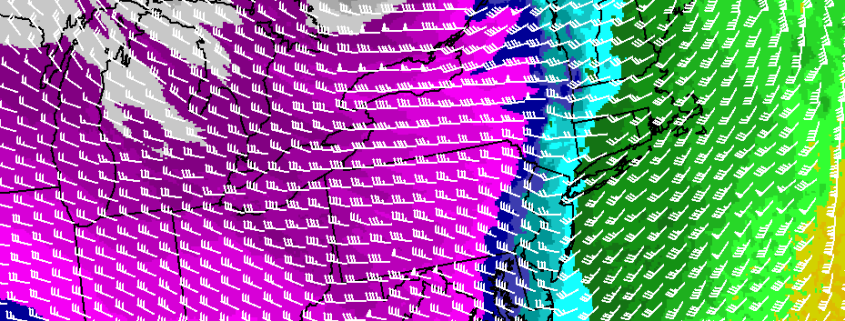
A much colder airmass will follow behind this front late tonight and tomorrow, as a strong Canadian high pressure starts to build into the Northeast. Temperatures will drop into 30s for most areas by dawn. Cold air will continue to advect into region during the day tomorrow, on light north to northeast winds. Model soundings indicate mixing to 900mb-925mb where temperatures are -6C to -8C. Despite some sunshine, temperatures will slowly rise into the upper 30s to lower 40s for highs tomorrow afternoon. These temperatures are seasonal for this time of year.

Read more

Long Range: Winter is Coming…January Pattern Change Details

So far this winter has been mild here with historic warmth. We released a previous premium article stating the reasons why. This is still in much dismay of snow-lovers, while a blessing to many others. But we’ve been discussing a pattern change here for January for a while, and now it appears that some parts of that pattern change are coming together a little sooner than we thought. Some of the climate patterns we discussed are going through major changes.

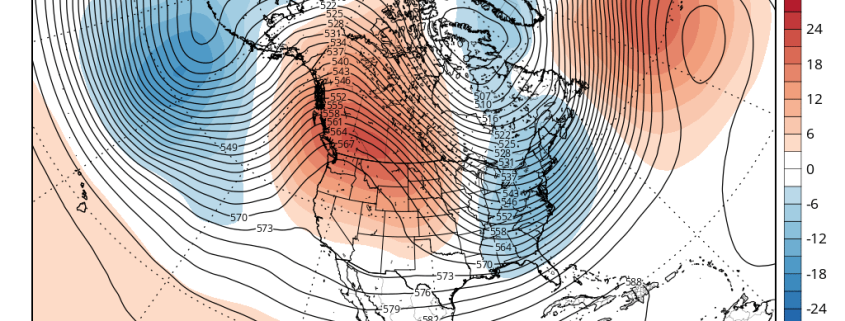
The pattern change will begin with the development of a large ridge over Scandinavia next week. This ridge builds into a very strong, anomalous ridge over the Barents/Kara Sea next weekend. Meanwhile a deep low/trough near the Aleutians causes another large ridge develop over Western Canada. Both ridges cause the polar vortex over the high-latitudes to begin elongating or splitting, from northwest to southeast. These changes will cause the AO to fall into the negative phase and the PNA to rise into the positive phase. This process results in a large trough with seasonably cold temperatures over the Eastern US shortly after New Year’s Day.

Read more