The Importance of High Latitude Blocking in The Upcoming Winter

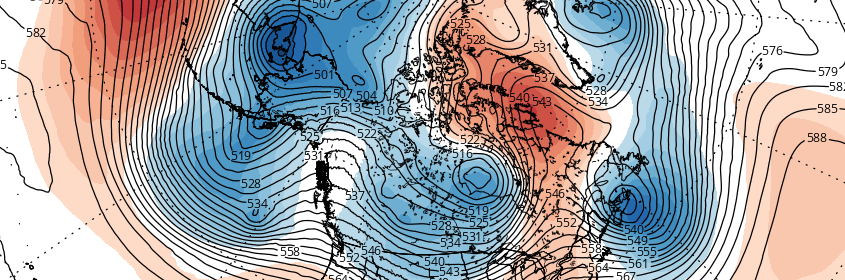
In our winter forecast, we discussed certain signals that supported high-latitude blocking developing for the middle and late periods of this upcoming winter. High-latitude blocking often comes with negative phases of the North Atlantic Oscillation (NAO), the Artic Oscillation (AO), and/or the Eastern Pacific Oscillation (EPO). High-latitude blocking is one most important factors in any winter forecast, as it typically supports colder temperatures and larger snowstorms for the Northeast US. This is an even more important factor in during a strong El Nino winter, as the Pacific or Subtropical jet is generally more active and stronger.

Research from Al Marinaro (@wxmidwest ) brought to light a strong correlation between the sea-level pressures in North Pacific and the NAO modality, during +ENSO (El Nino) winters. North Pacific sea-level pressures less than 1013 mb had a -NAO value on average for the December, January, February, and March period (DJFM). Sea-level pressures above 1013 mb during the month of October had either a positive NAO value or very close to netrual in the following winter. An official pressure for North Pacific reading has not been released for October yet. However, NCEP/NCAR reanalysis tells us that sea-level pressures were on average around 1010 mb over the region 65N-30 & 160E-140W in the North Pacific. That would be well-below the 1013mb threshold for a -NAO DJFM.
Read more

Monitoring the Stratosphere in November

Well, we’d be wrong not to mention that we are all rejuvenating from releasing our winter forecast for 2015-16. We hoped you all enjoyed reading it –whether or not it was what you were hoping to hear. It took a lot of collaboration, research, and efforts between all of us here to put it together.

In the upcoming days, we plan for a series of technical posts for our premium subscribers to explore more on important topics from the winter forecast. For this post,  we discuss more about Stratospheric Warming.

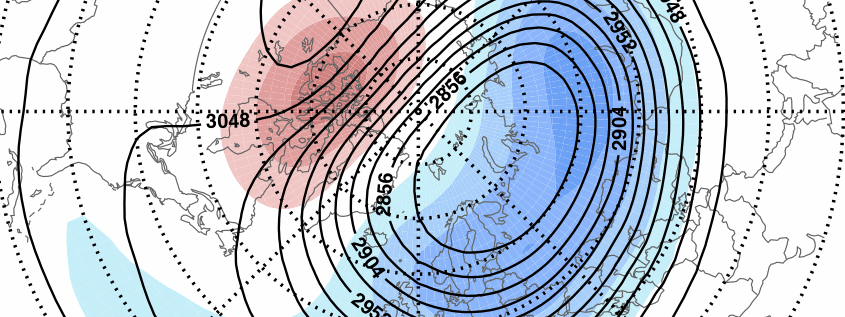
There’s been a high volume of discussion within the weather community regarding snow cover extent over Eurasia, and it’s potential foreshadowing of Sudden Stratospheric Warming (SSW) events, which may be correlated to a negative Artic Oscillation phase (-AO), 2 to 3 weeks thereafter.  According to the automated graph below, snow cover is now expanding and running close to 2009 at this time. As some of you may already know, the winter following that was featured colder than normal temperatures with above normal snowfall for December; and then same again in February. We also had a minor stratospheric warming in event in November, before a major SSW later in January and February.

Read more

November 2015 Outlook: Above Average Temperatures Likely

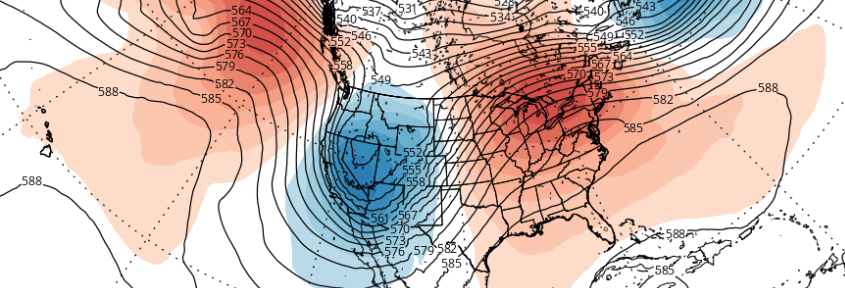
It’s that time of Autumn again, where weather enthusiasts start looking into the longer range forecasts for  telleconnections, pattern changes, and the first chance of snowfall; while everyone else who dreads winter will start shopping for new coats, boots and shovels. For now, it’s snow haters rejoice: It appears there will be very little wintry weather through most, if not all, of November.

Read more

The rise and return of a strengthening El Nino

El Nino has arrived, and it continues to strengthen, with increasing potential to become a powerhouse by Autumn and Winter.

Computer models and meteorologists are growing more confident that a strong El Nino will develop by this Autumn and Winter, with some computer modeling even suggesting that it could rival the 1997-98 “Super El Nino” which remains the strongest on record.

El Nino refers to the periodic warming of waters in the central and eastern Equatorial Pacific, which has a cascading effect on weather systems around the globe. In normal years, the atmospheric circulation allows trade winds to converge around the equator in the Pacific, blowing from east to west. But this year, trade winds are pushing in the opposite direction, bursting from west to east. This helps transport warmer waters, which typically lie in the Western Pacific, farther east — and dramatically changes the atmospheric circulation.

Read more