Importance of the North Pacific Pattern in Autumn

As we progress deeper into the autumn season, many are beginning to wonder if the upcoming cold pattern is a precursor to the type of winter that we will see. Unfortunately, it is not as easy as cold October yields cold winter or warm October yields warm winter. If that were the case, we’d have long range forecasting figured out by now and there would be no need for winter outlooks, as the winter would be set in stone by the end of October. The best we have are correlations, analogs, physical pattern drivers, and pattern persistence. When added together, the summation of these various factors provide a higher probability of success in medium to long range forecasting, but these methods are far from perfect. With that being said, the evolution of different atmospheric oscillations during the autumn season can give us a substantial clue as to the ensuing winter’s dominant index modalities.

In this particular case, let’s examine the autumn north pacific pattern of years since 1990, giving us a sample size of 22 years (we would have to wait through this winter to see if 2013′s correlation holds up). The north pacific pattern is often represented as the East Pacific Oscillation (EPO). Like the North Atlantic Oscillation, the EPO has certain, generally predictable outcomes when it oscillates from positive to negative phases. The positive phase of the EPO is usually associated with lower than normal heights across the northeastern Pacific, much of Alaska, and northwestern Canada. Conversely, the negative phase of the EPO generally produces higher than normal heights over the region just described. The positive (+EPO) tends to flood the United States with maritime pacific air due to the low pressure around Alaska, while the negative (-EPO) acts as a block to maritime pacific air due to high pressure over the NE Pacific/Alaska. The -EPO often sets up a cross polar flow with high pressure centered over Alaska and the flow oriented across the north pole from Siberia into Canada. The -EPO pattern has yielded some of most impressive, severe arctic outbreaks on record. The upcoming 10-15 days, for example, will be colder than normal in the East primarily due to the forcing from the negative EPO signal in the northeast Pacific. There’s not much blocking in the north Atlantic or arctic regions, so the main impetus for this cold through November 5th is the -EPO.

Read more

Forecast: Gorgeous, crisp fall weekend behind front

Warmer and unsettled weather which affected the area late this week is on the way out, being pushed away by a cold front which pushed through the region Thursday Night. The first in a series of expected cold fronts through late next week, cooler and less humid air will spill into the region by Friday afternoon. Luckily, along with the cooler air will come pleasant conditions with clearing skies and light westerly winds. This weekends weather will be characterized by plenty of sunshine, and temperatures topping out in the upper 60s. As it looks now, another gem on a long running list of great weekends which stretched back to September.

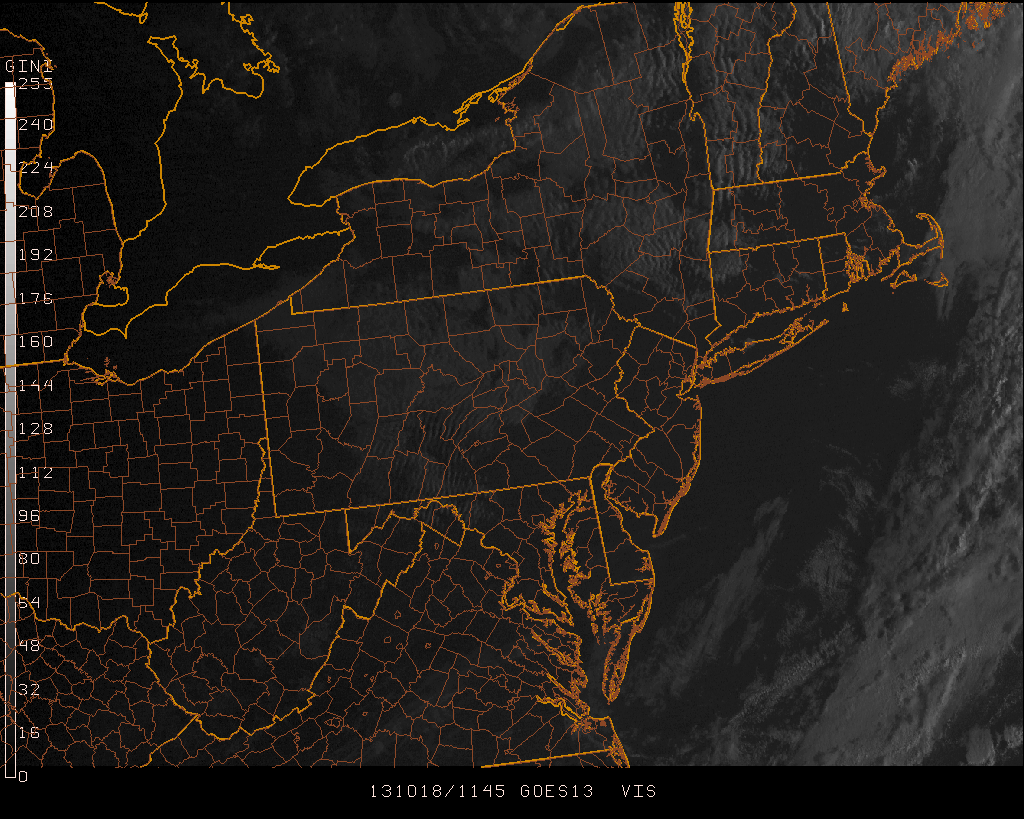
Visible satellite imagery from the morning of October 18th, 2013 showing improving conditions behind a cold front.

Visible satellite imagery from the morning of October 18th, 2013 showing improving conditions behind a cold front.

Read more

Update: October NAO and what it means for winter

As we have alluded to in previous articles, the weather pattern across the globe is currently undergoing changes. A lot of this has to do with recurving Typhoon Wipha, as the large storm generated a trigger to produce a large ridge ahead of it. This helps to create a more amplified pattern, slowing things down. A slower global pattern is what tends to lead to more blocking, and the blocking that we are seeing this month could be a very important player as we head towards winter.

The reason it’s important is because there is a significant correlation — especially recently — between a -NAO in October and a -NAO during the following winter. One reason among many for this is because a -NAO pattern will often establish itself in October, relax a bit during November, and then re-establish itself during the winter. Our previous article highlights the detailed research and correlations, which will help you contextualize what is being written in this article.

The prudent question to ask now would be how the NAO has been doing so far, and if it will stay negative for the rest of the month.

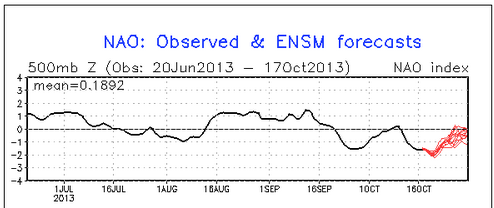
The NAO has been negative this month, and should continue to remain negative for the rest of the month.

The NAO has been negative this month, and should continue to remain negative for the rest of the month. The black line represents the observed values, and the red lines represent the forecast values from the GFS ensembles.

Read more

Fall foliage peaking in the Northeast this week

The middle of October is always a beautiful time throughout much of New England, and even down farther south into our area of the Northern Mid Atlantic. Although fall foliage season is always changing a bit, this year has featured a pretty average progression of fall colors. The ongoing lack of precipitation in our area may have delayed the colors slightly, but moderate color is working down towards the coast as of the middle of October. High and peak colors have worked into the area suburbs.

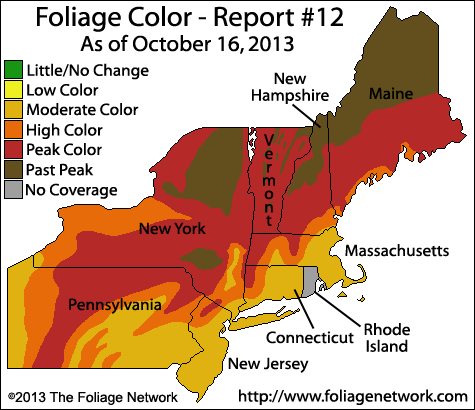
Foliage report from October 16th, 2013. Courtesy The Foliage Network.

Foliage report from October 16th, 2013. Courtesy The Foliage Network.

Read more