What the QBO and the sun can tell us about the winter ahead

Take a deep breath — sit back, and relax. You are about to read our first post detailing some early thoughts for the Winter of 2017-2018. August is a bit of an odd time for it, we know. Not every year offers the opportunity to discuss the road to the winter ahead during the month of August. Some years require patience until September or October before we can start discussing early signals with confidence. This year, however, we’re seeing important signs for the cold season already as we speak.

This afternoon, we’re going to take a very early look at some of the significant changes that have occurred all around us since the end of last winter. It’s true — in the time between the day the last snowflake fell in the Northeast states and today, there have been significant changes throughout the atmosphere, in the oceans, and even in the patterns of energy emanating from the sun. All of these things will impact the winter ahead — so lets dive in to what we’re observing so far.
Read more

Premium Long Range: Cooler, Active Pattern Next Week…More Changes Late Month?

Good morning! More summer-like weather with more heat and humidity will continue for the rest of the week,with some scattered showers and thunderstorms possible each afternoon or evening. But it appears the Western Hemispheric pattern will undergo another more significant changes to support some cooler weather again for next week.

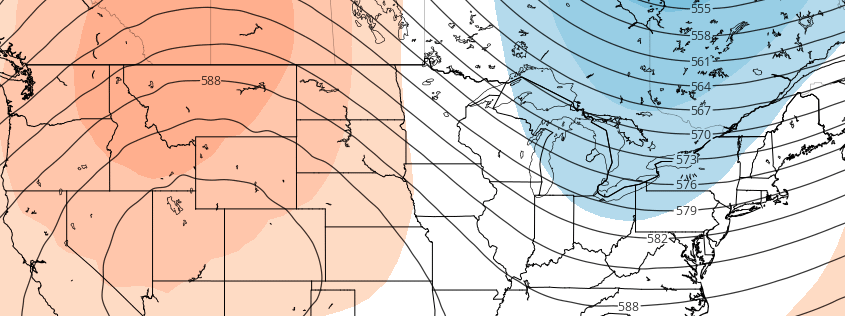
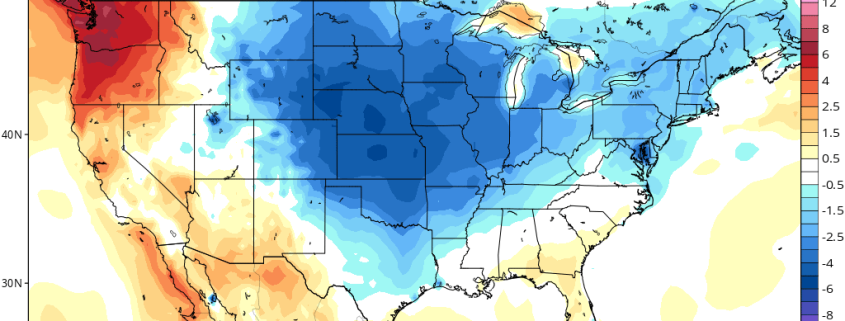
First changes, will start occurring over North Pacific as usual this week. An upper-level low will be near the Aleutian Islands or Southwest Alaska. This will cause a high-amplitude ridge to build over the West Coast by early next week. This will result in a larger trough digging and encompassing much of the Central and Eastern US over for next week.  Then cooler airmasses from Canada will be invading the CONUS, with temperatures well below over the much of the Northern and Central Plains and into parts of Great Lakes and Ohio Valley.

Read more

Premium Long Range: A Look at the Western Hemispheric Pattern and Tropics in August

Late last week, we saw our second heat wave of the summer over many parts of the Northeast and Mid-Atlantic region. It may have appeared to some people, that may be we have turned the tide toward more hot and humid pattern for the rest of the summer. But this pattern much cooler and unsettled this week. Now there are increasing indications from several climate phenomena and long-range ensemble guidance of major pattern change now occurring over the Pacific Basin, that will support a cooler pattern, for the Northeast and Mid-Atlantic regions, at least the first couple weeks of August.

Overall Pattern

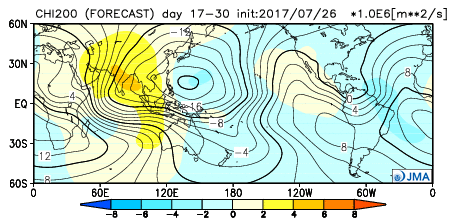
On the long-range ensemble guidance, the atmospheric pattern changes start out in the Pacific. A large trough will be over parts Southeast Asia and Western Pacific and in turn support a ridge near or just south of the Aleutian Islands and a large trough or upper-level low over more of the Gulf of Alaska and Northeast Pacific. This North Pacific pattern overall will continue to support more profound heat ridge in parts of the Western and Central US. More ridging over Greenland/Davis Strait will also result in a more negative NAO pattern. This entire pattern throughout the Western Hemisphere will on average support deeper troughiness in the Great Lakes and Ohio Valley and stronger Western Atlantic ridge to build over next couple weeks. But we do know ensembles and weeklies in general in the super long-ranges are less reliable. So what climate phenomena is potentially influence this pattern?

Read more

Long Range: How and why this weeks ridge positioning is critical

You may have heard over the past few days (or weeks) that a large ridge is developing throughout the Central portions of the United States. You definitely have heard about this ridge if you have agriculture interests — which is who we’re really speaking to in this afternoon’s Long Range Update. The development and positioning of this ridge has been a hot topic for a while now, and after some forecast models suggested the ridge would encompass much of the Eastern US, it has developed well west of those regions.

But, truth be told, there is a  lot more to the forecast than “the ridge is here” or “the models were wrong”. Many professionals, no matter what sector they focus on, will tell you the same thing: Understanding the process of how things occur is more critical than almost everything else. So while we provide the forecasts each day, we like to take the time to explain why things are happening, how they happen, and how we believe they will unfold down the road.

Read more