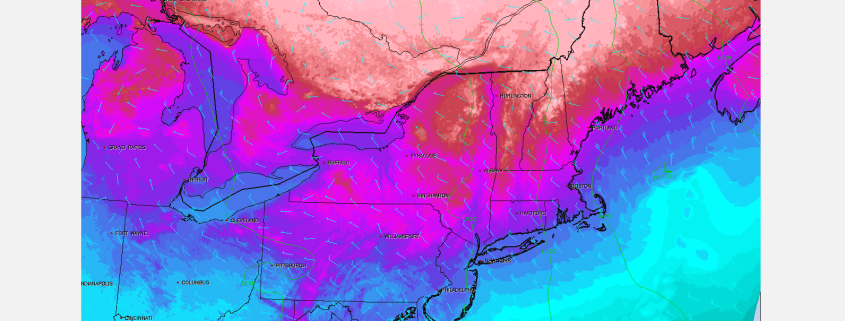
Public Analysis: Snow Squalls Possible Today, Unsettled Next Week

As we head into the end of the workweek this afternoon and evening, most of the area is experiencing quite the contrast from what we were looking at this time last week. Some heavier snow showers and temperatures in the teens are possible this afternoon and evening, with a cold weekend likely. Continuing the theme of this winter, a return to more above-normal temperatures is possible as early as Monday.

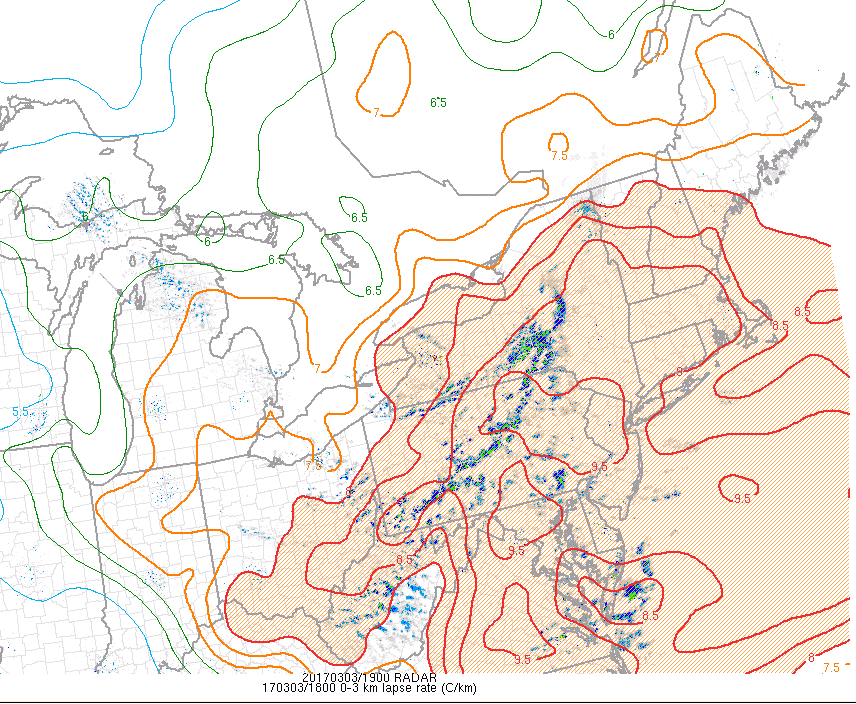
If we take a look at the visible satellite imagery this afternoon, we can see that there are numerous clouds associated with a very large and potent upper level system that is responsible for the impressive temperature drop we have seen over the past day or so across the area. This upper level system is also responsible for producing widespread snow showers and snow squalls, courtesy of very steep lapse rates (which is the difference of temperature with height). As of 2pm, the majority of these squalls were located over Pennsylvania and even though they do not look too impressive on radar, these squalls have been responsible for numerous car accidents as they are able to reduce visibility down to near-zero in less than a minute.
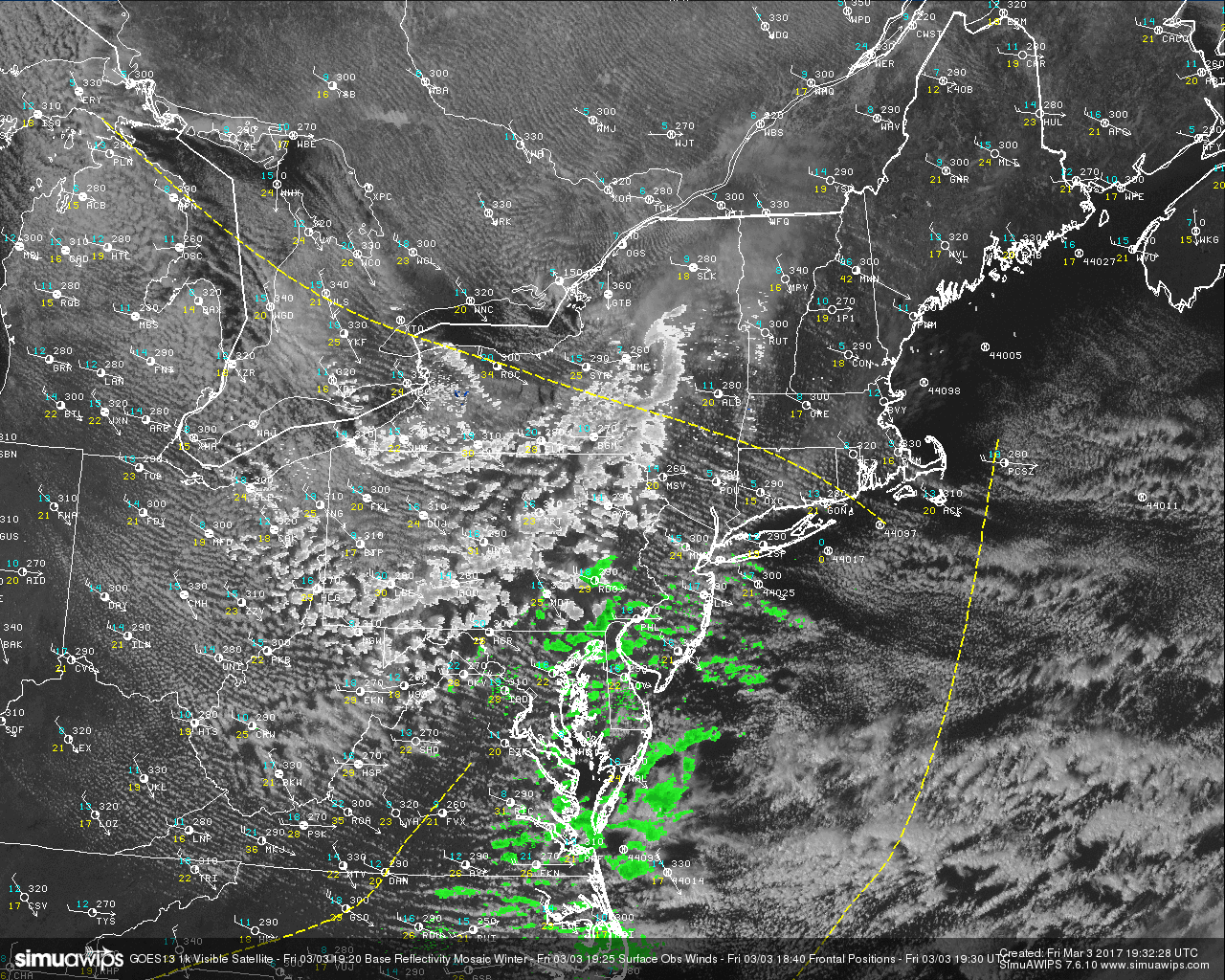
Current visible satellite imagery along with radar and surface observations showing numerous heavy snow squalls over PA (Courtesy of Simuawips.com)

Current visible satellite imagery along with radar and surface observations showing numerous heavy snow squalls over PA (Courtesy of Simuawips.com)

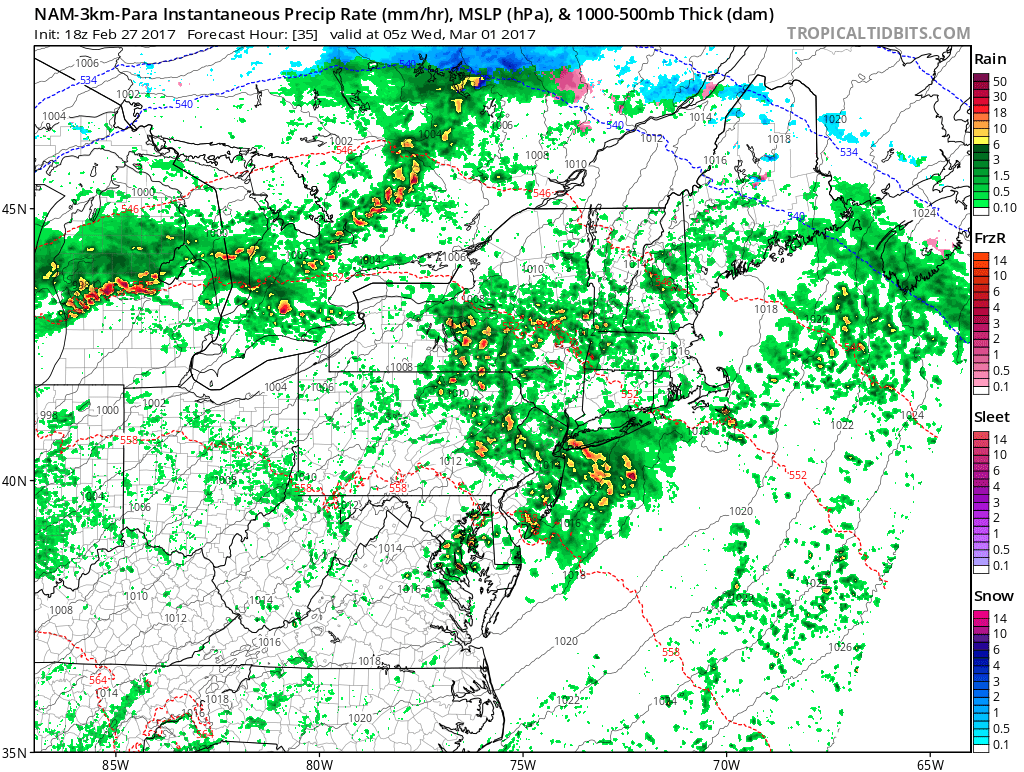
As the afternoon continues on and the atmosphere nearly maxes out the low level lapse rates as we head toward sunset, these snow squalls should continue east and possibly affect the NYC metro area by 4-6pm and 6-8pm for Long Island and Connecticut. Though these squalls may be slightly weaker by the time they reach the area, they will still be capable of rapidly dropping visibility, rapidly dropping temperatures, making roads very slick, as well as producing some gusty winds which may knock some small branches off of trees. Please exercise extreme caution if caught in these squalls, especially as we get closer to the afternoon commute. Due to the more spread-out nature and quick movement of these squalls, any accumulations should be limited to a trace in all locations.
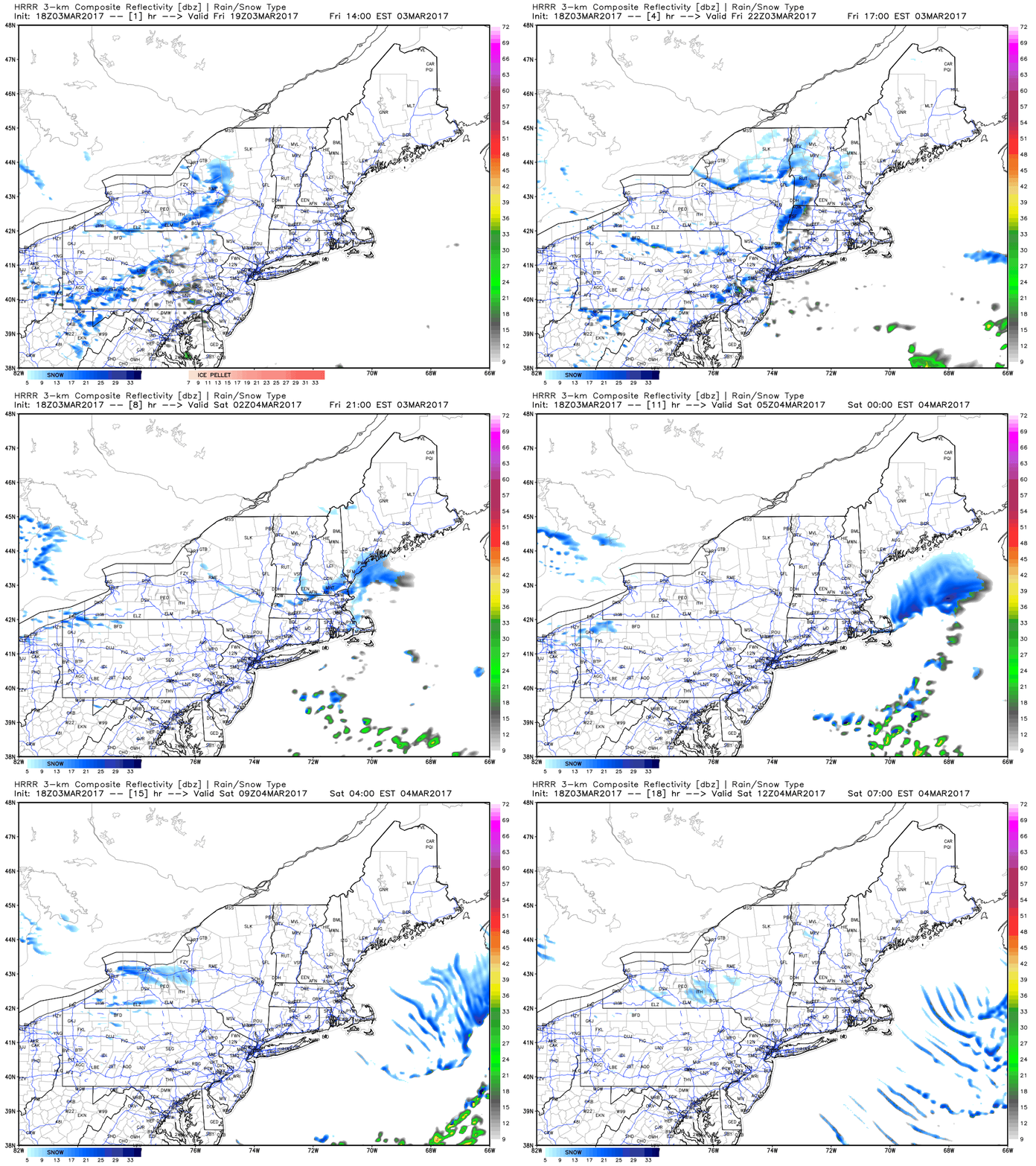
HRRR model showing snow showers and possible heavier snow squalls working their way into the area this afternoon and evening

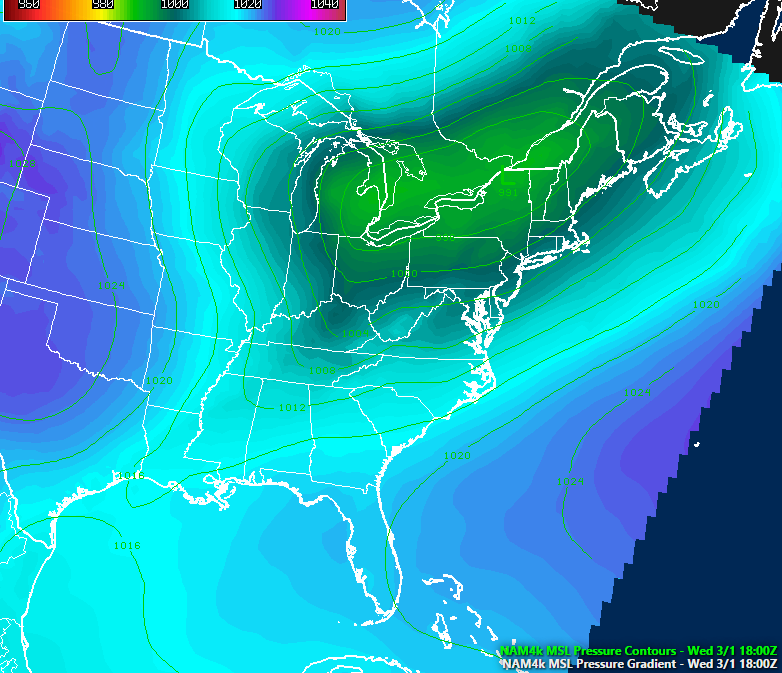
Later this evening, clearing skies and a very cold airmass above our heads will easily allow temperatures to drop down into the teens for inland areas and into the 20’s for locations closer to the coast, which is a massive departure from what we have experienced over the past week with lows in the 50’s! We expect the below normal temperatures to continue into tomorrow behind the large upper level system, with highs only being able to reach into the upper 20’s and low 30’s across the area. Due to a somewhat impressive pressure gradient draped over the region, there will be the potential for some gusty winds which will make it feel quite chilly throughout the day tomorrow with windchills in the single digits and teens. The winds should begin to die down towards sunset as clear skies once again dominate the area with another cold night on tap, with lows in the teens and even single digits across the area. Sunday looks to also be slightly below average with temperatures in the 30’s as an area of high pressure begins to take control over the area, which will reduce any winds and make it a much more bearable day. Overall, it should be a much more seasonable weekend, with mostly clear and dry conditions expected both Saturday and Sunday.
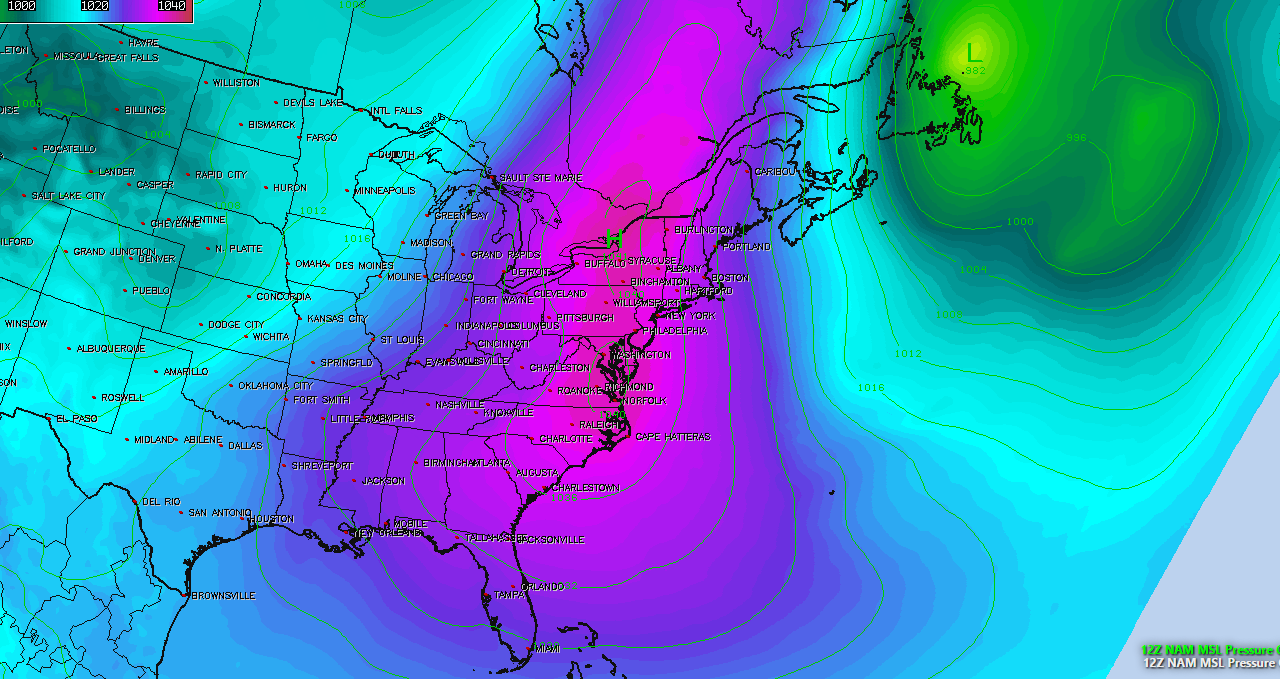
NAM model showing a large area of low pressure directly over our area by Sunday afternoon, providing calm and cold conditions

NAM model showing a large area of low pressure directly over our area by Sunday afternoon, providing calm and cold conditions

As we head into  Monday, the large area of high pressure over the Northeast should begin to exit to our east and position itself off of the Mid-Atlantic coast. This will allow above normal temperatures to work their way into the region from the south as a large low pressure area looks to track into the Mid-West, which may provide a chance at some heavier precipitation by Wednesday morning and afternoon as a cold front works its way through the Northeast. Model guidance diverges significantly once we reach the end of the next week, but there does exist the potential for another return to below-normal temperatures if we are able to sustain high-latitude blocking near Greenland. This is all very uncertain right now, so make sure to stay tuned over the next few days for more updates on this evolving weather pattern!

For more information and posts like this one, make sure you sign up for Zone Forecasts — where multiple detailed articles, videos, and interactives are posted each day.


Have a great day!

Steve Copertino
Public Analysis: Strong to Severe Thunderstorms This Afternoon

Severe Weather Video Update (Doug Simonian)

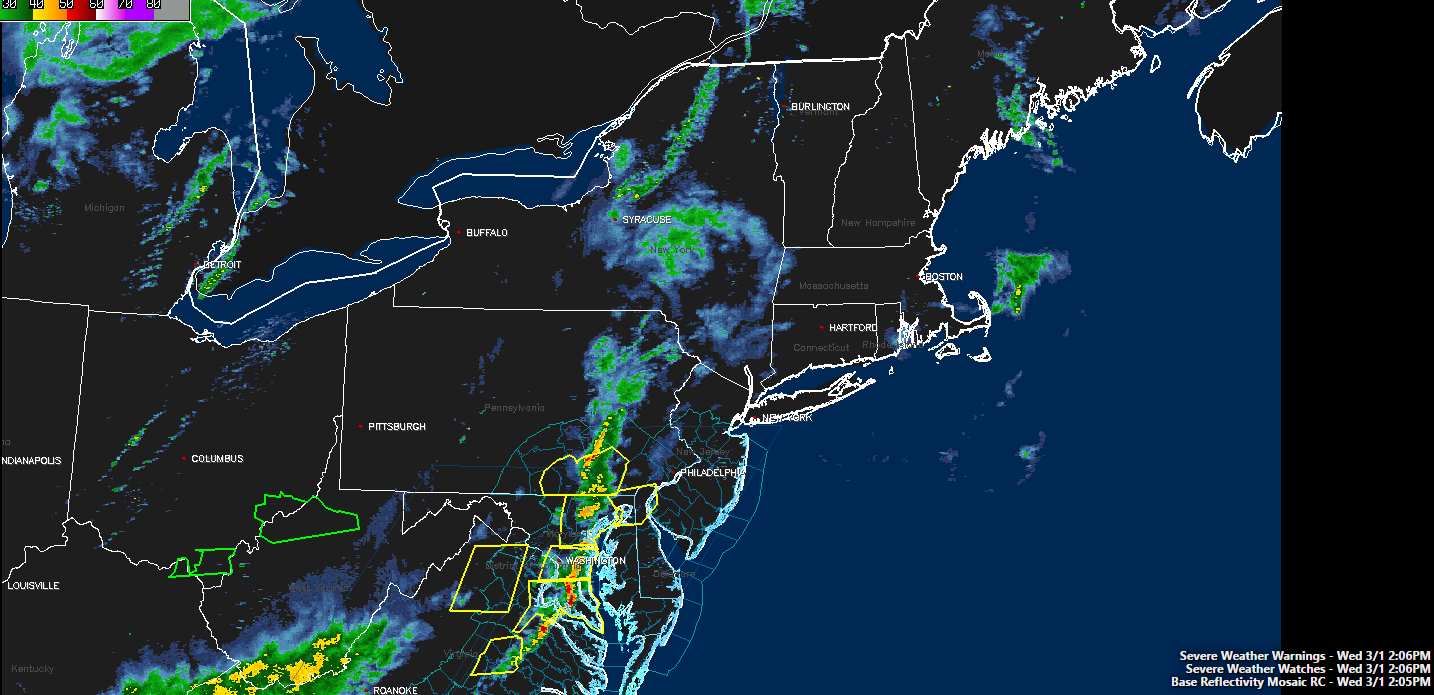
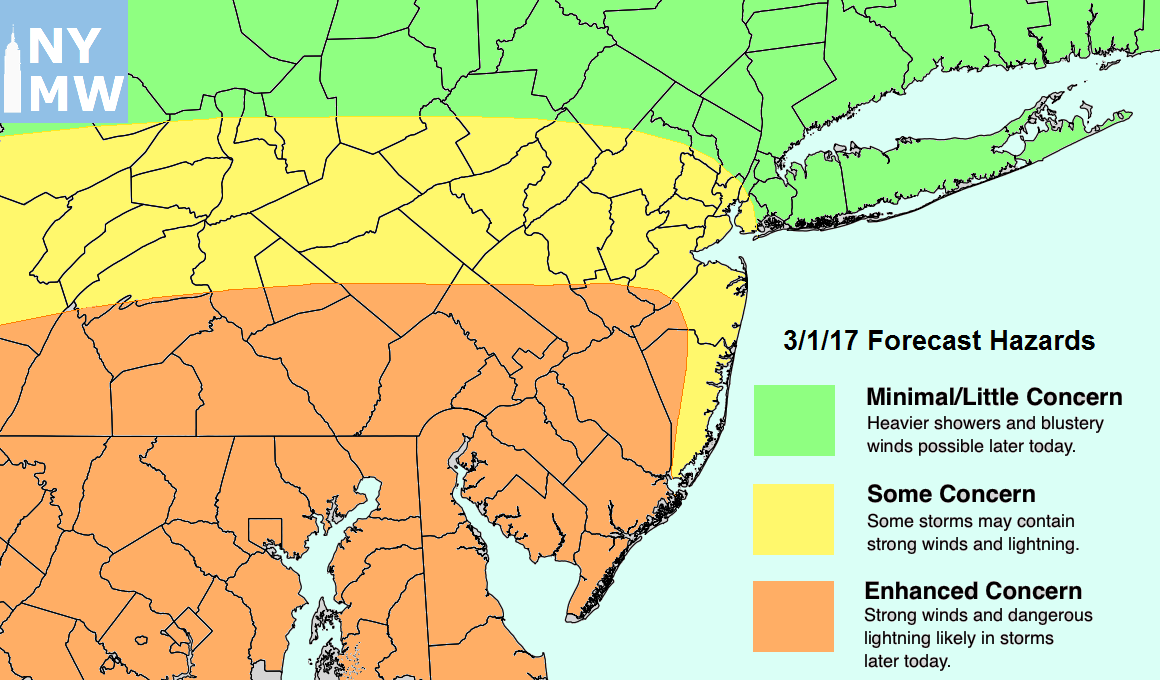
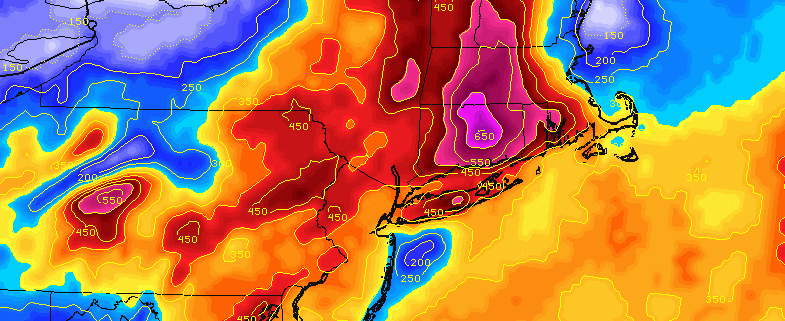
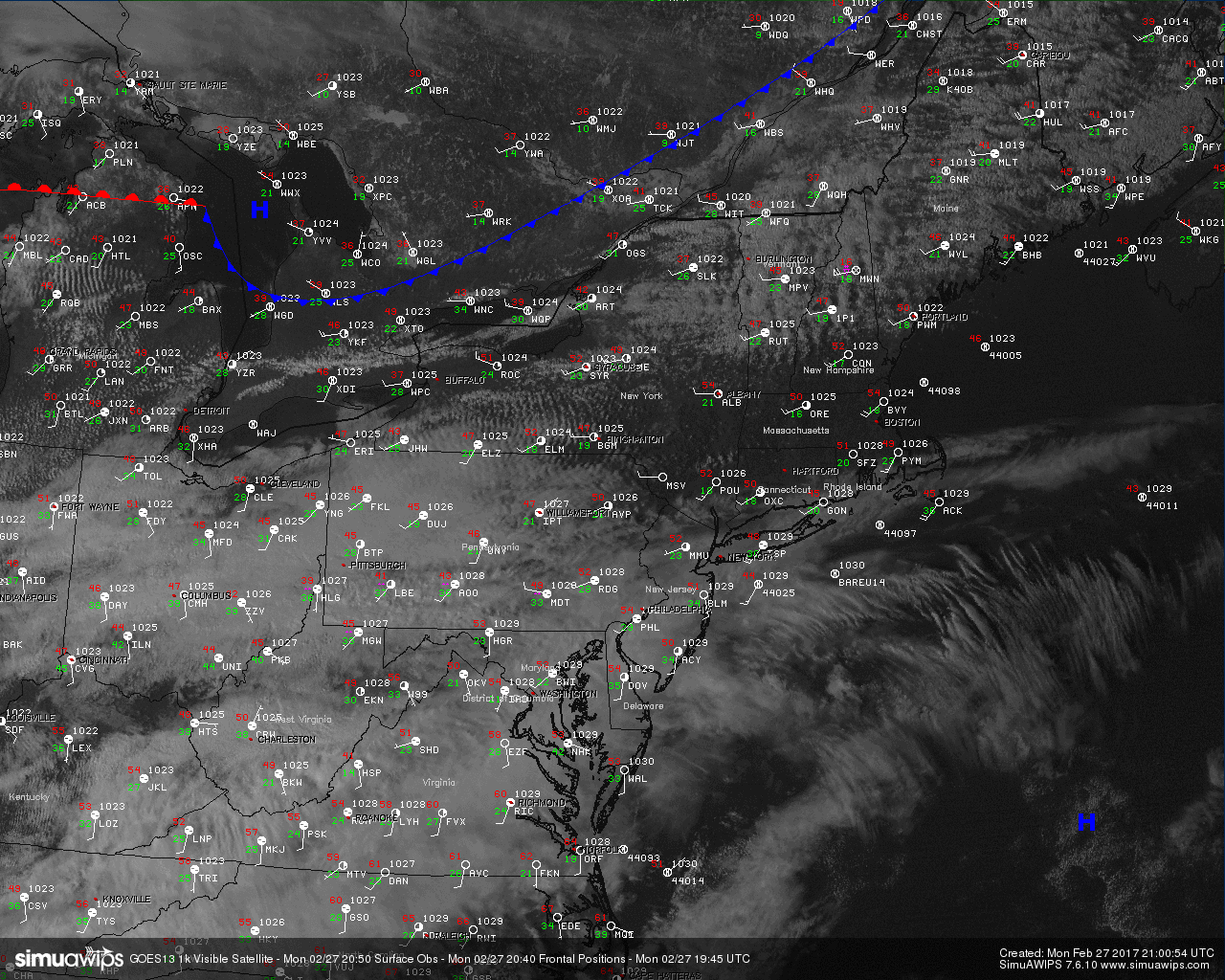
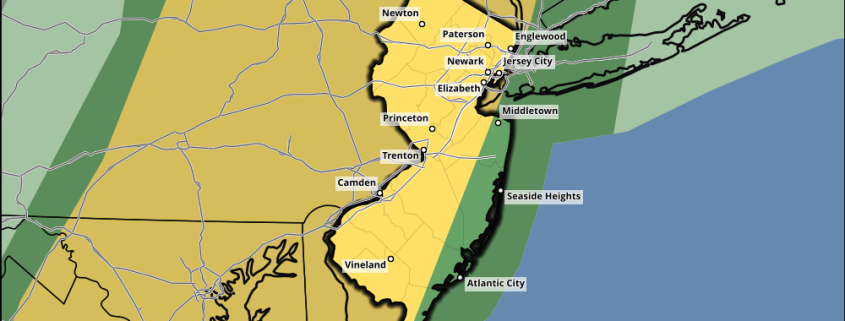
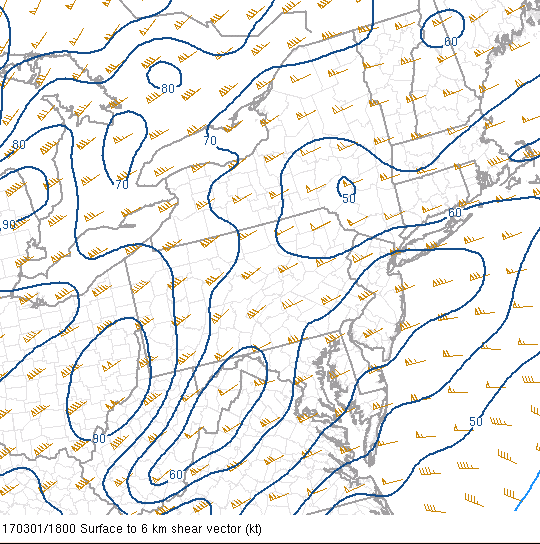
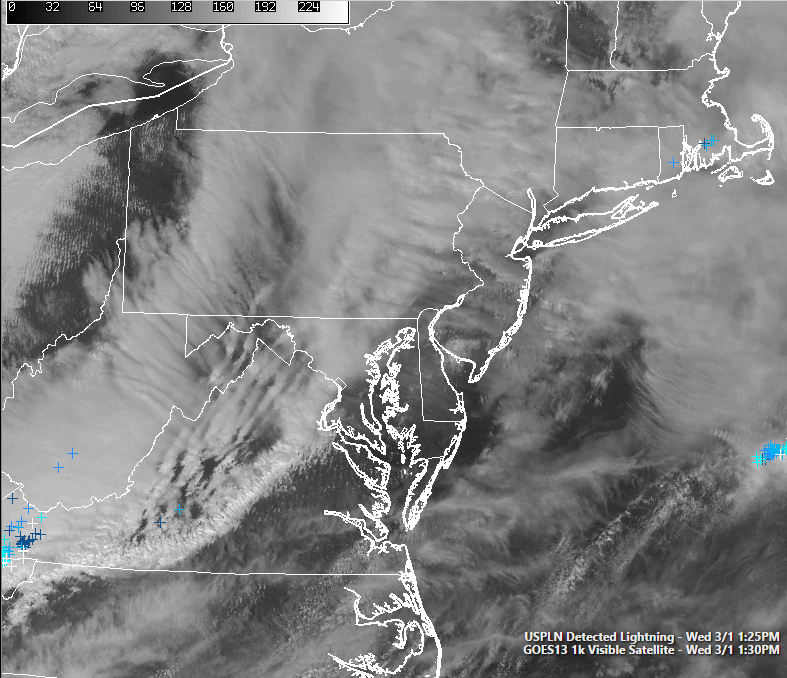
An active afternoon and evening is possible as a large area of low pressure moves through the Great Lakes region and into Canada today. The progression of this low pressure system to our northwest has allowed for warm/moist air to surge in from the south and provide a marginally unstable airmass for the southern half of the region as of 1pm. This unstable airmass will be aided by very strong wind shear, which is essentially the difference in wind direction as you get higher in altitude within the atmosphere. Even though most of the area did have heavier showers and even some isolated rumbles of thunder this morning, clearing has begun to take place. This is allowing for the sun to peek through some leftover high clouds and this will work to warm up the moist ground, which promotes evaporation. This evaporation ahead of the line of storms will allow for more instability to build, which will be key for the strength of any potential thunderstorms later on. As of right now it does appear that the greatest amount of clearing is currently taking place along the central and southern zones of NJ and PA, and as a result these areas are under a Severe Thunderstorm Watch mainly for damaging winds in excess of 60 mph ( Storm Prediction Center in Oklahoma)

Current visible satellite imagery showing clearing begining to take place in PA and parts of NJ (Simuawips.com)

Current visible satellite imagery showing clearing beginning to take place in PA and parts of NJ (Simuawips.com)

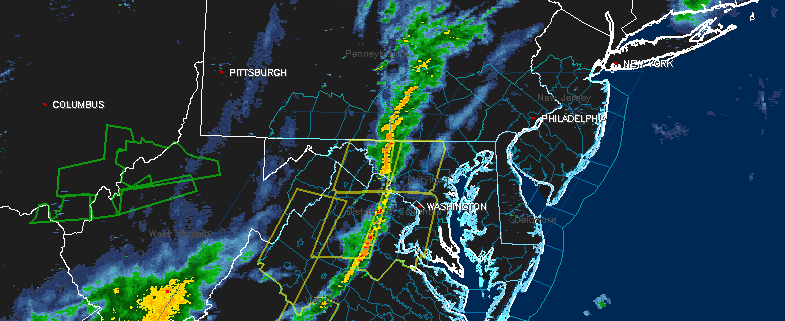
The area of storms expected to impact the region is currently located back in Pennsylvania with multiple severe thunderstorm warnings active. In addition, we have begun to notice some increase in intensity over the past hour as this line passes over locations that experienced areas of scattered sunshine earlier. This line will be sustained by the very strong upper level winds and an increased instability feed from the south and we expect this line to begin to impact the region around 4pm. As mentioned the exact intensity of these storms will be highly dependent on how these storms interact with the environment, but we expect the southern zones (SE PA, SNJ, and into portions of Central NJ) to receive the strongest impacts with the potential for damaging wind gusts, lightning, heavy rains, and possibly some small hail in the strongest storms. Further north, the lack of instability will limit the potential impacts to some strong winds and occasional lightning as well as some heavy rain that will reduce visibility.

Current look at the radar along with active Severe Thunderstorm Watches and Warnings across the area (Courtesy of Simuawips)

Current look at the radar along with active Severe Thunderstorm Watches and Warnings across the area (Courtesy of Simuawips)

Gradually, the threat for severe weather will shift southeast through these zones during the afternoon and early to mid evening hours. The main complex of storms will move offshore, shifting through Southeast NJ (Atlantic City and Cape May) during the early to middle evening, and then offshore. Cooler and more stable air will move into the area behind the storm complex.

impactmap_mar1


Make sure to stay updated over the next few hours with these potentially dangerous storms!

For more information and posts like this one, make sure you sign up for Zone Forecasts — where multiple detailed articles, videos, and interactives are posted each day.


Have a great day!

Steve Copertino
Public Analysis: Another Week of Extremes on Tap

If you enjoyed the record warm temperatures, severe weather, and sudden return to more winter-like conditions that we experienced over the past week, then you’re in luck! This week is shaping up to be very similar to last, with record or near-record temperatures possible in the middle of the week, followed by a strong cold front passage that will leave the entire area right around seasonable or just slightly below average for this time of year with a possible clipper system passing near the area by the end of the work week.

This afternoon was rather pleasant with some mid to high level clouds noted on visible satellite imagery as a high pressure system located off of the mid-Atlantic coast remains in control of our weather for the rest of the day and into tomorrow. As we progress into late afternoon hours and evening, cloud cover will begin to increase over the entire area as southerly winds usher in a moist airmass in the low levels of the atmosphere. Since the cloud cover will be relatively heavy, temperatures will have a hard time dropping much this evening, so expect temperatures to only be in the mid to high 30’s inland and in the lower 40’s for the coastal regions as well as southern locations. Some patchy drizzle may be possible as the low level moisture mentioned earlier begins to increase as we head into the evening hours.

Current visible satellite and surface observations showing a rather thick cloud deck overspreading the Northeast (Simuawips.com)

Current visible satellite and surface observations showing a rather thick cloud deck overspreading the Northeast (Simuawips.com)

As we move into Tuesday, a warm front should gradually begin to overspread the region in the morning and bring a cloudy start to the day. As we progress into the afternoon hours, temperatures should rise into the upper 50’s to mid 60’s areawide, with cooler temperatures around the mid 50’s likely along coastal locations. High level clouds may allow some sunshine to break through tomorrow afternoon, but as another warm front moves through in conjunction with some upper level energy from a disturbance passing near our area, low clouds and even some rain are quite possible by the afternoon. Low level clouds should continue to increase into the evening hours, with some steadier rain showers possible by late evening. Though winds look to be a little too strong for fog in the evening, warm winds coming off of the ocean and low level moisture in place may allow for at least the coastal communities to see some periods of fog, though this will have to be looked at in greater detail as we get closer to tomorrow evening.

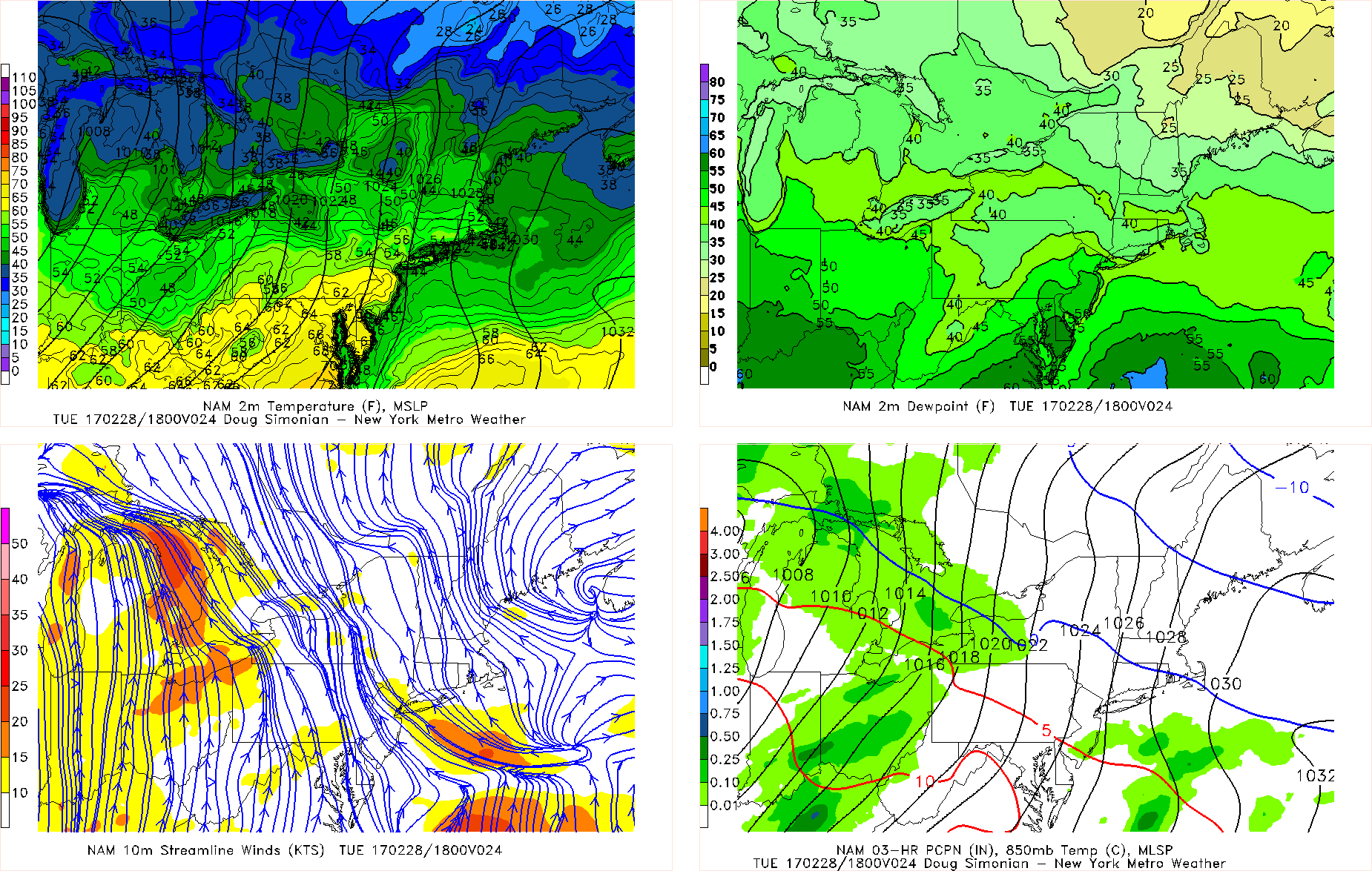
NAM model showing winds coming off of the Atlantic on Tuesday afternoon, providing cloudy conditions as well as a threat for showers later in the day

NAM model showing winds coming off of the Atlantic on Tuesday afternoon, providing cloudy conditions as well as a threat for showers later in the day into the evening hours

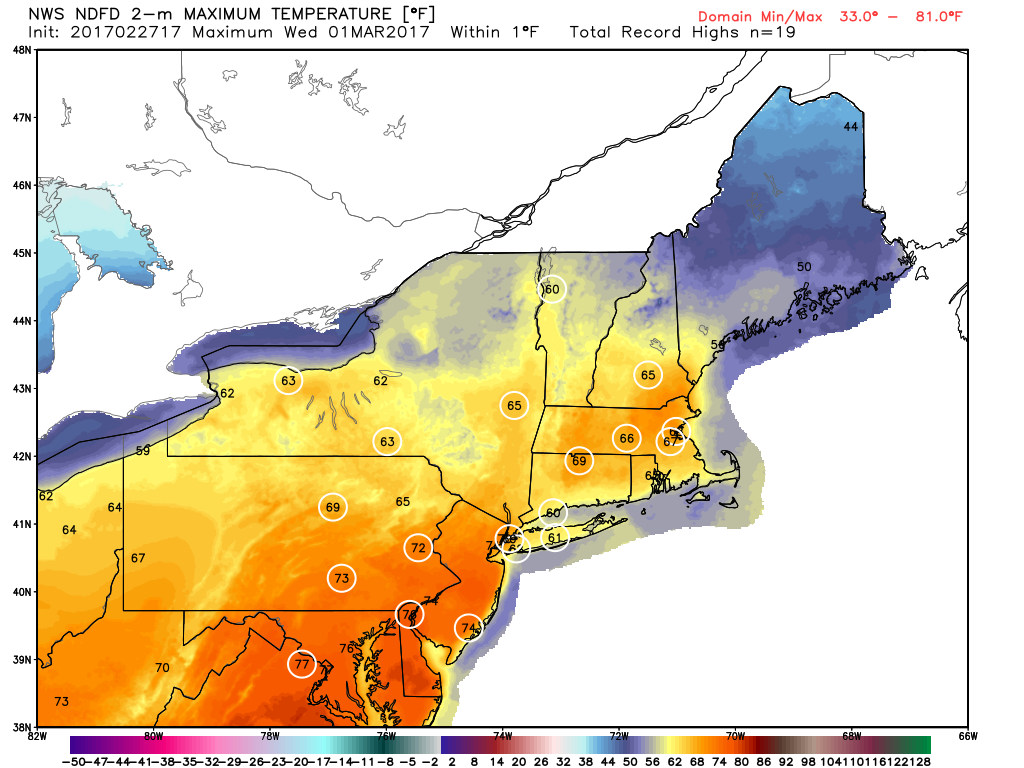
Wednesday should be the most eventful day of the week in terms of sensible weather as the warm front that initially approaches the region tomorrow begins to advance north. The initial fog and rain showers should diminish by late morning, giving way to at least some sun breaking through the clouds. Temperatures should quickly rise deep into the 60’s and even low to mid 70’s by the afternoon hours, which could break numerous records once again across our area. Since we still do hold on to southerly winds, coastal sections as well as Long Isalnd may be limited as to just how warm they get.

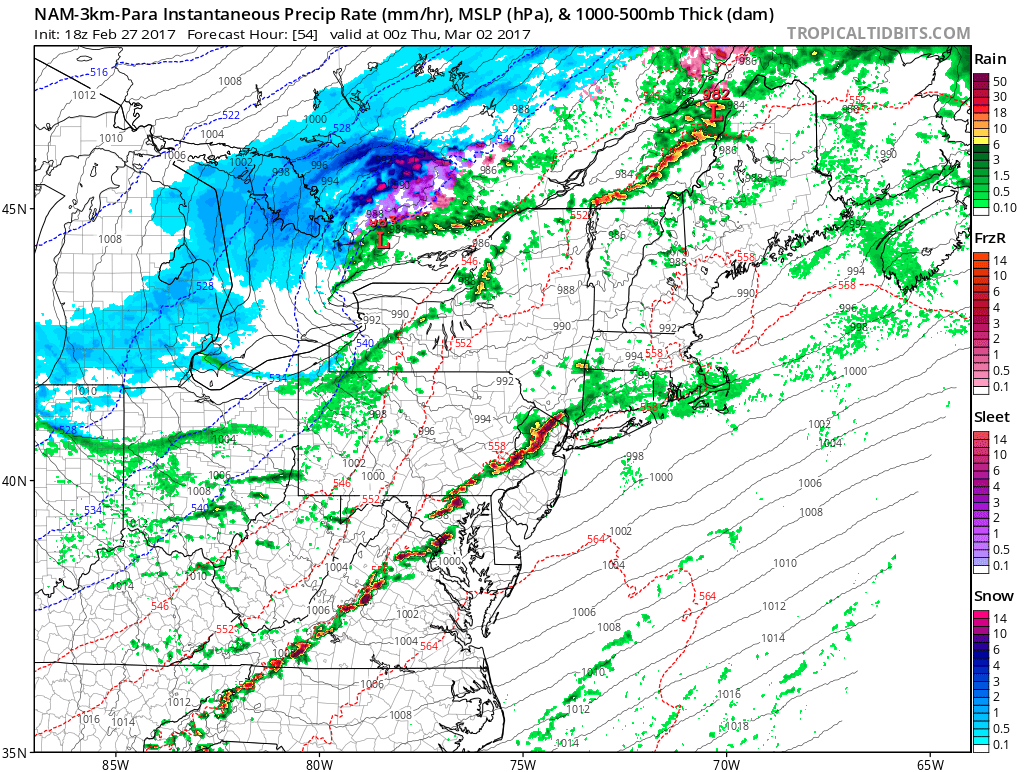
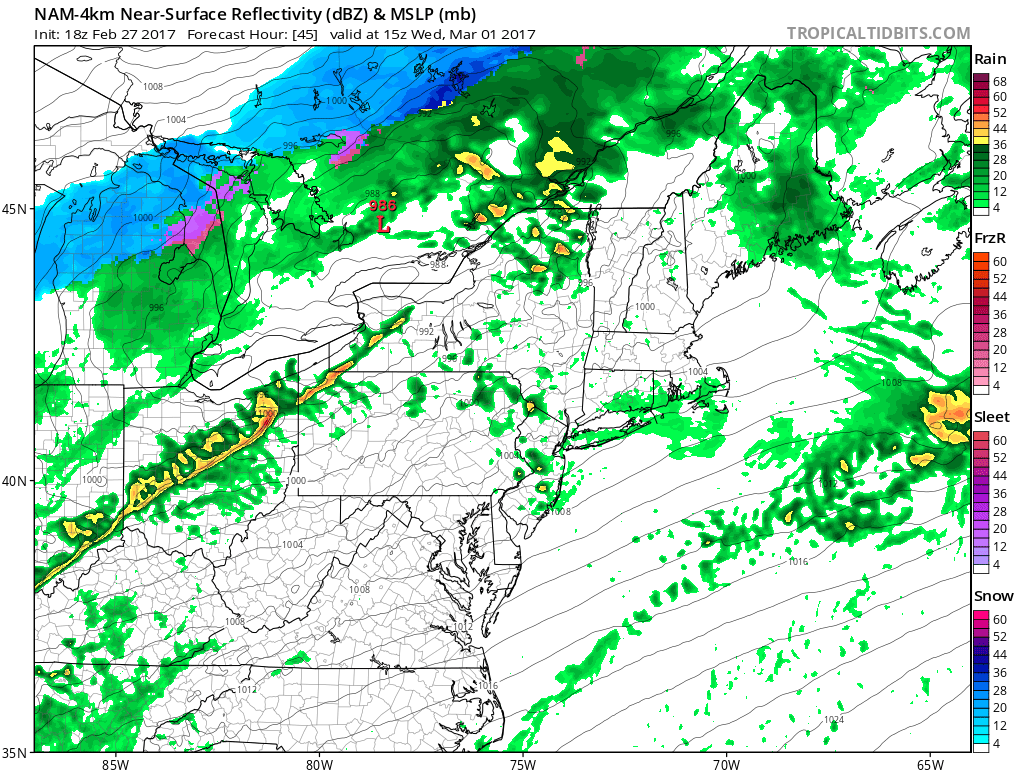
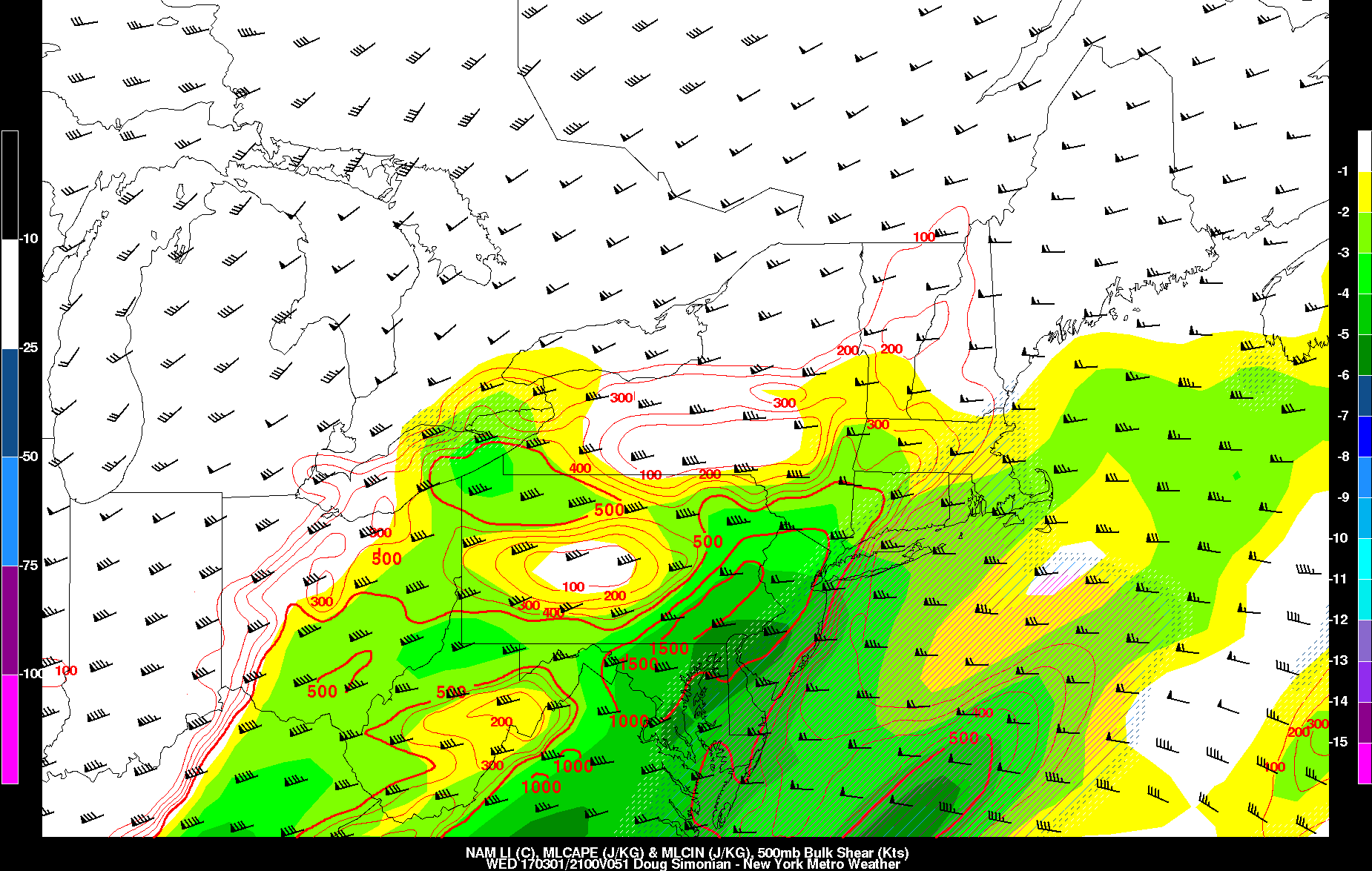
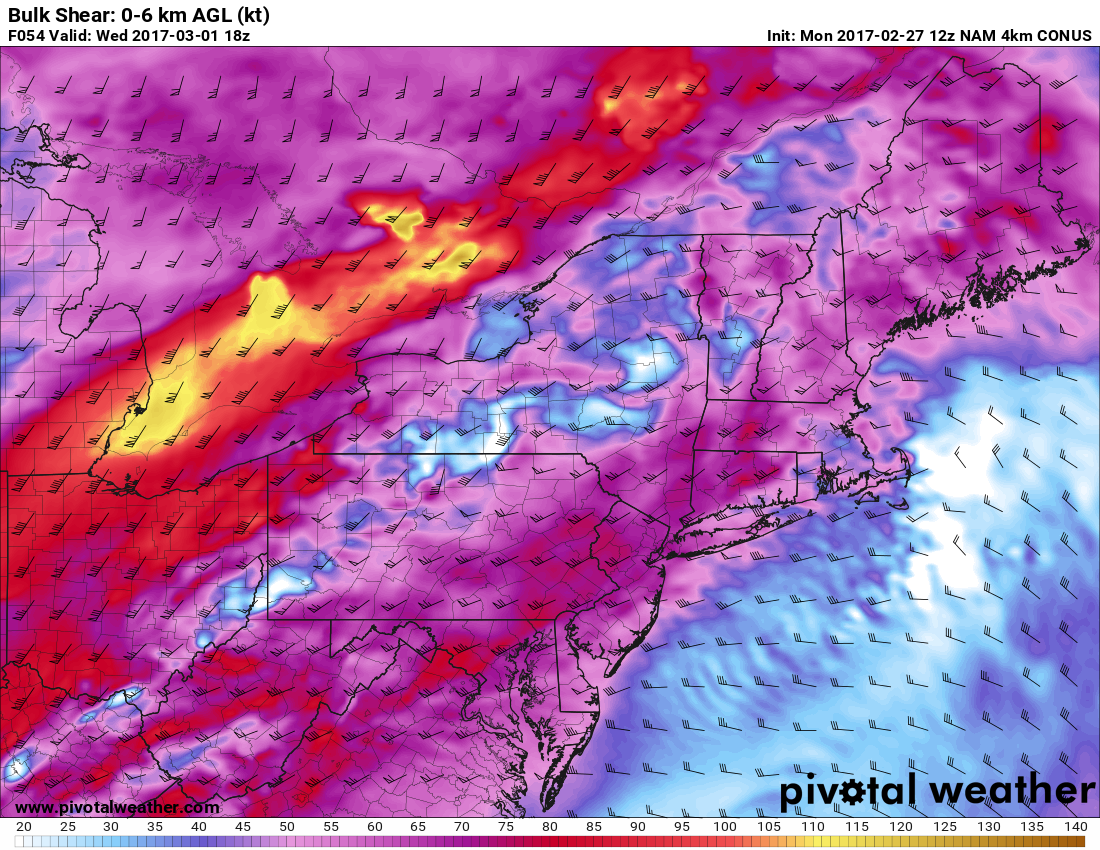
As a strong cold front associated with a low pressure system moves through the Great Lakes Wednesday afternoon, winds from the south will usher in a very moist airmass for this time of year which will allow the atmosphere to become quite unstable. Even before the cold front and its associated “lift” which helps to build thunderstorms arrives, some showers and thunderstorms will be possible by the early afternoon hours. These shower and possible thunderstorms will mainly be limited to heavy rain and perhaps some gusty winds, but after these initial storms pass through is when the main event of the day looks to unfold. As we begin to destabilize the atmosphere again later in the afternoon, very strong upper level wind shear as well as significant lift will be present over the metro area, which will be quite favorable for organized severe thunderstorm development capable of potentially damaging winds. Though model guidance is beginning to key in on the potential for severe thunderstorms to pass near or over the area later in the day and into the evening, there are still some very important details that will have to be worked out during the day on Wednesday. One of the key factors to this potential severe weather threat will be just how widespread the initial showers and thunderstorm development is Wednesday morning, which will ultimately determine where the best instability is located, as well as where the leftover low level boundaries are located (which could locally enhance storm development). As of this morning, the Storm Prediction Center in Norman Oklahoma has placed our area in a Slight Risk for severe thunderstorms on Wednesday with damaging wind gusts being the most likely risk at this time. Make sure to stay tuned as we will have continuing coverage of this potential severe threat over the next 48 hours.

Afternoon NAM model showing strong thunderstorms approaching the tr-state area by late afternoon

Afternoon NAM model showing strong thunderstorms approaching the tr-state area by late afternoon

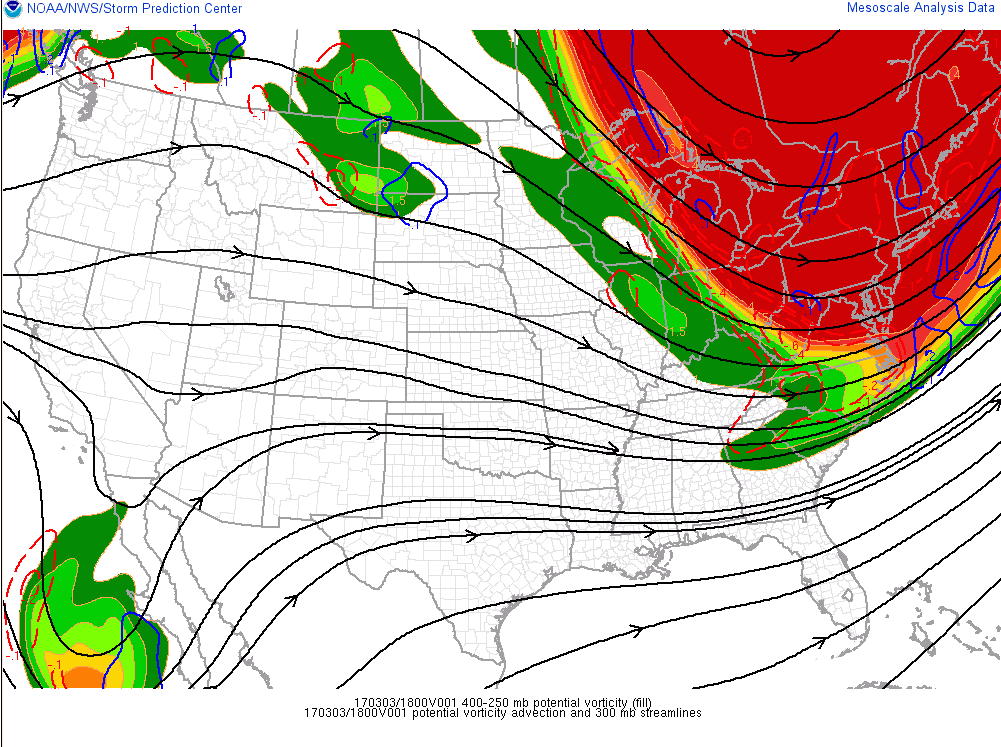
Behind the front will come a dramatically changed weather pattern. Thousands of miles to our north, a blocking ridge near Greenland will begin to have its effects on the weather throughout the hemisphere. Northern jet stream disturbances will slide southward through the Great Lakes and into New England, with colder air lingering across the Northeast parts of the United States. The first of these disturbances comes late this week in the form of a transient clipper system. Forecast models have wavered with the storms exact track, but a weak low pressure area tracking quickly through the Northeast US on Friday holds the potential to deliver some light snow — especially in New England. The exact track of the low pressure area will determine where the swath of light wintry precipitation falls. Make sure to stay updated with the active weather week ahead! For more information and posts like this one, make sure you sign up for Zone Forecasts — where multiple detailed articles, videos, and interactives are posted each day.


Have a great evening!

Public Analysis: Strong to Severe T-Storm Threat Late this Afternoon

An unseasonable warm airmass continues to be over region this afternoon. Clouds will mix with some sunshine and temperatures will be rising into middle to upper 60s and some lower 70s over many inland areas through middle of this afternoon. Closer the coast, moist south-southeast winds will keep more low clouds and temperatures cooler in the mid-upper 50s or lower 60s.

Read more