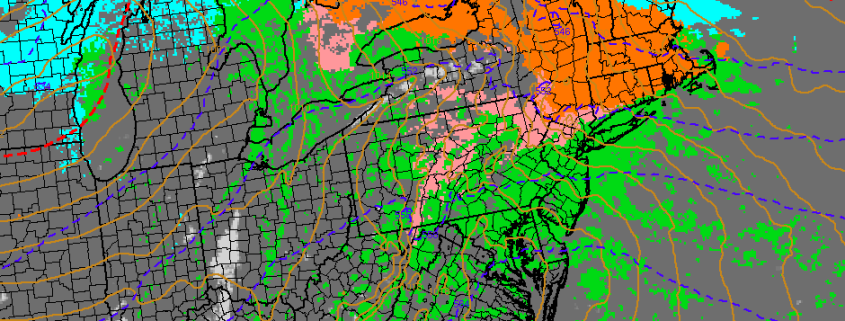
Interior wintry weather expected on Tuesday morning

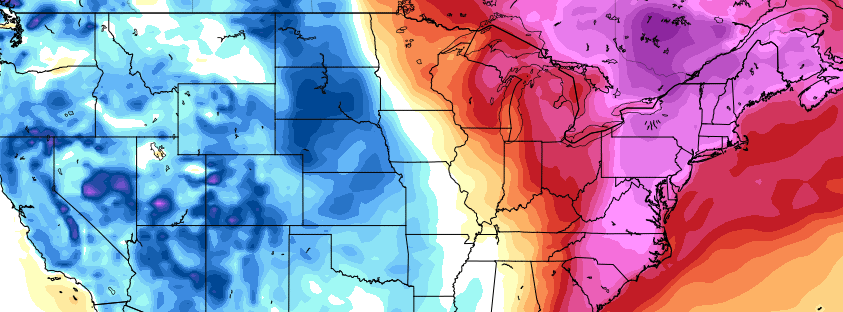
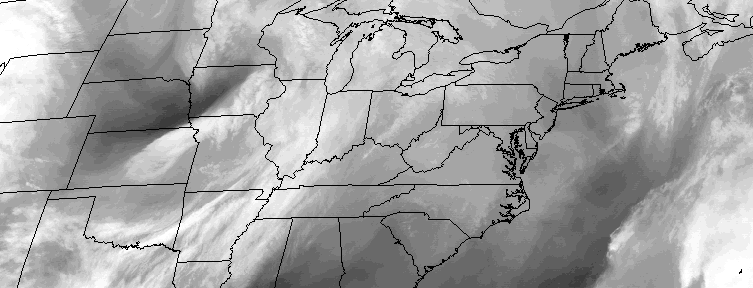
Skies will remain mostly cloudy through this afternoon and evening, as a cold front approaches from the northwest. Despite the cloudcover, a deep west-southwest flow will help temperatures will rise into the lower to middle 60s. A cold front will slowly move through the region with some scattered showers late this afternoon and early tonight. Precipitable water values near 1.25 to 1.50″ could support some heavy downpours with these showers.

A much colder airmass will follow behind this front late tonight and tomorrow, as a strong Canadian high pressure starts to build into the Northeast. Temperatures will drop into 30s for most areas by dawn. Cold air will continue to advect into region during the day tomorrow, on light north to northeast winds. Model soundings indicate mixing to 900mb-925mb where temperatures are -6C to -8C. Despite some sunshine, temperatures will slowly rise into the upper 30s to lower 40s for highs tomorrow afternoon. These temperatures are seasonal for this time of year.
Read more

Long Range: First wintry threat possible for interior next week

Record breaking warmth occurred throughout the area today, with high temperatures in the lower 70’s shattering previous high temperature records by nearly 10 degrees. In fact, New York City reached their record high temperature at 12:01am, breaking the previous record for Christmas Eve set back in 1990. This is no small feat — temperatures averaged almost 30 degrees above normal throughout the day in our forecast area.

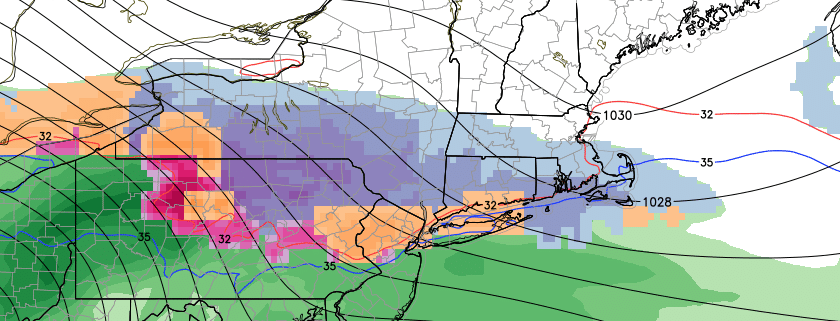
In the midst of an incredibly warm, snowless pattern, forecast models suggest the potential for a trend-breaker during the middle of next week. Within a fast, warm mid level atmospheric flow, models are indicating the potential for a slower moving, closed low in the mid levels of the atmosphere. As this low shifts eastward through the Mississippi Valley and eventually de-amplifies toward the Northeast US, the potential exists for significant amounts of moisture to be drawn northward toward the Northeast US. Waiting to our north, precariously timed — as models suggest — will be a strong and cold Canadian high pressure system.

Read more

Dreaming of a White Christmas? Dream On

It has been a meteorological winter of mud, rain, and warmth.

Two full weeks in to the meteorological winter season, which begins December 1st and ends March 1st, no winter weather of significance has impacted our area. That, in itself, isn’t all that notable. December of 2014 also featured above normal temperatures and very little winter weather. 2015, however, has been much more notable on almost all facets — with record shattering warm temperatures and prolonged above normal temperature departures.

On Saturday and Sunday of this past weekend, daily high temperature records were broken at almost all of the NYC 5-Boro’s weather reporting stations. New York City (Central Park) broke their daily high temperature record on Sunday before the clock even reached 10:30am. Central and Southern New Jersey? Forget it: Temperatures there soared into the lower 70’s, breaking records as well.

Read more

Record breaking warm temperatures possible this weekend

With winter still on hiatus, the warm pattern is taking over — and likely taking records with it. A building mid level ridge will be the story this weekend, as a large and energetic storm system digs into the Central United States. Rising mid level heights to the east, over the Ohio Valley and Northeast, will be the first sign of the advection of an anomalously warm airmass. With southerly winds and increasingly warm air in the mid and low levels of the atmosphere, high temperatures will increase each day the end of this week and weekend.

By this weekend, 850mb temperatures (mid to low levels of the atmosphere) will exceed 10 C — which is extremely anomalous for this time of year. If the sun can break through the dense fog, which is likely to settle into the area during the overnight hours each day, highs on Saturday could exceed 60 degrees. This will be especially true away from the coast.

Read more