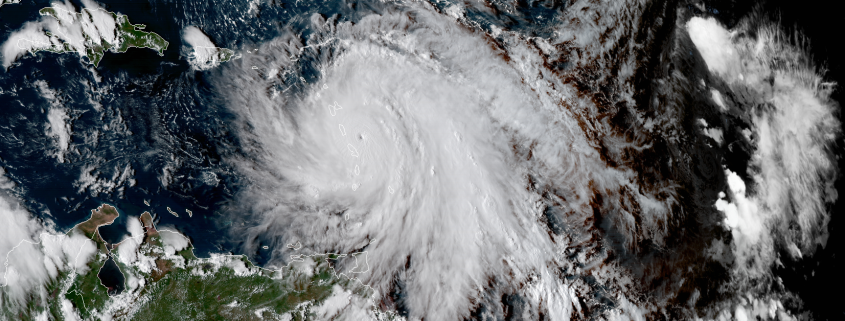
Extremely Dangerous Maria Eyes Dominica

Good Evening! 

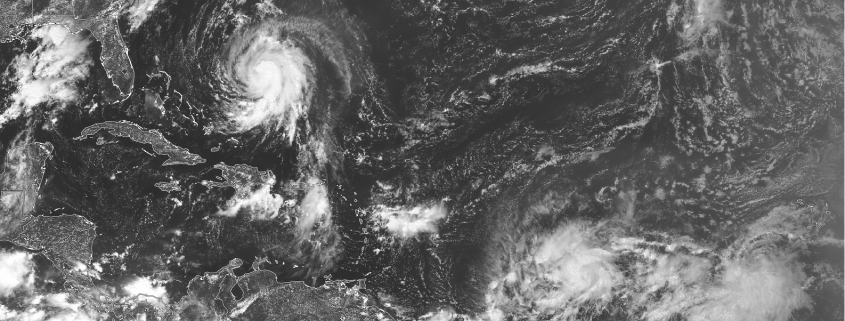
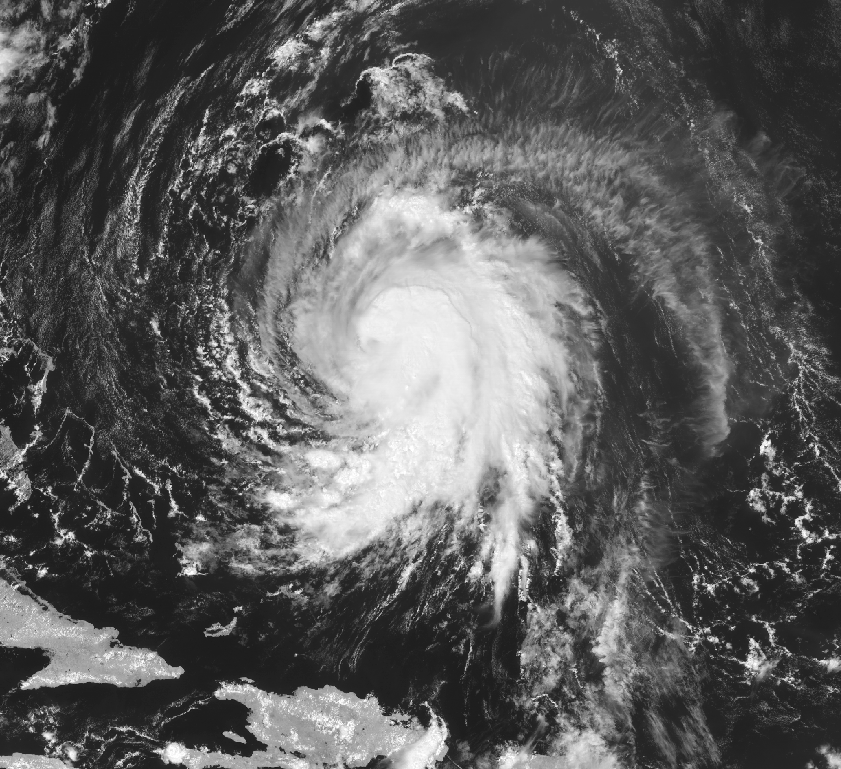
Back on Friday we were talking about a vigorous tropical wave that was designated Invest 96L. Since that time, the disturbance became a tropical depression on Saturday, battled with some moderate shear and dry air, and was upgraded to a hurricane yesterday afternoon. We mentioned that the storm would have excellent conditions to intensify once it was nearing the islands, and that’s what Maria did, but to a whole different level. Since this morning, the storm has intensified into an extremely dangerous Category 4 hurricane with winds up to 130 mph as of the 5pm advisory by the National Hurricane Center. The storm has an incredible satellite presentation, characterized by a small pinhole eye, extremely deep convection surrounding the center, and good to excellent outflow in all quadrants. Earlier reports from a reconnaissance plane showed that the pressures within the storm were falling quite steadily, but the plane finished its mission just before Maria’s eye began to clear out an warm. Since that time, the eye continues to become increasingly defined, and satellite estimates are indicating that the storm may be stronger than the 130 mph intensity that it was given.
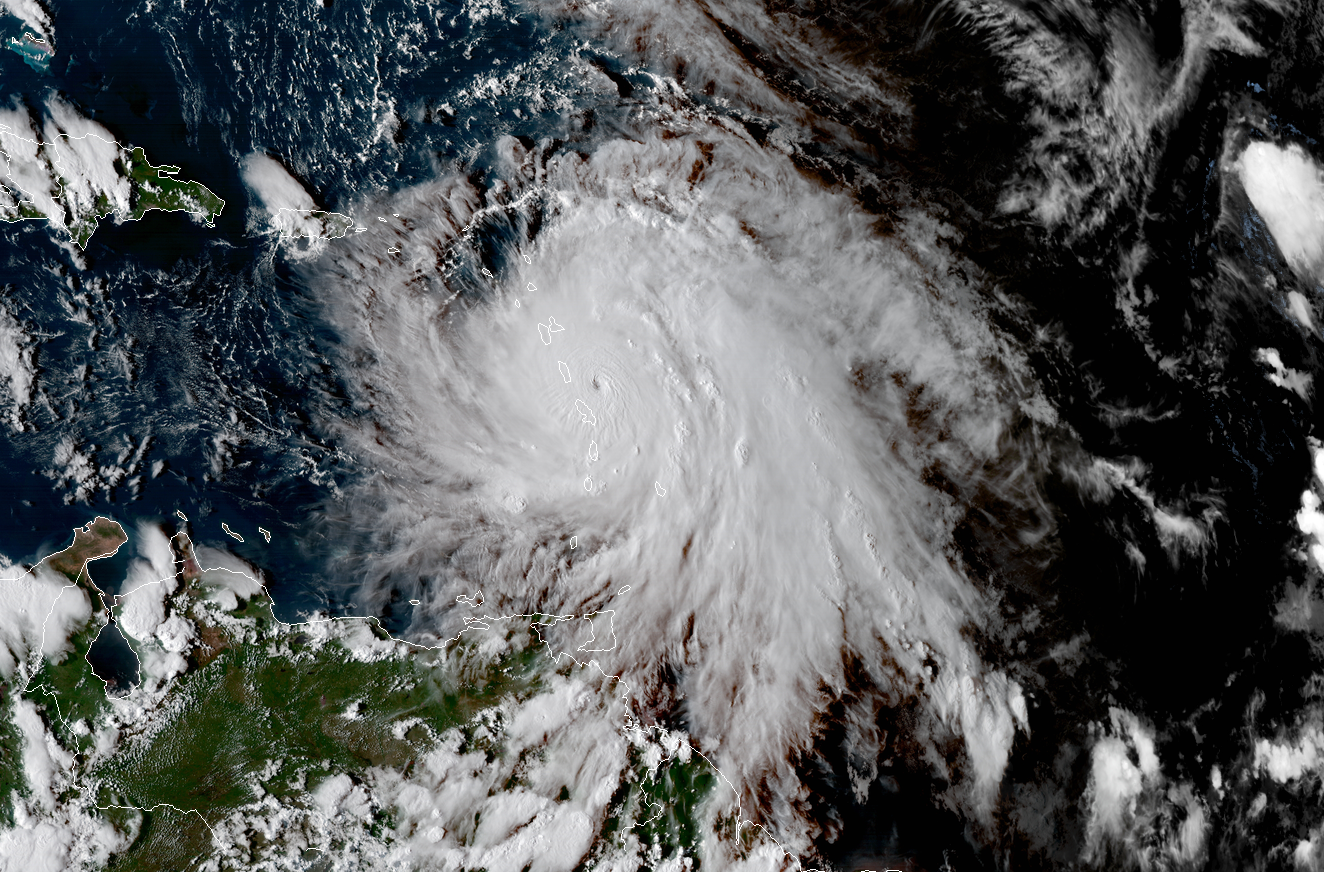
Natural color imagery provided by GOES 16 and CIRA Colorado State

Natural color imagery provided by GOES 16 and CIRA Colorado State

At the time of this post, Maria is only about two hours or so from making a direct landfall on the small island of Dominica, which is home to some 70,000 people (2016 estimate). The last time the island saw a similar threat from a hurricane was way back in 1979 when Hurricane David made a direct landfall, which devastated the island, leaving nearly 75% of the population homeless, and wiping out a majority of the Banana and Coconut crops which the islands relies on for profit. With Maria having such a tight and intense core (8-10 nm miles), this will make the next few hours of watching the radar out of Martinique crucial. If the center goes right over the island, we could see a catastrophic scene similar to what happened on Barbuda with Hurricane Irma just about two weeks ago. We will have another reconnaissance plane within Maria by 7-8pm eastern time, which should give us an exact estimate on the intensity of the storm as well as any wobbles it may take. It is quite likely that Maria will be at least somewhat stronger than the 130 mph estimate by the time the mission arrives, and I would not be surprised to see the storm near 150-160 mph by 11pm eastern time.
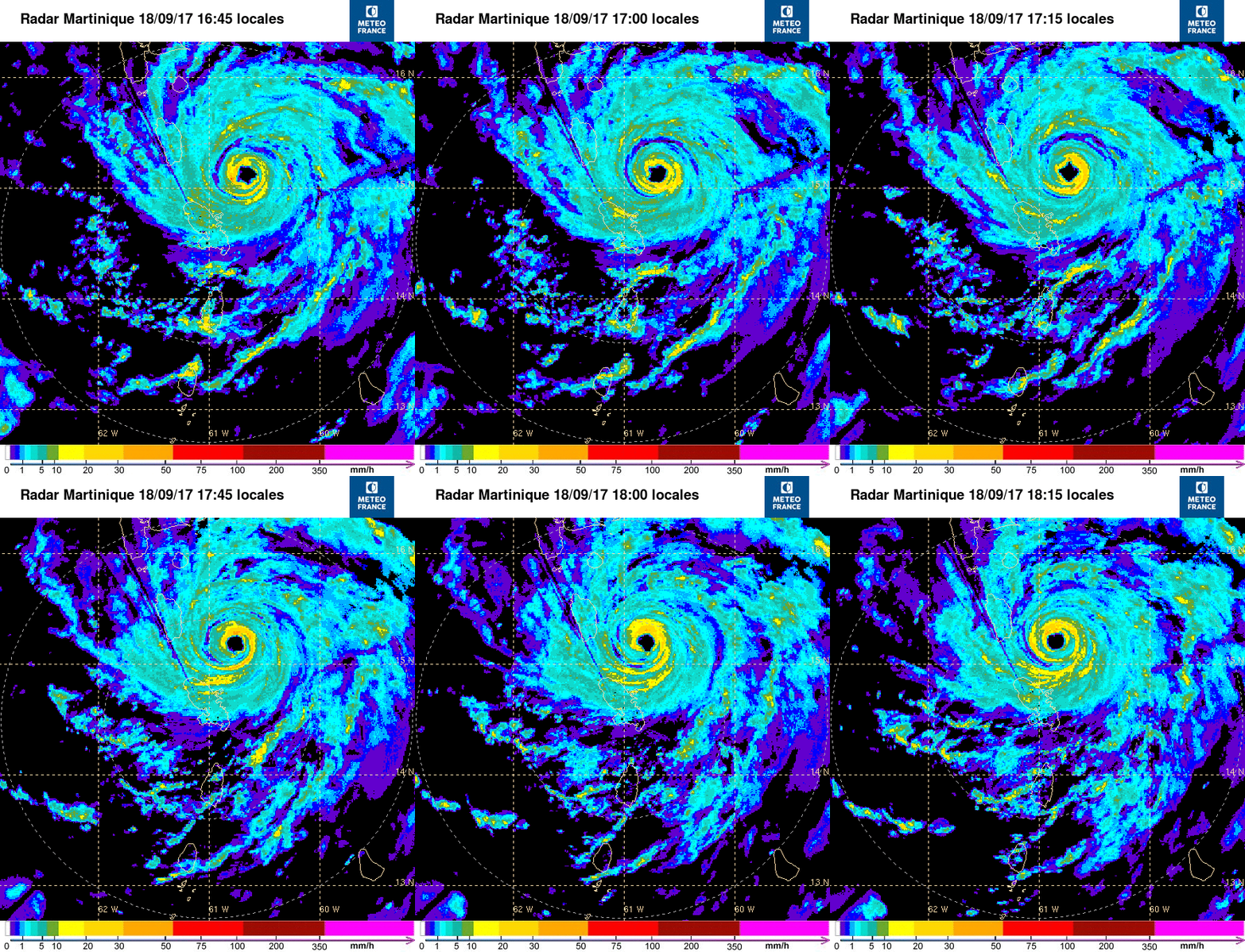
Radar loop out of the island of Martinique showing the motion of extremely dangerous Hurricane Maria with 130 mph winds (MeteoFrance)

Radar loop out of the island of Martinique showing the motion of extremely dangerous Hurricane Maria with 130 mph winds (MeteoFrance)

After Maria moves through the islands, we then look to the US virgin islands and Puerto Rico for likely impacts from the storm. While the peaks of the islands may briefly disrupt Maria if it does indeed make a direct landfall, Maria will still have all of Tuesday and a good portion of Wednesday to reorganize or restrengthen over the very warm water of the Caribbean. The storm has a very powerful upper level anticyclone, which is allowing massive amount of air to be evacuated from the system, which should keep the system healthy over the next 48 hours. If Maria does not weaken due to the islands this evening, than it is possible that it could continue to strengthen until the tiny eye that it has collapses and has to undergo an eyewall replacement cycle. This could temporarily weaken the storm, but as we saw with Irma, it also expands the windfield of the storm quite a bit, which then leads to even greater surge concerns.

The people of Puerto Rico and the Virgin Islands should be preparing for an intense hurricane to impact the area as soon as Wednesday afternoon with sustained winds up to 150mph, rainfall in the 10-16″ range, extremely dangerous storm surge, extreme wave action, and the potential for deadly mudslides. This is an extremely dangerous storm, and it should not be taken lightly. A hurricane warning is in effect for the entire region, and the track over the next 24 hours will determine whether or not Puerto Rico sees a direct impact from this system, but should be preparing for one regardless.

***Please monitor all information from your local weather service, the National Hurricane Center, local officials and news outlets over the next few days as this extremely dangerous storm enters the Caribbean.***
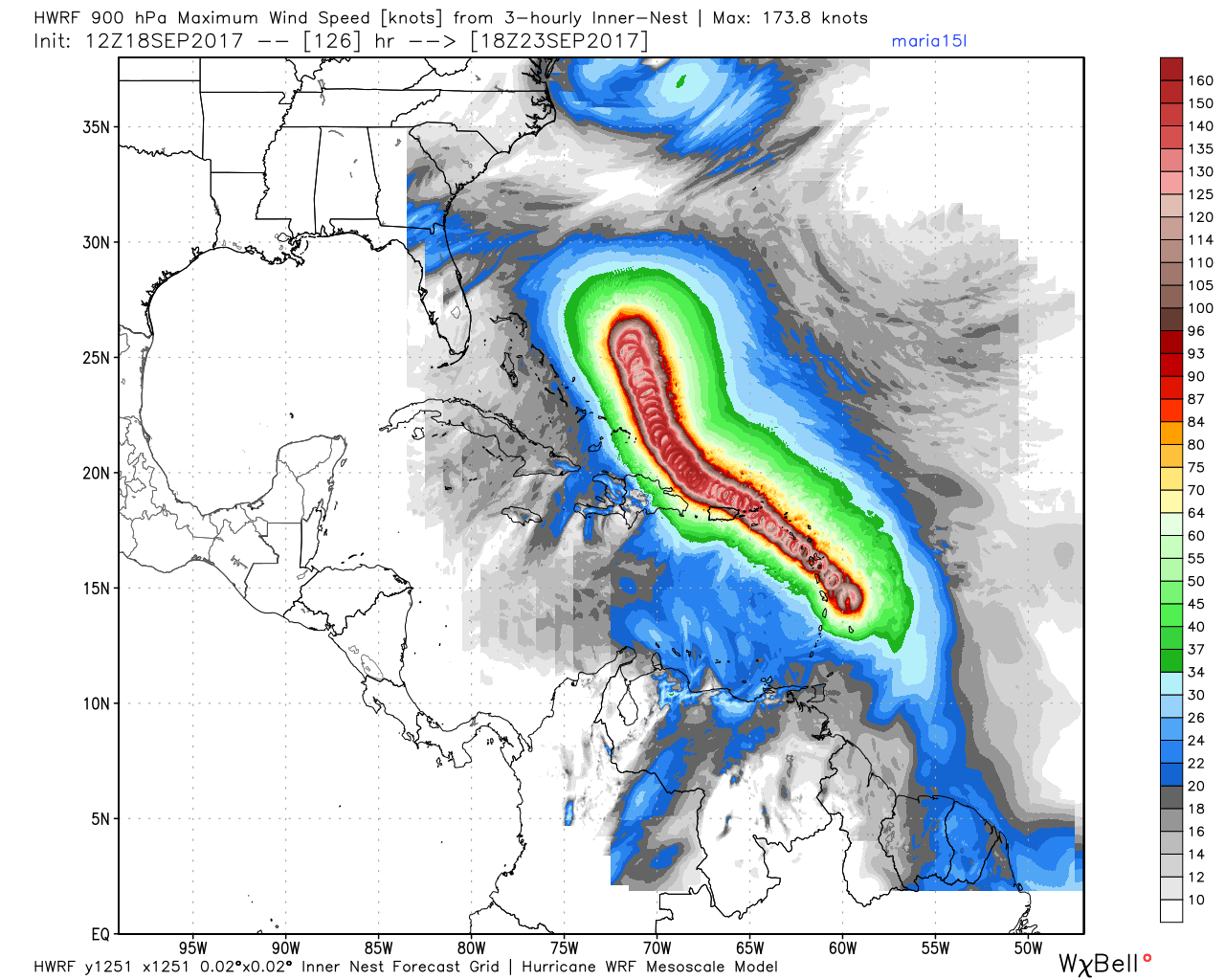
This afternoons HWRF model showing Maria impacting the US virgin islands and coming extremely close to Puerto Rico

This afternoons HWRF model showing Maria impacting the US virgin islands and coming extremely close to Puerto Rico

The long term forecast for Maria becomes quite complicated after the storm passes north of Hispaniola, as the remnants of Jose will likely make another loop after being deflected off a a building ridge to its north. This will likely create a weakness for Maria to continue moving north, but the extent and duration of this northward movement will be highly dependent on the strength of Jose as well as the ridge to its north. Additionally, this afternoons global models as well as their ensembles have showed Maria making it closer to the US mainland as the remnants of Jose weaken considerably faster, which allows the potential weakness to close up much quicker. We likely will not know what Maria’s fate will be until after it impacts the Virgin islands/ Puerto Rico in the coming days, so make sure to check back on Wednesday when we’ll have a full update on Maria!
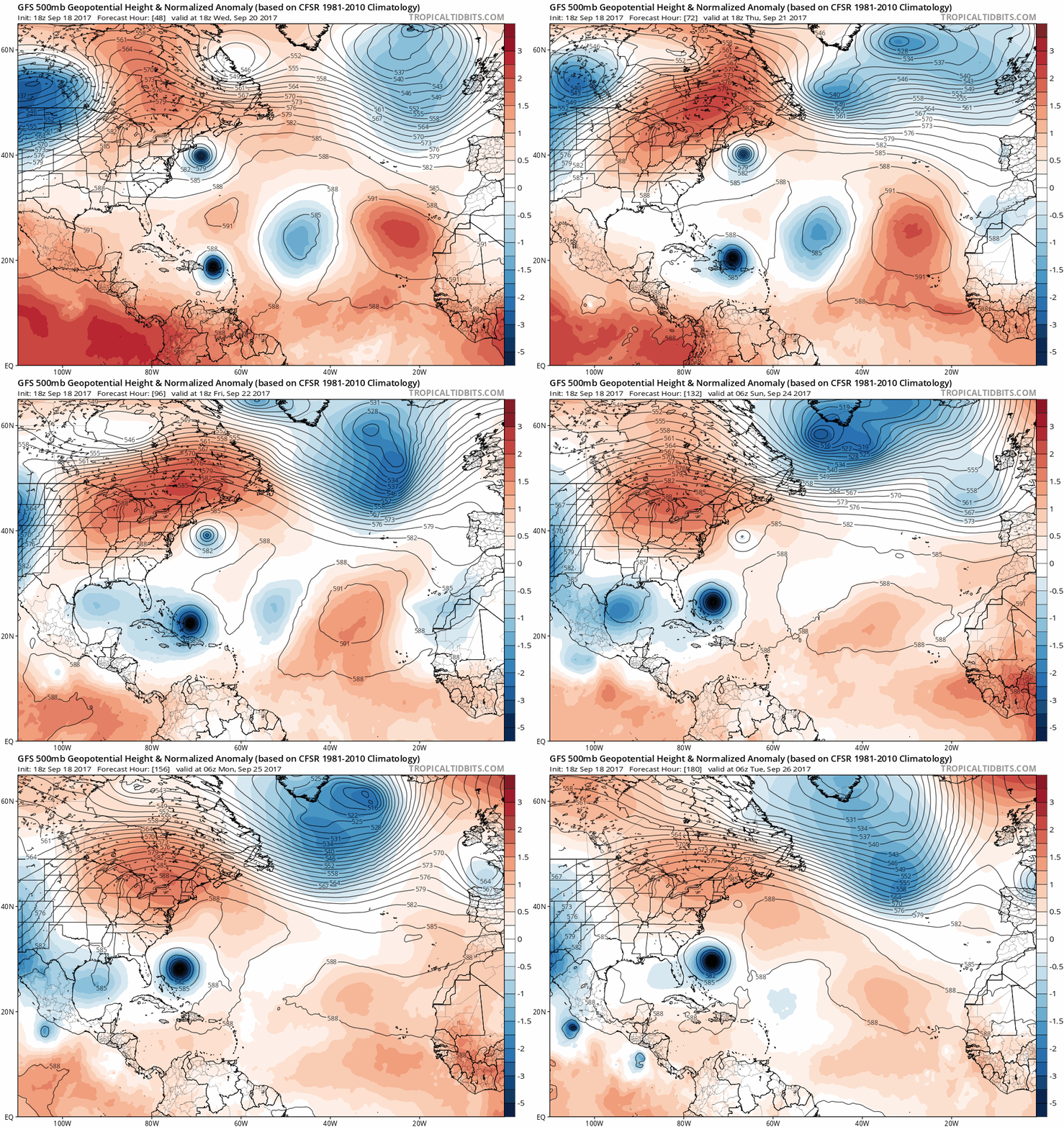
The afternoons GFS model showing the leftover weakness caused by Jose eventually determining the track of Maria

The afternoons GFS model showing the leftover weakness caused by Jose eventually determining the track of Maria

For more information and posts like this one, make sure you sign up for Premium Forecasts — where multiple detailed articles, videos, and interactives are posted each day. Also, come interact with our staff and many other weather enthusiasts at 33andrain.com!

Have a great evening!

Steve Copertino
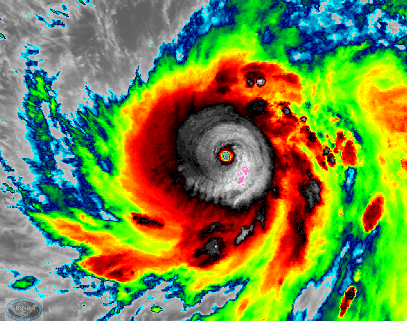
Hurricane Maria’s Track May Depend on Jose

In what seems to be about day seven hundred in an endless cycle of Tropical news, we have plenty more to talk about. Hurricane Maria underwent rapid intensification last night, strengthening from a Category 1 to a Category 3 storm. It developed a very tight core with a rapid increase of lightning around the center — a classic foreboding of rapid intensification. This intensification has continued throughout the day, as it has now become a Category 4 hurricane with 130mph winds. This was evident because a classic pinhole eye opened up, reminiscent of some of the strongest hurricanes, such as Hurricane Gilbert. It is looking like Puerto Rico will take a direct hit from Maria, as perhaps a Category 4 or even 5 hurricane. Afterward, there is a lot of spread in potential outcomes, though the general pattern at large does signal a landfall somewhere along the East Coast. But a big variable will be how the remnants of Jose behave, something that will be very hard to forecast.

Read more

Attention Turns to Jose, Two More Systems Active Over the Open Atlantic

Good Afternoon! 

The tropics have begun to really ramp up yet again, with Jose still meandering north of the southern Bahamas, newly formed Tropical Depression 14, and a vigorous tropical wave that has been designated Invest 96L.

————-

Tropical storm Jose has been on the upswing over the past 18 hours or so, as the strong wind shear that has been blasting it ever since Irma made landfall has finally abated to some degree. The storm developed very cold convection right over the center last evening, and this likely worked to help reorganize the storms core a bit, since earlier microwave passes showed that the system had become severely tilted to the point that the mid level and low level centers were no longer aligned. At this post is being written, the hurricane hunters are currently investigating the system, and have found winds just around the threshold for a Category 1 hurricane along the southeast portion of the circulation. Typically the strongest winds are found in the northeast quadrant, so I would no be surprised if this mission found winds of around 80 mph, but I will wait for the NHC to make that official decision of reclassifying it as a hurricane. As stated, shear has begun to weaken, and Jose will be over very warm sea surface temperatures of around 29-30C for the next 36 hours, along with relatively moist mid level atmospheric conditions. This should allow the system to strengthen back to a high-end Category 1 Hurricane, or even a low-end Category 2 before shear really begins to increase to high levels in about 48-60 hours.

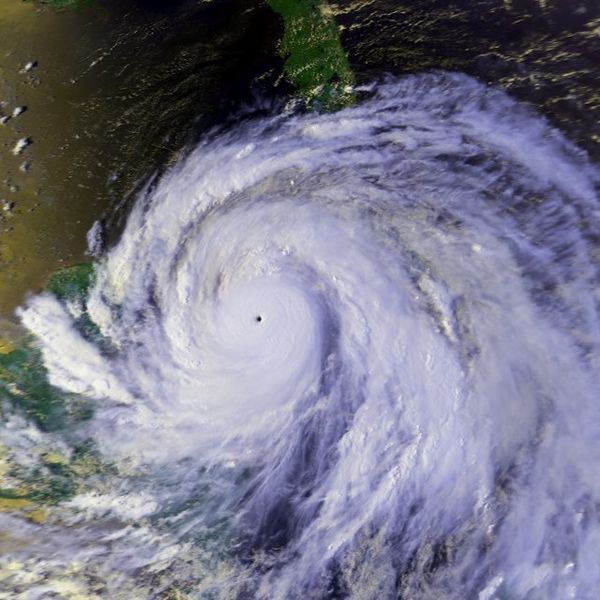
Current hi-res visible satellite imagery of Tropical Storm Jose over the open Atlantic with 70mph winds.

Current hi-res visible satellite imagery of Tropical Storm Jose over the open Atlantic with 70 mph winds.

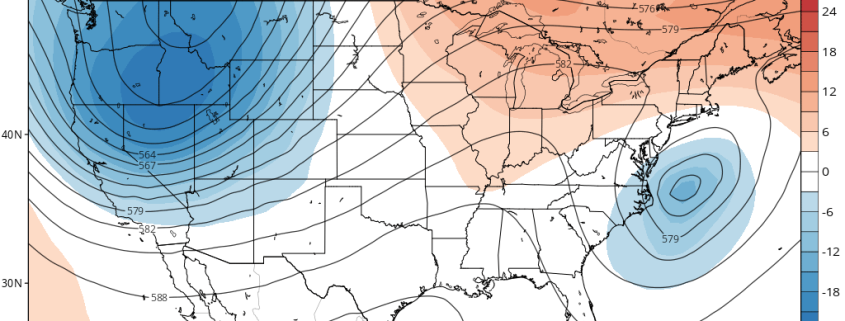
The track of Jose is what remains the hot-ticket item. Over the past few days, there has been a noticeable shift westward, with some global models even showing Jose making landfall along the east coast. Once Jose is positioned between Bermuda and North Carolina on Monday, steering currents will begin to break down and the storm should begin to slow a bit while moving to the north. As the storm slows down, the consensus from the reliable models seems to show that more mid level ridging will build over and around Jose to slow it down even more once we get to the Tuesday afternoon period. By this time, a the storm will likely be encountering very strong wind shear and much cooler waters, which should force it to become a large extra-tropical system near the 40/70 ‘benchmark’ by Wednesday. While direct impacts are unlikely from this system outside of some gusty winds and possible rainfall along with coasts, strong wave action and life-threatening rip currents are likely to last well into next week as the storm slowly moves eastward over time. There will also be an enhanced threat for beach erosion, especially if the storm slows down as it nears the area. We will have a special update this weekend if conditions change, and direct impacts from Jose seem to be on the increase.

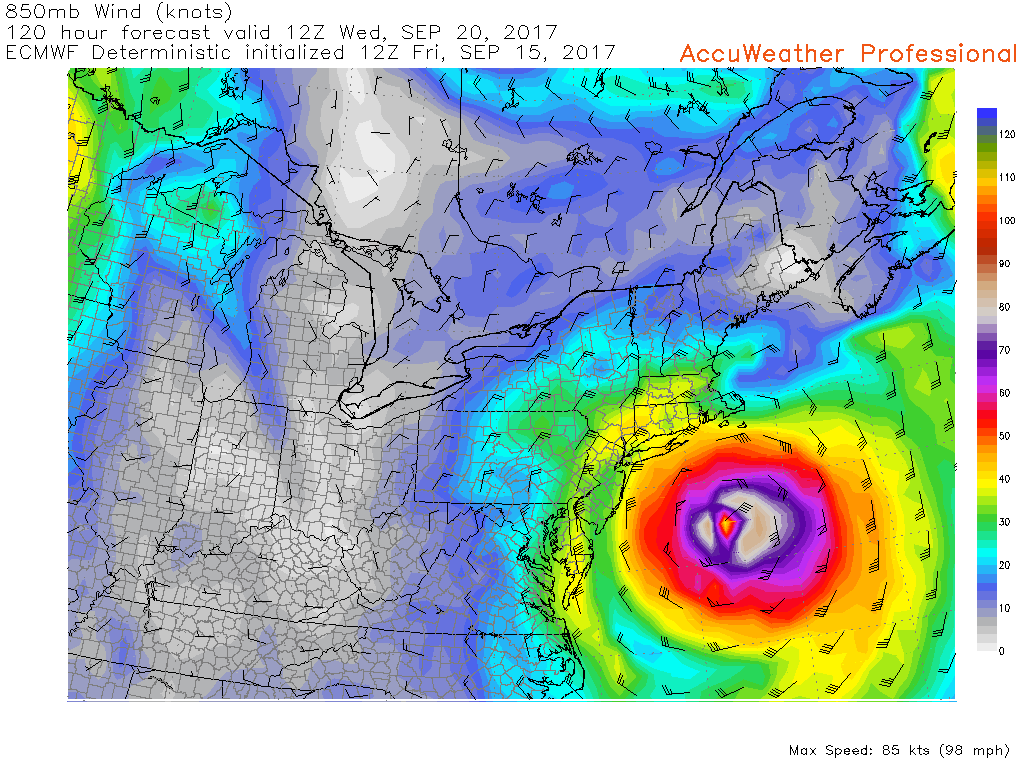
This afternoons ECMWF model showing Jose south of New England and heading towards the east

This afternoons ECMWF model showing Jose south of New England and heading towards the east

Invest 96L East of the Lesser Antilles 

A strong tropical wave with a healthy amount of spin is currently located about 1000 miles east of the Lesser Antilles, and has become much better organized over the past day and a half. This system was a par of a large eastern Atlantic monsoon trough, which split into two halves, with the right side of the trough organizing into TD14. During the day today, the system has been able to sustain moderate to heavy amounts of convection over its presumed center of circulation. Visible satellite imagery shows that this system may have a weak surface reflection, with banding beginning to show up on the southern periphery of the invest. However, we have not had a reliable scatterometer pass of this system that is able to show whether or not a system has a closed surface circulation. Regardless, the system is currently within a very favorable area of windshear which lies around the 5-10 knot range. Additionally, the system is over warm waters of 28-29C, and remains embedded within a very moist pouch that surrounds the system. The environment looks very favorable for continued development of this system over the next day or so, and I would not be surprised to see the system become a tropical depression or storm as early as Saturday evening.

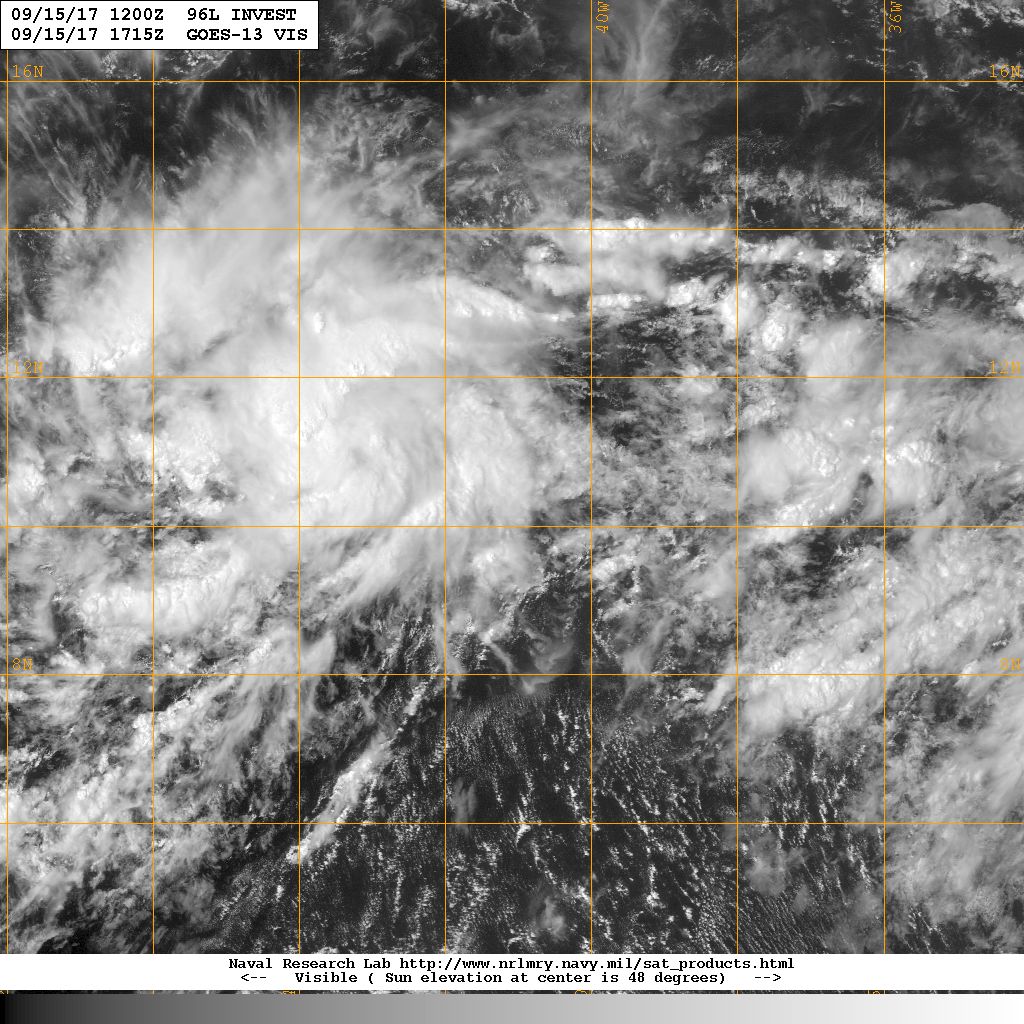
Invest 96L this afternoon showing the system gradually becoming better organized

Invest 96L this afternoon showing the system gradually becoming better organized

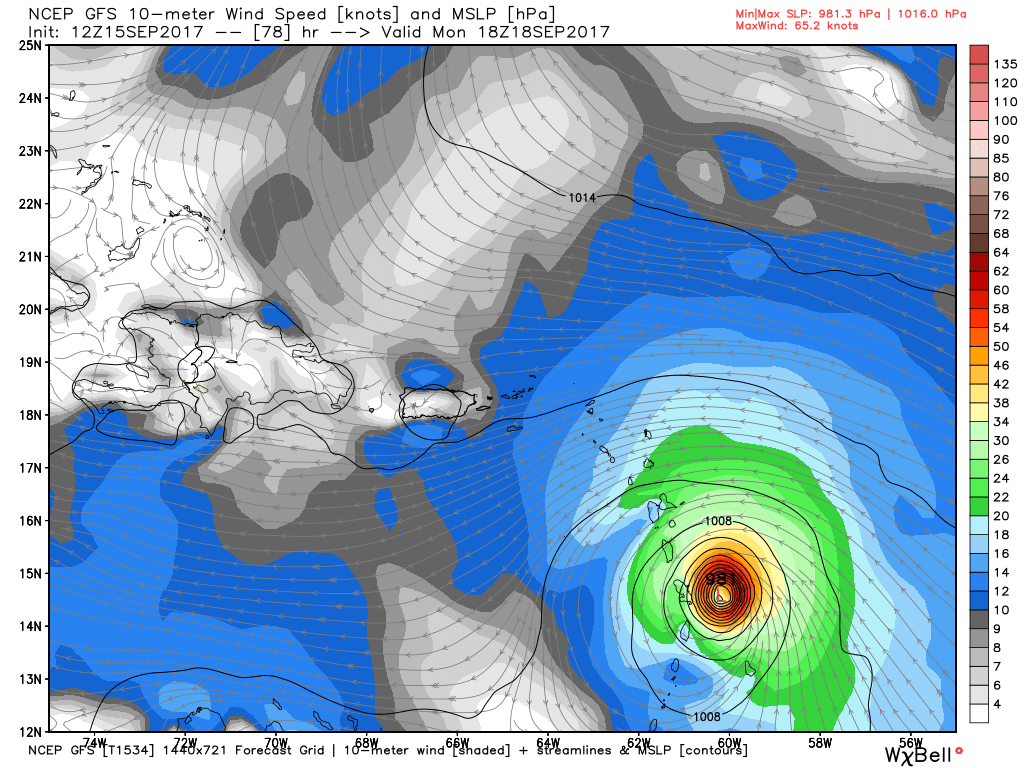
Over the next few days 96L should continue heading west/west northwest towards the Lesser Antilles, possibly reaching the islands as soon as Tuesday. With favorable environmental conditions, it appears likely that the system will at least be a mid-grade tropical storm at that point, with some of the other model guidance showing a hurricane nearing the islands. Due to the fact that we do not even know whether or not the system has a closed circulation, it is very heard to gauge exactly how strong this will be once it nears the islands, but the Islands should very closely monitor the progress of this system over the next five days, especially the island of Antigua, which is currently housing the population of Barbuda, which was completely destroyed by Irma when it was a 185 mph hurricane. The track of this system beyond the islands will be heavily reliant on the future of Jose, so make sure to check back over the next few days when these details become clearer.

This afternoons GFS model showing 96L becoming a strong tropical storm/hurricane just before reaching the Lesser Antilles

This afternoons GFS model showing 96L becoming a strong tropical storm/hurricane just before reaching the Lesser Antilles

Tropical Depression 14-No Threat To Land

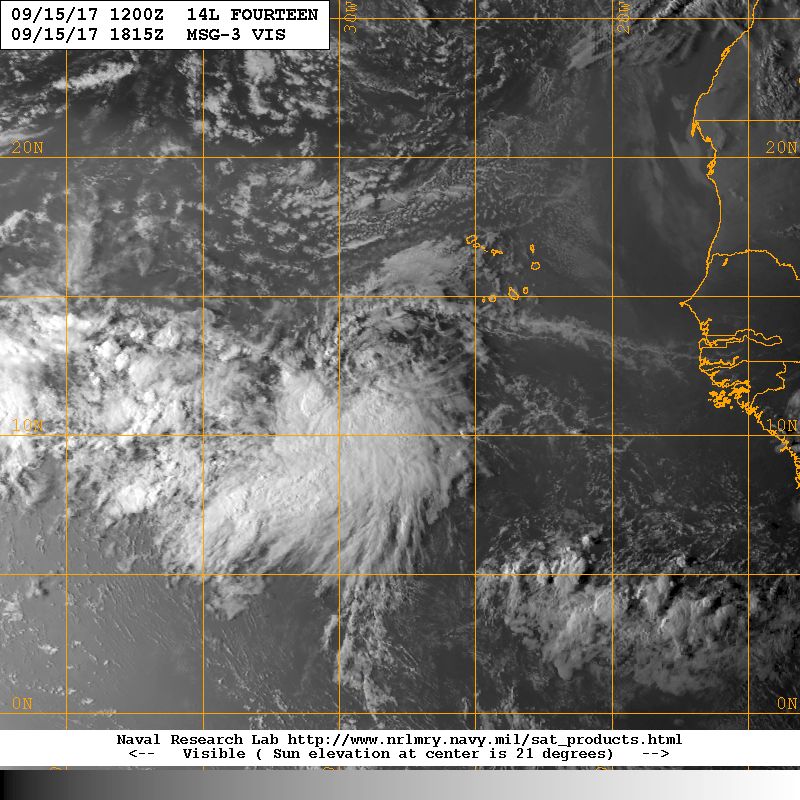
TD14 formed over the far eastern Atlantic from a strong tropical wave, and was designated by the NHC yesterday evening. The system seems to be experiencing some moderate amounts of mid level shear this afternoon, which has displaced the heaviest convection from the low level center. Despite this, the system will be over warm waters and within a moist environment over the next 72 hours, and is expected to become a tropical storm over the next few days as it gradually heads WNW. TD 14 is thousands of miles away from land, and most models show the storm eventually dissipating as it encounters very strong shear and dry air from an upper level trough over the central Atlantic. Depending on what 96L does over the next 48 hours, the next two names on the list of Lee and Maria.

We will have a full update on Monday!

Afternoon visible shot of Tropical Depression 14 over the far Eastern Atlantic

Afternoon visible shot of Tropical Depression 14 over the far Eastern Atlantic

For more information and posts like this one, make sure you sign up for Premium Forecasts — where multiple detailed articles, videos, and interactives are posted each day. Also, come interact with our staff and many other weather enthusiasts at 33andrain.com!

Have a great weekend!

Steve Copertino

Unsettled Weather Today, More Pleasant This Weekend, Watching Jose for Next Week

Good morning! More unsettled weather is likely today. First, some areas of patchy fog will clear out later this morning. Then a large mid-upper trough over OH/TN Valley will be moving eastward  with more cloud cover and scattered showers and thunderstorms today over the Northeast and Mid-Atlantic regions today. Shortwave energy and wind fields with the trough will gradually be weakening, as it approaches the coastline. So we don’t anticipated any more organized convection or severe weather. For most part today is just looking more dreary, more warm and muggy conditions.

Read more