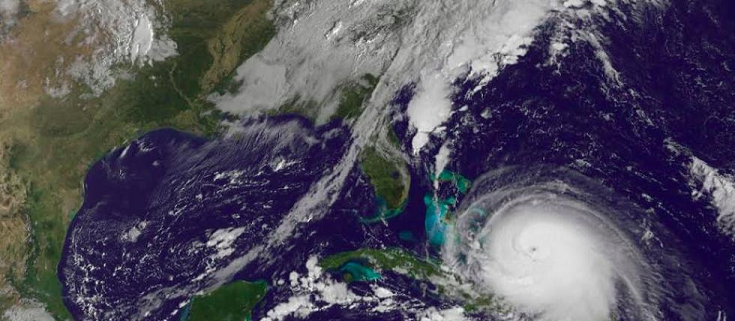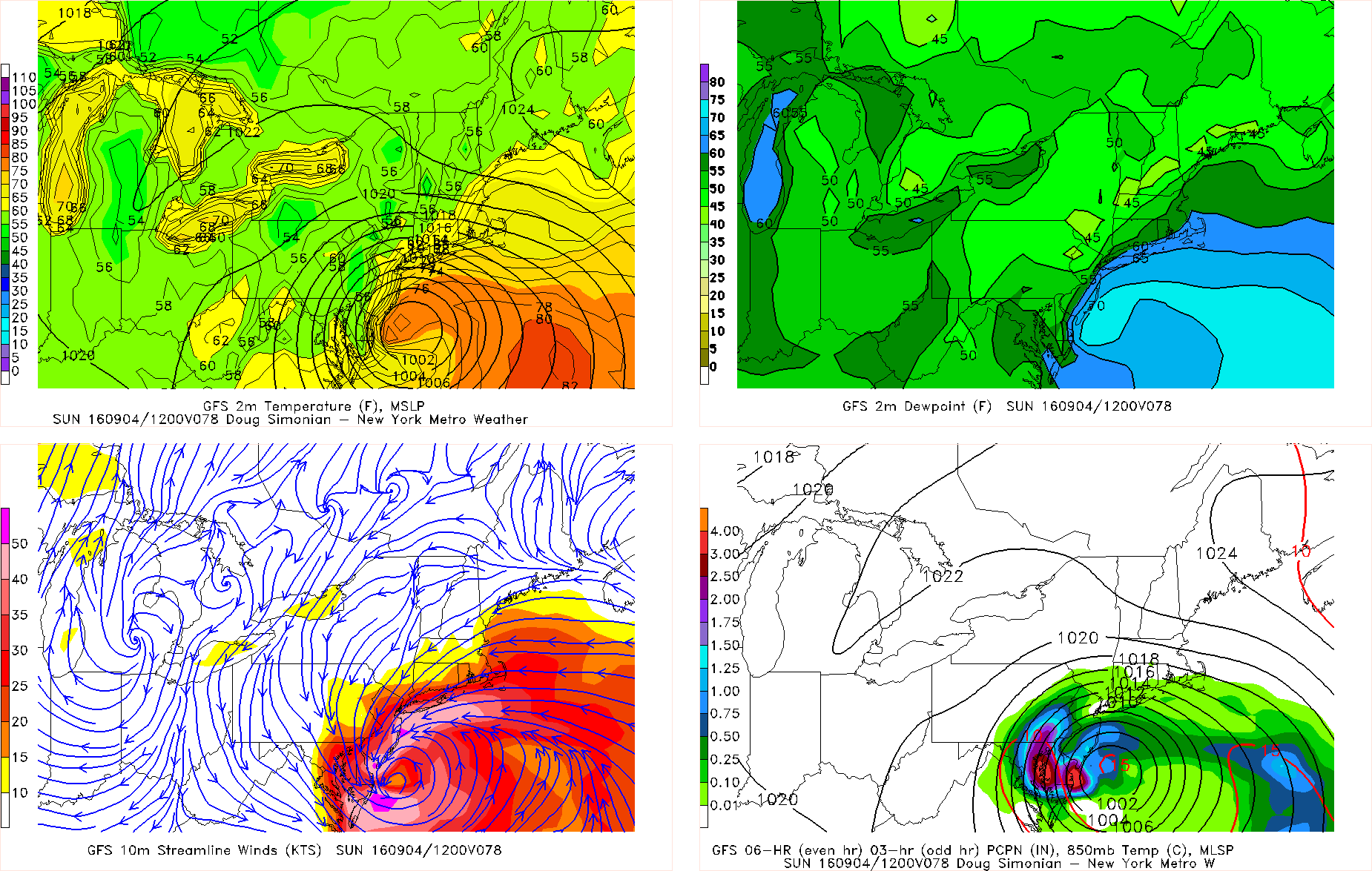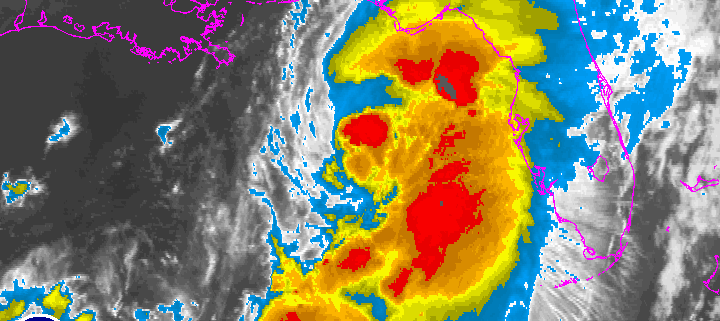
Thursday Overview: Watching Hermine for Labor Day Weekend

A wave of tropical moisture surging ahead of a cold front approaching the region, has led to periods of rain this morning. This is now beginning to taper off from west to east across the region. Clouds could break for some sunshine this afternoon. But there is still a chance of some isolated showers and thunderstorm popping up until the cold front moves through region late this afternoon. Temperatures will likely reach the upper 70s to lower 80s with enough sunshine this afternoon. Then tonight, skies will clear with high pressure building over the region. Friday will be mostly sunny with temperatures rising into upper 70s to lower 80s. Dry conditions will likely continue into Friday night. Then attention turns to Tropical Storm Hermine which is currently strengthening in the Gulf of Mexico and is forecast to make landfall as a minimal hurricane over the Florida panhandle late tonight.

Much of the latest model guidance overnight has shifted further south and east with what remains of Hermine, reducing some impacts from heavy rain and high winds in parts of the area. However, models have not been too consistent with the track of this storm near our region, over the last few days. One of these models (the GFS) has also shifted west again during its early morning run, with heavy rainfall and strong winds for the New Jersey coast. The mid-morning and early-afternoon model runs have also shifted back northwest, bringing significant impacts back to the region. If Hermine tracks closer to region, the mostly likely time frame for significant impacts, appears to be on Saturday night and Sunday. .
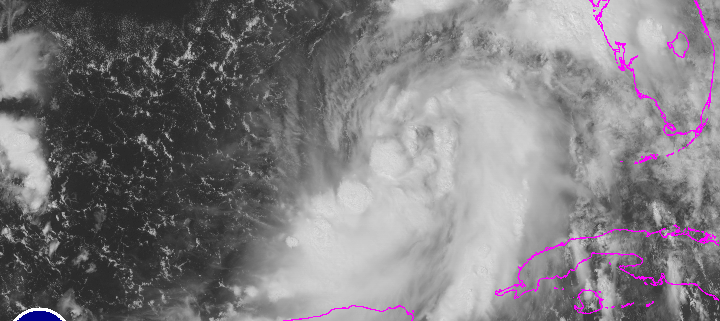
Read more

(Premium) Tropical Storm Hermine Increasingly Likely to Affect our Region

We continue to carefully monitor developments with tropical storm Hermine currently over the Gulf of Mexico. It is forecast to make landfall near around the Florida Big Bend area, as a tropical storm. But it could intensity more — into a Category 1 Hurricane — before making landfall. Therefore, a hurricane watch has also been issued for this region. The main threat will still be heavy rainfall and perhaps some coastal flooding and storm surge along the coast, due to the new moon cycle.

For our region, we watch for at least the remnants of this system to affect our area. Model guidance has been indicating that a northern stream shortwave will break off the upper-level trough that will passing through the Northeast tonight and tomorrow. This will trail the that trough and create a new, powerful shortwave trough in the Ohio Valley — similar to what we sometimes see during our strongest snowstorms. Then this shortwave trough and energy will amplify the downstream pattern, and thus interact with the shortwave energy from Tropical Storm Hermine, as it moves up somewhere near the Georgia and Carolina coasts on Friday.

Read more

The relentless ridge and its effect on 99L

When meteorologists looked at the medium range forecasts on the first of August, one thing was clear, it appeared: Troughiness would become more likely east of the Mississippi River by the tail end of the month. Brought on by a change in tropical forcing and an overall adjustment in the hemispheric wave pattern, this seemed like a moderate to high confidence forecast. Those ideas were wrong.

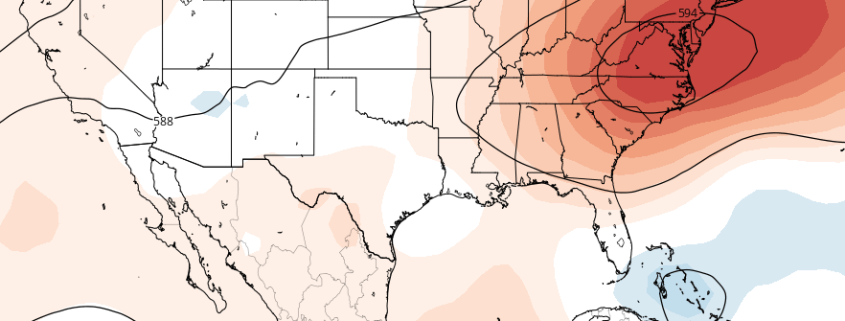
Instead, poor modeling and a changed pattern evolution has led to an entirely different outcome: The mid level ridging, which has become a staple of the East Coast weather pattern since early July, will return. Forecast model guidance has altered the hemispheric pattern evolution to support a -PNA (Pacific North American oscillation), or troughiness on the West Coast of the United States. This will only feed the development of a strong ridge from the Southeast United States into the Mid Atlantic.

Read more

The meteorology, and stats, behind the 2015 Hurricane Season

Meteorological Winter began today, and the 2015 Hurricane Season officially ended yesterday, marking a transition in seasons — and the attention of meteorologists worldwide. While the season will be remembered for a few more significant storms, the overall season in the Atlantic was quiet. There were 11 named storms and one more tropical depression. Four of those named storms became hurricanes and two of those became major hurricanes (Category 3 or higher). The number of named  storms is actually about average for Atlantic hurricane seasons between 1966-2009. But the number of hurricanes is below the average of 6 for the season. Only two storms made landfall in the in the United States: An early season tropical storm named Ana over North Carolina in May, and then Tropical Storm Bill over Texas in June. There hasn’t been a major hurricane landfall in the United States since Hurricane Wilma in 2005 — which is now 10 years ago.

Read more