Does the tropospheric pattern change have staying power?

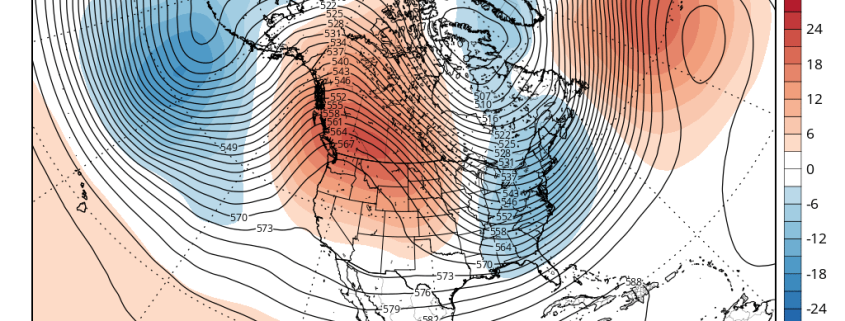
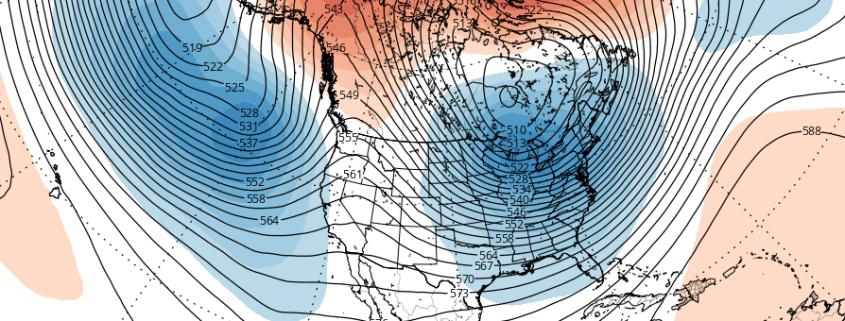
Winter has arrived. The first shot of arctic air in the young winter season will arrive this week — and it will be brutal, with temperatures in the single digits and teens on both Monday and Tuesday. This cold air will be short-lived, however, as temperatures will warm to above average late this week, as a mid and upper level atmospheric ridge starts to build back over the Eastern US.

Subtropical jet disturbances will be ejecting out of the Southwest United States later this week as the pattern ramps up in activity. The first of these disturbance arrives Friday and Saturday. At the surface, the primary low tracks into the Great Lakes region, while another secondary low forms over the Mid-Atlantic. A warm antecedent airmass and a lack of high latitude blocking should put a serious cap on any wintry weather potential; although some frozen precipitation remains possible in the far interior and higher elevations.
Read more

Colder, more wintry pattern ahead: First storm on the horizon? 

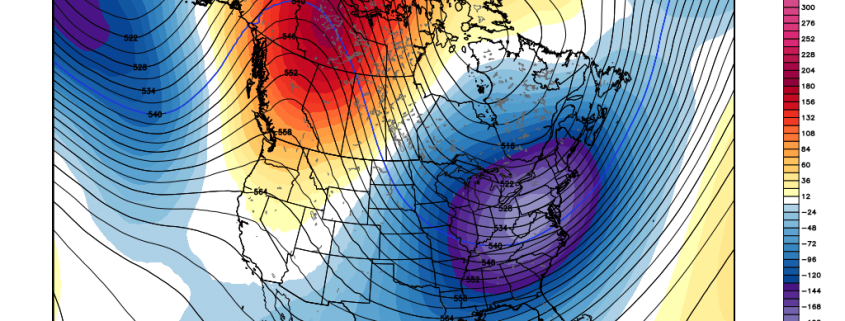
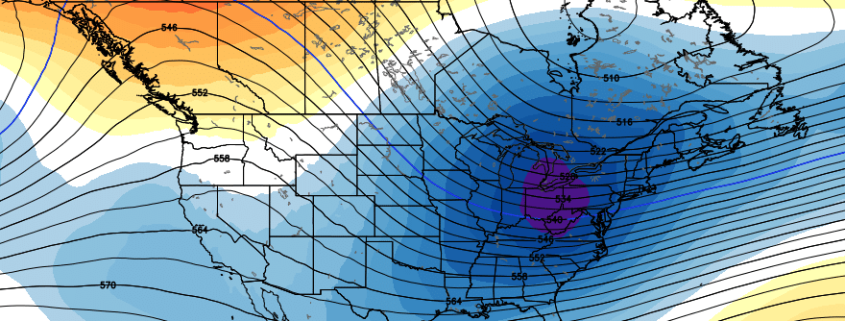
Winter is — still — coming. As we move into the New Year, forecast models and ensemble guidance continues to show changes in the mid level atmospheric  pattern that will support much colder temperatures for January than what we saw in December. As explained in our previous post post, the very anomalous Kara Sea Ridge and ridge over Western Canada will cause splitting of the polar vortex at 500mb. This will support polar jetstream shortwave energy diving on the downstream side the Western Canadian ridge (like a slide), carving out a trough over the Northeastern United States.

This pattern will bring a seasonably cold airmass into our region this weekend and early next week. Temperatures will run near or several degrees below normal. An Arctic front on Monday will make Monday afternoon through Tuesday feel bitterly cold, especially when compared to the lack of cold we’ve seen so far. Afterward, temperatures will moderate to several degress above average as the Western Canadian ridge starts to roll over and the trough shifts east later in the week. But this warm up is temporary, as the pattern starts to reshuffle in the higher latitudes.

Read more

Warmth on borrowed time as January pattern change looms

Old man winter may finally be waking up. After a December which, to this point, has featured historically warm temperatures and an overall lack of snow, a well anticipated pattern change now looks increasingly likely to play out during the middle part of January. In fact, forecast models suggest the pattern change is already underway, and the effects of it may be felt a bit earlier than anticipated when we released our Winter Forecast back in early November.

The atmosphere is already undergoing significant changes which will have a tremendous impact on the sensible weather in our area within about two weeks time. Most interesting of all? Those changes are beginning (and are currently most notable) thousands of miles away, in part of the Arctic Ocean north of Sibera known as the Kara Sea. That’s not all, however, a myriad of hemispheric changes are expected over the next few weeks.

Read more

Long Range: Winter is Coming…January Pattern Change Details

So far this winter has been mild here with historic warmth. We released a previous premium article stating the reasons why. This is still in much dismay of snow-lovers, while a blessing to many others. But we’ve been discussing a pattern change here for January for a while, and now it appears that some parts of that pattern change are coming together a little sooner than we thought. Some of the climate patterns we discussed are going through major changes.

The pattern change will begin with the development of a large ridge over Scandinavia next week. This ridge builds into a very strong, anomalous ridge over the Barents/Kara Sea next weekend. Meanwhile a deep low/trough near the Aleutians causes another large ridge develop over Western Canada. Both ridges cause the polar vortex over the high-latitudes to begin elongating or splitting, from northwest to southeast. These changes will cause the AO to fall into the negative phase and the PNA to rise into the positive phase. This process results in a large trough with seasonably cold temperatures over the Eastern US shortly after New Year’s Day.

Read more