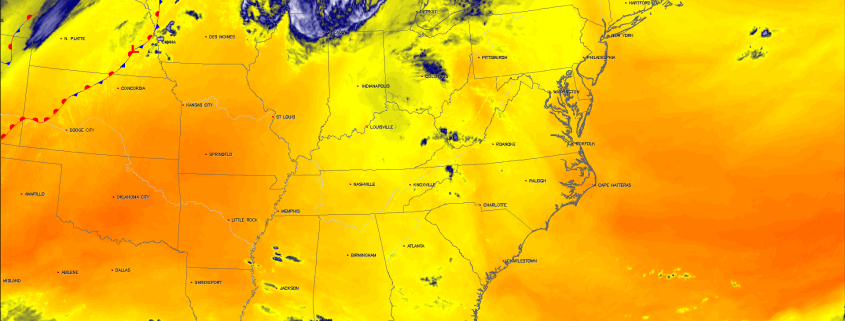
La Nina is in the Atmosphere, but Changes are Possible

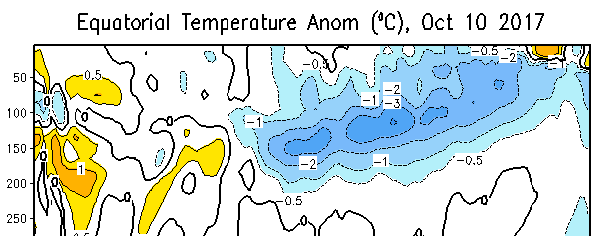
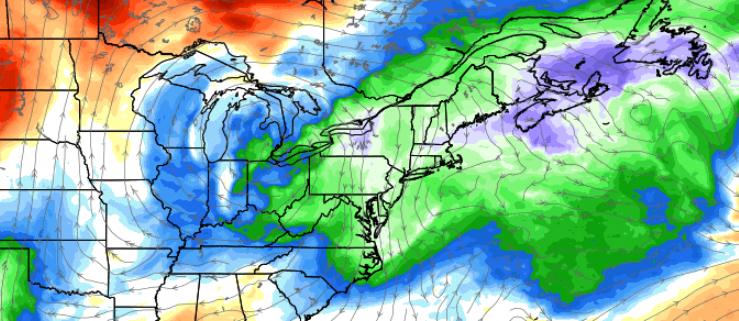
After some big warmth, we finally saw some Autumn chill arrive over the past couple of days, which signifies the change of seasons. We are now approaching crunch time when it comes to compiling a winter forecast. In our Winter Forecast Webinar, one of the main topics discussed was the evolution of the La Nina and the effects it is already having on the atmospheric pattern. With La Nina conditions already having been established with regards to feedback in the atmospheric circulation, and the fact that ENSO events tend to peak in November, it would seem to be a given that La Nina would be at least somewhat or even perhaps a major driver this coming winter. And to some extent, we believe that is true. However, there is conflicting evidence regarding the future of the La Nina, and part of this will be evidenced by a pattern change to a +PNA and a trough in the East later this month. These factors will be discussed in detail in this article.

Read more

Tropical Depression Sixteen Forms Off the Coast of Nicaragua, Likely to Strengthen

Good Evening! 

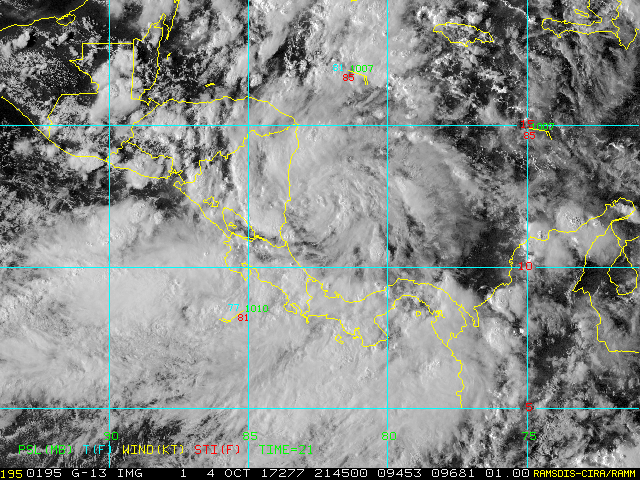
The active hurricane season of 2017 continues on with yet another system developing, this time down near Nicaragua. Around two weeks ago, we highlighted that there was at least a moderate chance that the increased thunderstorm activity, below-average wind shear, and above normal sea surface temperatures would lead to some kind of tropical system during the first week of October. Like clockwork, we had a very large tropical wave move across the central Caribbean with an associated upper low just to its west. This greatly increased shower and thunderstorm activity over the area and began to lower pressures. Thunderstorms began to consolidate and yesterday the National Hurricane Center designated a small area of low pressure north of the Panama coast embedded in these showers and thunderstorms as Invest 90L  with a high chance of development. Earlier today, surface observations and satellite data showed that the system had become sufficiently organized enough to be classified as the sixteenth tropical depression of the season with winds around 35 mph.

A little after one o’clock or so, the hurricane hunters flew into the depression to get a better idea of the systems strength and its overall structure. They did not find anything overly impressive, but they did find that the system did have a relatively well-organized center with winds around 35mph. The pressure was down to 1006mb, which is quite typical for these types of monsoonal depressions during the month of October. Since that time, the depression has not changed very much, but remains well organized with multiple curved bands and low level spiral bands present around the circulation. Convection is not all that deep at the moment, but this is to be expected during the afternoon hours with peak heating. As the sun sets and temperatures begin to cool, the temperature differential between the ocean and the cooler air aloft should spark numerous thunderstorms that should help the system begin to become better organized.

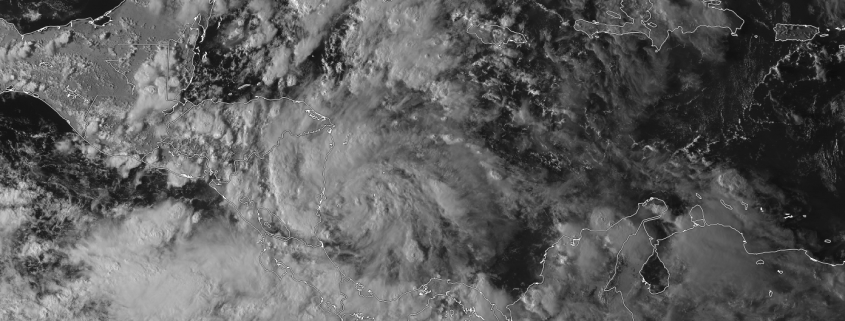
Visible satelite imagery of Tropical depression 16 just off of the Nicaraguan coast this evening with 35 mph sustained winds (RAMMB CIRA)

Visible satelite imagery of Tropical depression 16 just off of the Nicaraguan coast this evening with 35 mph sustained winds (RAMMB CIRA)

The depression should continue to gradually move towards the coast of Nicaragua over the next 12-24 hours, likely strengthening to a tropical storm in the process. This afternoons SHIPS text (which is a guide for intensity for cyclones) showed a rather significant chance that TD16 will rapidly intensify over the next 24-48 hours, with up to a 60% chance of the system increasing by 55 knots in the next two days. We will have to closely monitor this system over the next day or so to see how convection develops and organizes over the center. Since the system has a relatively small center already, it would not take much in the way of deep convection for the system to be able to begin to rapidly intensify over the extremely warm waters of the Caribbean and take advantage of the very strong Oceanic Heat Content below the system. History is also on the side of this system, as some of the most intense hurricane on record have intensified in the same area that this system will be tracking.

Regardless, it is likely that this system will be a moderate to strong tropical storm by the time it interacts with Nicaragua tomorrow afternoon. The system should exit central America tomorrow evening, and should be able to retain tropical storm strength as it reemerges over the Caribbean. Initially the cyclone will be over relatively shallow waters near the coast, but as it continues to accelerate north it will begin to encounter some of the warmest and deepest oceanic heat content in the world. This point will be crucial, as we will have to see if the system has a stable enough core post lander interaction. Upper level conditions will be quite favorable, with a large upper level low back away from the system off to the north and west, which should create a nice poleward outflow channel. This will allow for the system to effectively transport latent heat from the center of the storm. At this time, it seems that a strong tropical storm or minimal hurricane will be likely by Friday afternoon, when the system is nearing the Yucatan Peninsula.

Map showing the forecast points for TD16 with Oceanic Heat Content in the background. The yellow and orange values are quite high, and support a strong system.

Map showing the forecast points for TD16 with Oceanic Heat Content in the background. The yellow and orange values are quite high, and support a strong system.

TD16 should either pass over the Yucatan or just east by Friday evening, and eventually make its way into the Gulf of Mexico. At this point, the intensity of the storm will be highly dependent on the structure of the system, but if the system remains healthy and the core is not too disrupted from the Yucatan, then it appears quite possible that the system could enter the Gulf as a low-end Category 1 hurricane-possibly stronger if it gets its act together earlier in time. After this point, it becomes pointless to speculate on intensity once the system reaches the central Gulf by Friday, but the global models seem to indicate that there is good chance that upper level conditions will remain conducive for at least some intensification as the system approaches the Gulf Coast. TD16 should be nearing the Gulf Coast as early as Sunday morning, but the exact landfall point will likely not be known until Friday or so. For now, I would say that points from the “Big Bend” of Florida to the central Louisiana coast should keep a close on the progress of this system over the next few days as the overall intensity forecast for this system remains complicated and could change in a moments notice.

We will have an update on this system and its potential impacts for the Northeast later in the week!

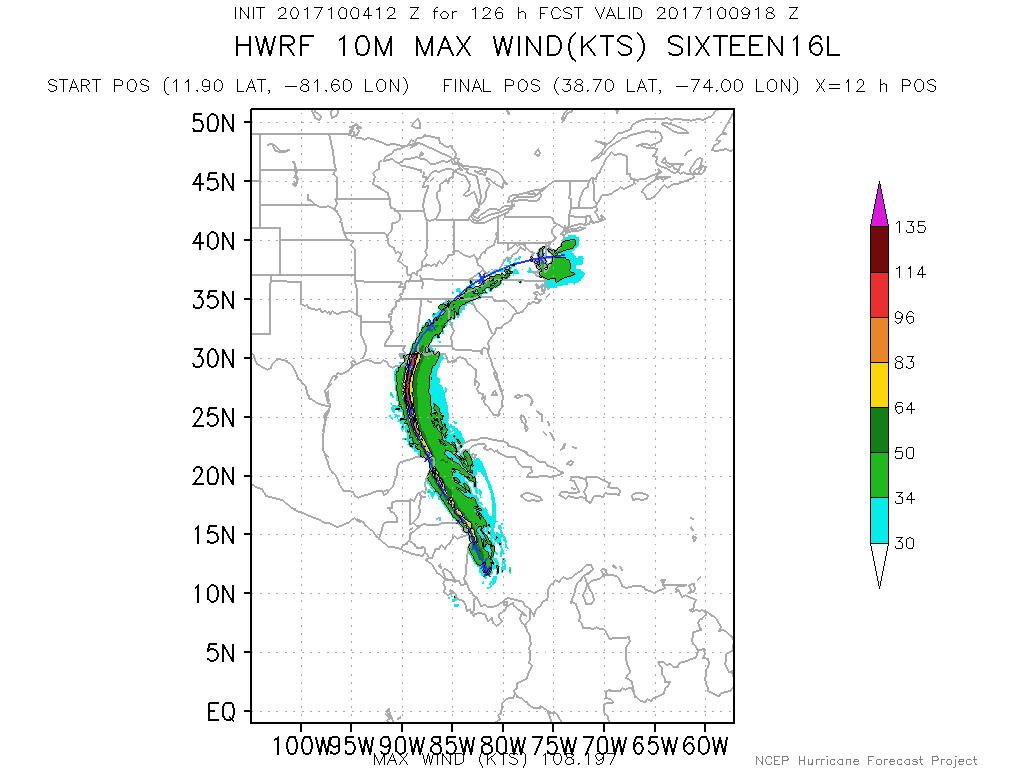
This afternoons HWRF model showing TD16 steadily strengthening into a strong hurricane before landfall along the Gulf Coast

This afternoons HWRF model showing TD16 steadily strengthening into a strong hurricane before landfall along the Gulf Coast

For more information and posts like this one, make sure you sign up for Premium Forecasts — where multiple detailed articles, videos, and interactives are posted each day. Also, come interact with our staff and many other weather enthusiasts at 33andrain.com!

Have a great night!

Steve Copertino

More Dry and Warm Conditions Continuing This Week

Good Evening! 

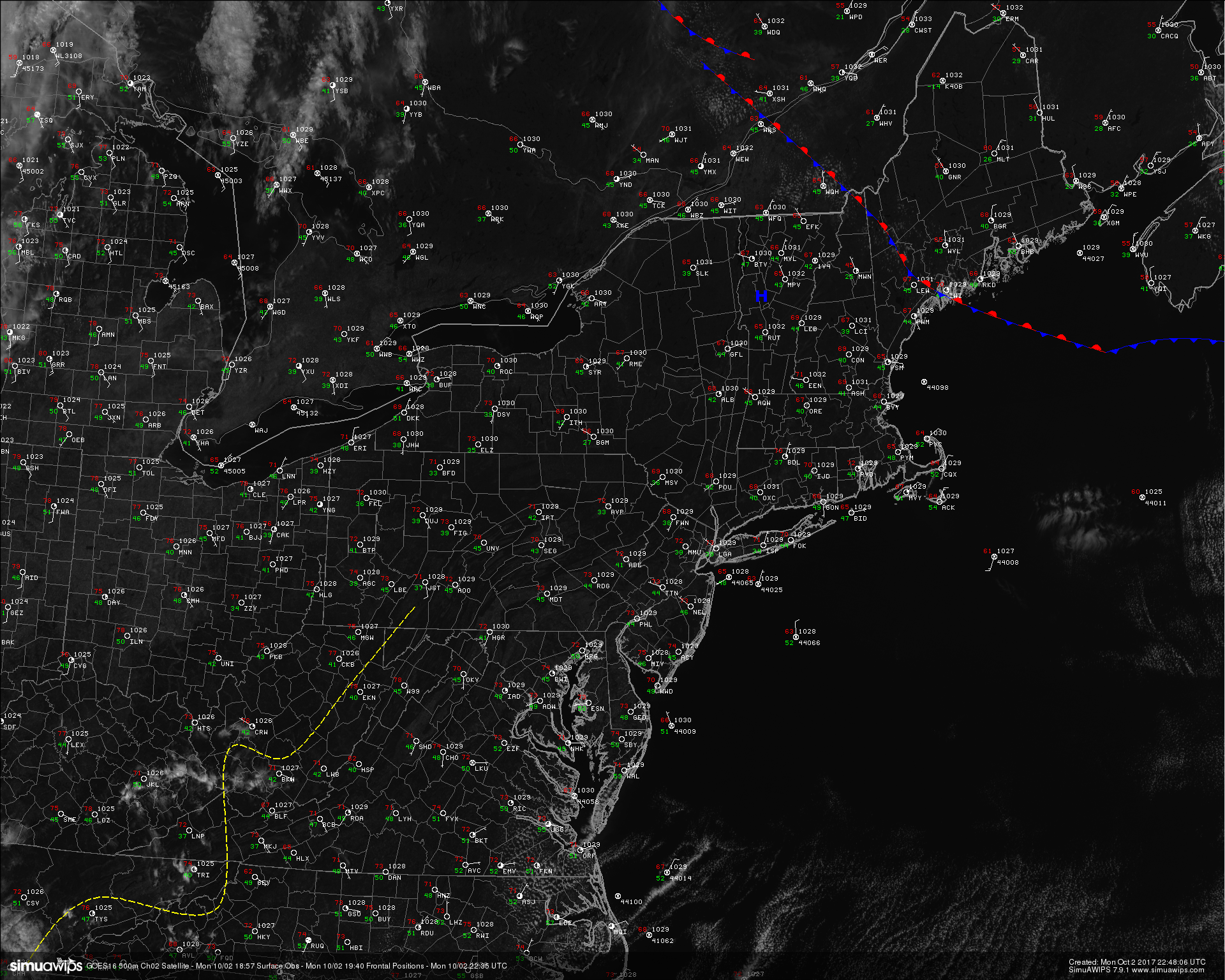
Today was another clear and beautiful day across the Northeast as the area of high pressure that dominated the region over the weekend continues to progress eastward over New England. With winds out of the north and east this afternoon, we saw cooler onshore winds over much of the area with highs reaching into the upper 60’s to middle 70’s, with the cooler temperatures confined into the upper regions of New England which was underneath the “center” of the Canadian high pressure system. Outside of a stray cloud or two this afternoon, the day was pretty much clear across the entire northeast with no signs of rain anywhere in the area. These conditions are expected to last into the evening hours and eventually overnight, when radiational cooling will allow for temperatures to rapidly cool back down into the upper 40’s to lower 50’s for lows this evening. Some locations in the far northern sections of Connecticut and New York may even see patchy frost as some low level moisture gets trapped underneath a temperature inversion in the lower levels of the atmosphere. Further south, this will translate to an enhanced risk for fog as we discussed last week. Foggy conditions may last into the early morning hours of Tuesday, before burning off as the day goes on.

High resolution visible satellite imagery from GOES 16 showing extremely quiet and clear conditions across the Northeast (Simuawips)

High resolution visible satellite imagery from GOES 16 showing extremely quiet and clear conditions across the Northeast (Simuawips)

The same mid level ridge that is currently over the region will continue to build and strengthen during the next few days leading to continued pleasant weather for the entire Northeast. The only changes that we will be seeing will be in the form of just how much the mid level temperatures moderate, which will then dictate how much temperatures will be allowed to rise. There is very good agreement amongst the model guidance that Wednesday will be the start of a short, but slightly warmer period as more west-southwest flow in conjunction with warmer mid level temperatures will allow highs to reach back up into the upper 70’s to lower 80’s across the region. On Thursday, we should see much of the same, but even warmer mid level temperatures will allow for above-normal highs to be relatively commonplace during the day, with highs in the lower to middle 80’s, especially over the NYC metro area and along points further south. As stated earlier, there really aren’t any solid rain chances this entire week, with the only slight-chance coming from a breakdown in the ridging over the Northeast, which may allow for some scattered shower/isolated thunderstorm development later in the day on Thursday and into Friday.

Loop of mid level temperatures off of the 18z NAM model showing a strengthening of the ridge, which ushers in some warmer weather once again

Loop of mid level temperatures off of the 18z NAM model showing a strengthening of the ridge, which ushers in some warmer weather once again

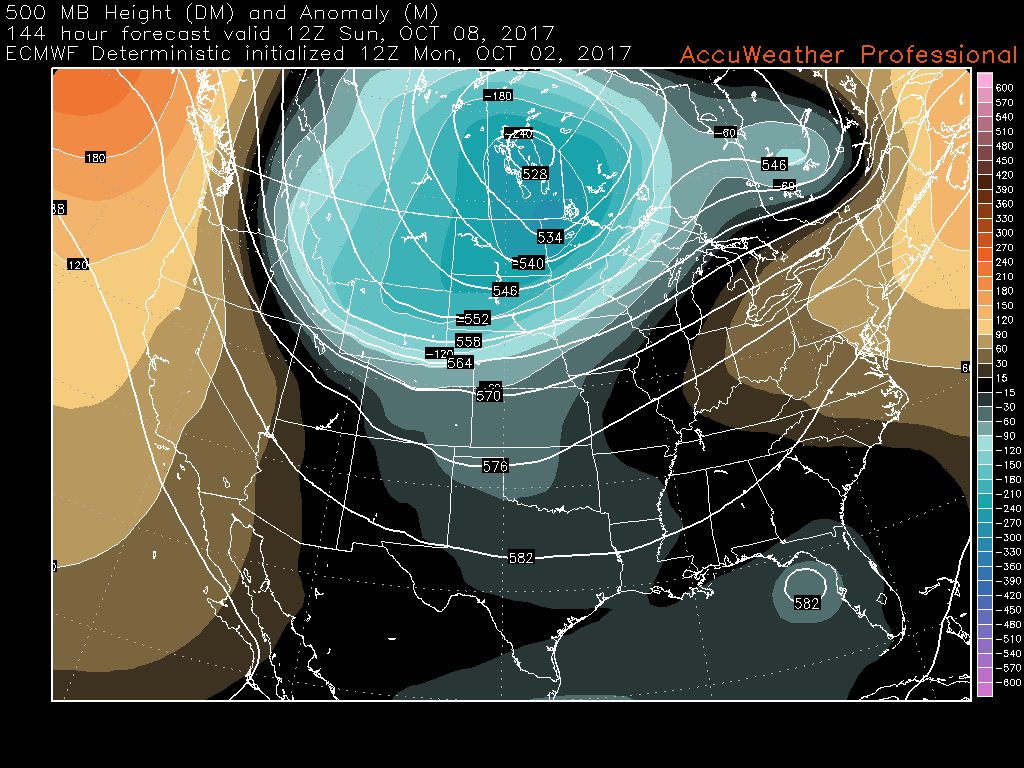
Overall, expect temperatures to be right around the same mark on Tuesday, then on a gradual increase from Wednesday into Thursday, before coming back down to the middle to upper 70’s by the end of the work week. Skies will be at least mostly sunny virtually every day except Thursday, when a slight increase in clouds and shower activity may occur.  Even low temperatures will be on the rise during the week, with the coolest lows expected this evening. Afterwards, expect lows to range into upper 50’s to lower 60’s starting Wednesday evening. We may have to watch for some increased moisture streaming along the edge of the western Atlantic ridge, which may provide the area with an increase in some more unsettled activity by the beginning of next week. There’s significant uncertainty about this time-frame right now, so we will be watching it closely

This afternoons European model showing the eastern ridging finally breaking down and a deep trough digging into the central part of the country. This pattern could potentially bring more unsettled weather to the East next week

This afternoons European model showing the eastern ridging finally breaking down and a deep trough digging into the central part of the country. This pattern could potentially bring more unsettled weather to the East next week

For more information and posts like this one, make sure you sign up for Premium Forecasts — where multiple detailed articles, videos, and interactives are posted each day. Also, come interact with our staff and many other weather enthusiasts at 33andrain.com!

Have a great night!

Steve Copertino

Maria and Lee Head Out To Sea, Beautiful Weekend on Tap for the Northeast

Good Afternoon! 

Today is the first in a series of more Fall-like conditions over the East with mild temperatures, low humidity, and crisp/cool nights. An area of high pressure has moved into the area behind the cold front that passed the area a few days ago, and is providing very clear and calm conditions for the entire Northeast.  Our source region for the air mass overspreading the region is fresh from Canada, so expect these pleasant and drier conditions to last throughout the day and into the evening hours. Winds should be light, but generally out of the northwest for the remainder of the afternoon. With cooler mid level temperature and relatively sunny skies, most of the area should see temperatures get up to the upper 60’s to lower 70’s, with some cooler readings likely farther into New England.

Later on in the day, a weak but compact area of low pressure associated with a mid level trough will begin to push towards the area and bring an increasing chance of clouds by sunset. The mid level system with this area of low pressure is rather impressive for this time of year and would usually be a pretty impressive clipper system for the area if it were deeper into the year, but regardless this system will begin to increase the threat of showers and possibly even a low-topped thunderstorm across the area late this evening. The change in temperature from the ground, into the mid levels of the atmosphere is also rather impressive, and this could become further enhanced as the low nears the warmer coastal regions late this evening and into very early tomorrow morning. At this time we expect any of the heavier activity to be rather isolated, but we would not be surprised to see reports of gusty winds, heavy rainfall, occasional lightning, as well as the potential for some very small hail or graupel. This activity may become more focused over the LI sound and near Connecticut where the increased temperature differential may spark some more feisty showers and thunderstorms. Regardless, we should see overnight lows drop down into the lower to middle 50’s, with some area north and west likely getting down into the 40’s before dawn.
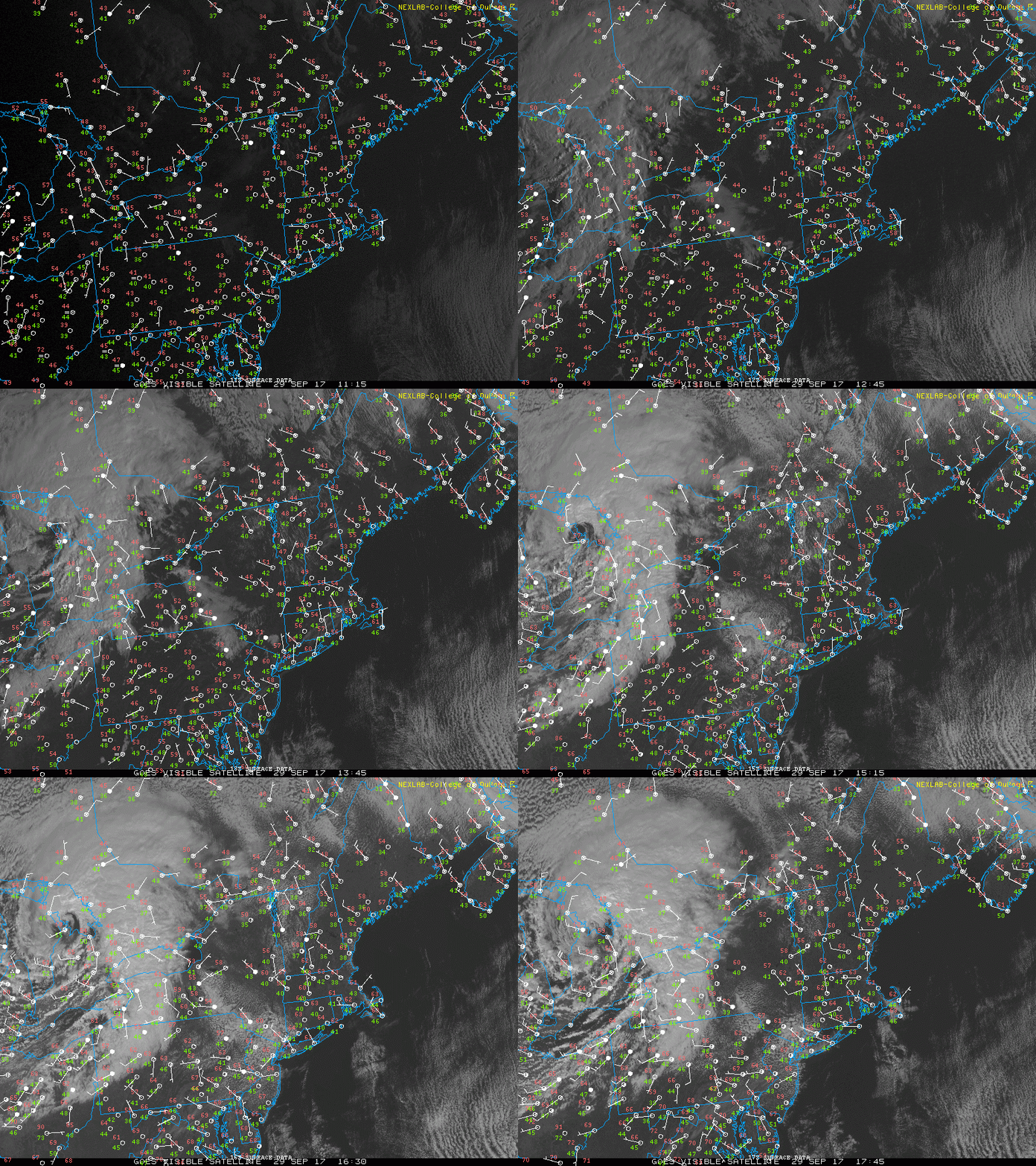
Loop of the current observations over the Northeast this afternoon showing relatively calm and cooler conditions. Also note the energetic low pressure system over the great lakes (CoD Weather)

Loop of the current observations over the Northeast this afternoon showing relatively calm and cooler conditions. Also note the energetic low pressure system over the great lakes (CoD Weather)

As we head into tomorrow and the area of low pressure degrades into a weak trough, we should see another area of high pressure begin to build into the Northeast as well as the Mid-Atlantic states for the remainder of the weekend. For both Saturday and Sunday, skies will be pretty much mostly sunny with some mid level clouds at times. Winds will also be light, but gradually shifting back to a more northerly component on Saturday afternoon, which should reinforce the overall drier weather. Highs will likely remain in the mid to upper 60’s across the entire area, with some locations near the city seeing highs reach into the lower 70’s. Overnight lows will have a much more crisp feel to them as radiational cooling takes over both nights and allows any heating gained during the afternoon hours to quickly radiate back into the atmosphere. Lows will easily drop into the lower to middle 50’s both evenings, with an enhanced potential for areas north and west to see temperatures drop into the 40’s as well. Overall, it should be an excellent weekend for any kind of outdoor activity with clear skies, light winds, and relatively dry weather.

Another area of strong ridging is expected to develop over much of the nation next week, and when looking at a mid level map one may think that we’ll return to the 80 degree highs that we had this week, but due to the juxtaposition of the ridge, we should see an area of high pressure develop to our north and east which will funnel in cooler onshore winds. This will pretty much put a cap on just how warm things can get next week, though we may have to deal with an increase in low level moisture once again and the potential for fog during the evening hours. At this time, it does not appear likely that there will be any heavy rain threats over the next seven days or so, but we will continue to monitor the latest trends and will have a full update on Monday!
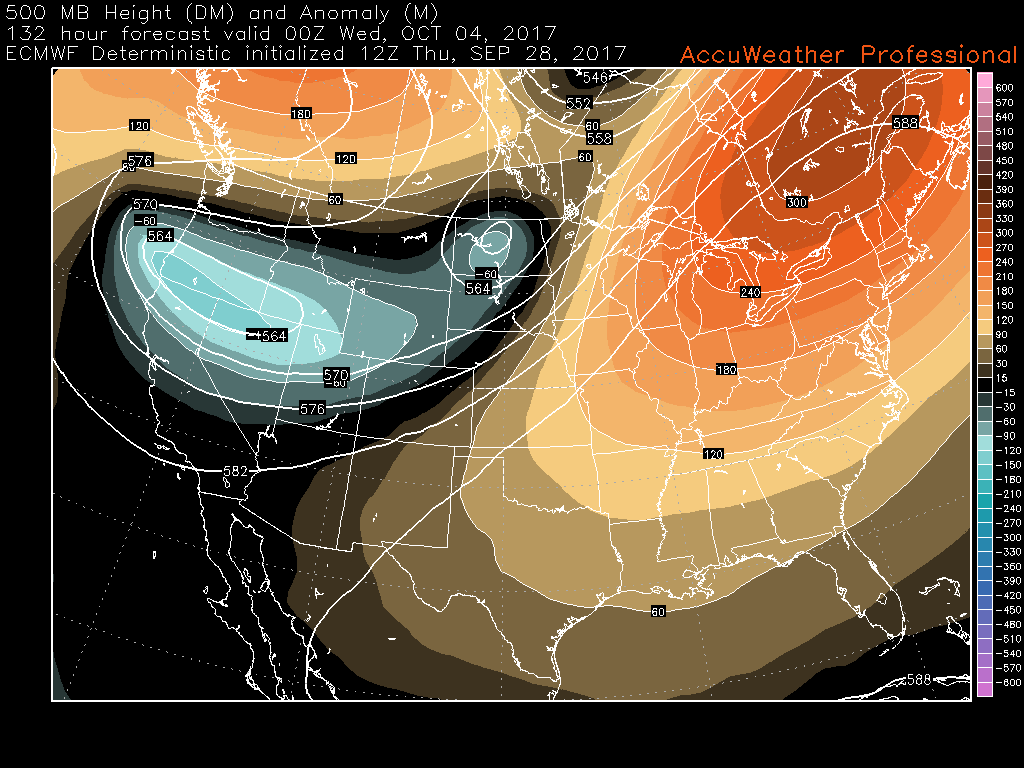
ECMWF model showing a large area of ridging forming over the eastern third of the nation next week. Temperatures will likely be back to above-normal next week, but not as warm as this week.

ECMWF model showing a large area of ridging forming over the eastern third of the nation next week. Temperatures will likely be back to above-normal next week, but not as warm as this week.

Maria and Lee Not Long for This World 

Once mighty hurricanes Maria and Lee have been reduced to tropical storms this afternoon after accelerating northeastward into a region of increasing shear and decreasing sea surface temperatures. These system will continue to head off to the east over the next few days, before being absorbed by a larger non-tropical low pressure system that may eventually impact portions of Europe with gusty winds and heavy rainfall.

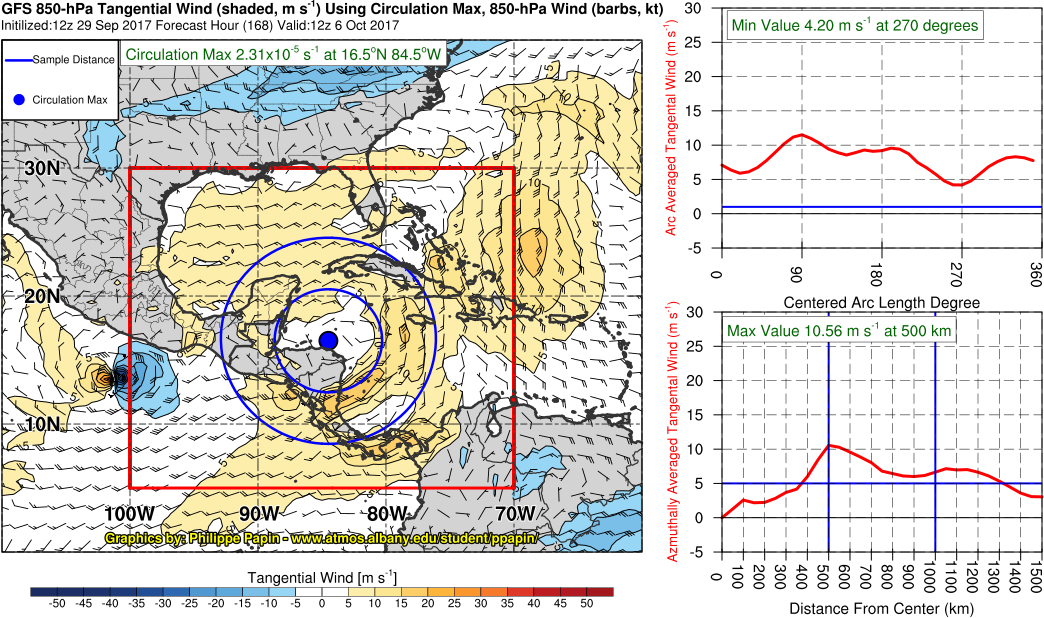
Behind these two systems we have a few area to watch, but nothing imminent to develop. There is a surface trough labeled invest 99L near the southern Florida coast that is producing a large area of disorganized showers and thunderstorms, but has not been able to organize significantly due to strong wind shear that will likely persist over the system during the next few days. Farther east, we have another tropical wave producing a large area of showers and thunderstorms just east of the Leeward islands. This system is also being impacted by strong wind shear from an upper level low to its west that should inhibit any significant development in the short term. However, both system will pose a threat for heavy rainfall and potential flash flooding, so please pay attention to your local NWS office for any flood watches or warnings.Lastly, the models have become less-certain regarding the development of a large tropical gyre forecast to form over the western Caribbean in the next week or so. This system would likely be quite large in nature and would take days to organize, but would still pose a significant threat for heavy rains and flooding. We have plenty of time to monitor future trends, but we still expect that this region of the Caribbean will have at least a medium chance for tropical cyclone development over the next 7-12 days.

This afternoons GFS model showing a very large monsoon gyre developing over the Caribbean in around a week or so. Any tropical development would likely be slow to occur due to the large nature of this system (Phillipe Papin)

This afternoons GFS model showing a very large monsoon gyre developing over the Caribbean in around a week or so. Any tropical development would likely be slow to occur due to the large nature of this system (Phillipe Papin)

For more information and posts like this one, make sure you sign up for Premium Forecasts — where multiple detailed articles, videos, and interactives are posted each day. Also, come interact with our staff and many other weather enthusiasts at 33andrain.com!

Have a great weekend!

Steve Copertino