Premium: Another ULL next week, warm temperatures follow

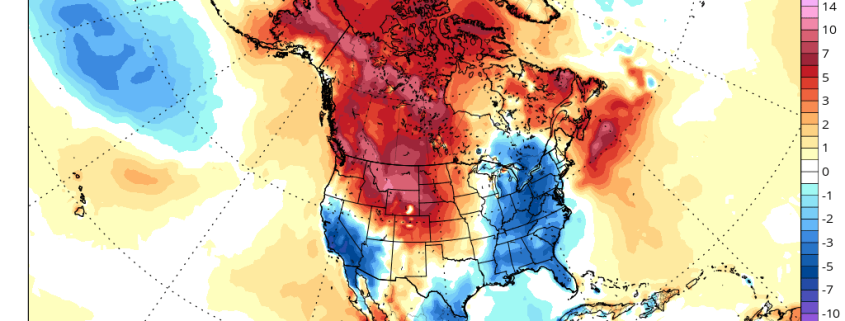
It’s May 11th, which means it’s getting in the late meteorological Spring season. Many of us often look forward to even warmer weather as we approach Memorial Day weekend and the beginning of meteorological summer. But the seasonal trends with blocking causing cool air intrusions are continuing over the last couple weeks, with omega blocking becoming a dominant presence. Now some high-latitude blocking is returning again for another cooler week of weather. But how cool will it actually be? And when will warmer weather return? We discuss more details on the overall pattern evolution for the rest of this month.

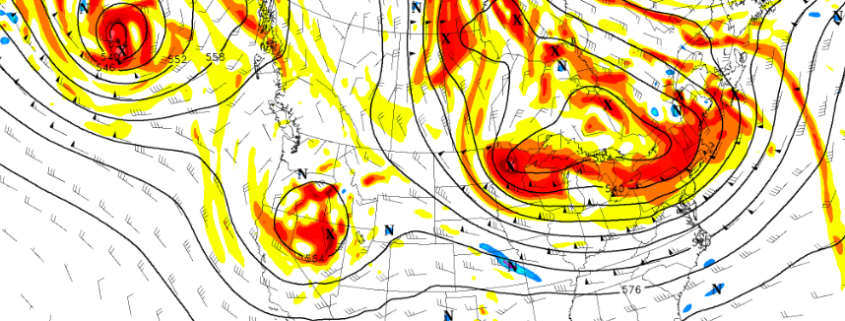
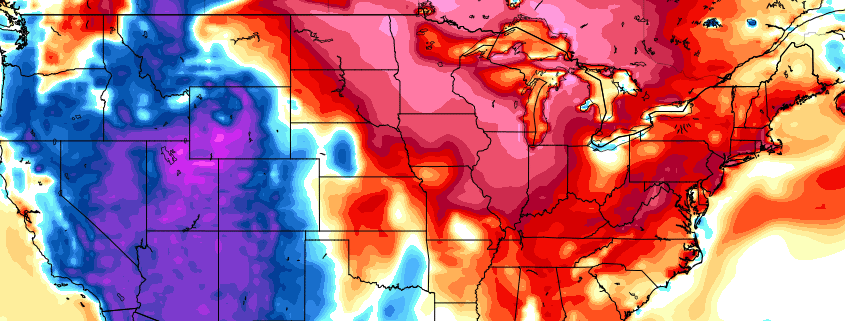
We start with a -EPO blocking ridge over Alaska. Shortwave energy coming downstream of this ridge will phase into a closed upper-level low over the Great Lakes later this week. Initially, this will cause heights to build over the Northeast. At the surface, high pressure will build over the Western Atlantic. More southerly flow around this high pressure will cause temperatures to rise near or slightly above normal for this coming Wednesday and Thursday.
Read more

Premium: Warmer than normal temperatures by late May

The news many have awaited for several weeks is finally here: We are forecasting the return of above average temperatures by the end of May. For the past few weeks, the hemispheric pattern has been stuck in a bit of a rut. High latitude blocking has maintained its control over the pattern, on both the Pacific and the Atlantic sides, forcing the development of anomalous cutoff lows and troughs into the Northern 1/3 of the United States. Colder than normal air with unsettled weather has been the dominant sensible weather in our area.

The transition out of this pattern is already underway. While high latitude blocking on the Pacific side (a -EPO) will again flex its muscles late this week, it will be more of a parting shot than anything else. An upper level low will form, as a response to the -EPO ridging, and push into the Great Lakes. But its presence will be mainly progressive, as a front swings through our area and the upper level trough elongates and moves to our northeast.

Read more

(Premium) Will May Be Cooler and Wetter Than Normal?

High-latitude blocking returned this week. After a warm start early this week, confluence from an upper-level over Southeast Canada forced a frontal boundary south of the region. This produced cooler than normal temperatures for the rest of the week. As a result, April will likely finish near or slightly below normal on average. It appears that May will start not only cool, but also wetter. So will May also be a cooler and wetter month as a whole? Or will a warming, drier trend occur again later in the month?

For next week, high-latitude blocking over the AO and NAO regions will start to weaken and an upper-level low moves out of Southeast Canada.  But an active split flow pattern with Pacific energy undercutting the West Coast ridge remains into next week. This pattern will keep a succession of troughs moving over the Central and Eastern United States for the next week or two. These troughs will supports airmasses coming down from Canada with mostly below normal temperatures. There is still the potential for backdoor cold fronts and cut-off lows with this pattern as well.

Read more

From Strong El Nino to Strong La Nina?

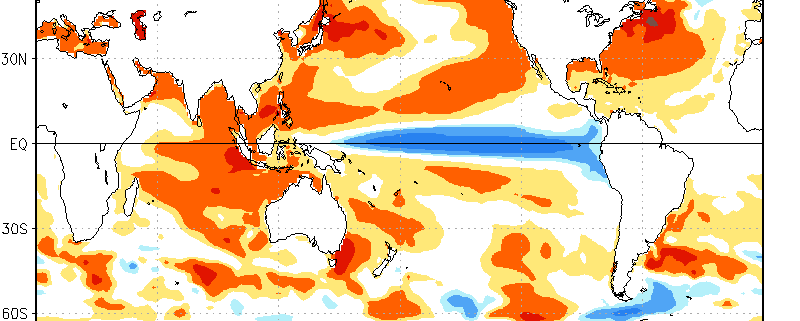
Over the past few months, we have had an El Nino. In fact, it has been one of the strongest El Ninos on record, and is one of the reasons why this past winter was generally quite warm, and why the Pacific Jet stream was so fast and active. It also helped to trigger the historic blizzard we had on January 22nd-23rd. Currently, while we still have an El Nino at the surface, conditions are rapidly flipping towards La Nina when one takes a deeper look at the oceans, as well as the trends in the climate models.

Under “normal” conditions, where there is no El Nino nor a La Nina, the trade winds are persistent in the Equatorial Pacific, which generally blow from east to west. This “pushes” the warmest Equatorial waters further west towards Australia and Indonesia, leaving cooler waters in their wake with more upwelling of subsurface cool water as well. Over the past year or so, these trade winds rapidly weakened and even reversed in some areas, allowing warm water to flow back eastward (instead of getting forced westward) towards the entire Equatorial Pacific, spreading eastward towards Peru. As warmer water builds, Oceanic Kelvin waves, which move from west to east — but also move up (upwelling) and down (downwelling) to transport warm or cool water vertically — are able to push warm water to strong depths and generate “pools” of warm water. This allows an El Nino to sustain itself, as even when a brief period of trade wind acceleration takes place and more upwelling happens, the water upwelled is still warm. It can take months to fully reserve a new El Nino equilibrium.

But finally, the proverbial rubber band is snapping.

Read more