AM Update: Warmth returns to east, but for how long?

Good morning and Happy Wednesday to you all. There is something oddly special about the first day of November in the meteorological community. It’s not a holiday, it’s not the start of any official season. But it has significance for many who forecast or follow the weather – it’s the beginning of “winter season” per se, where the forecasts for the weeks and months ahead start to have more significant implications on what we can expect during winter.

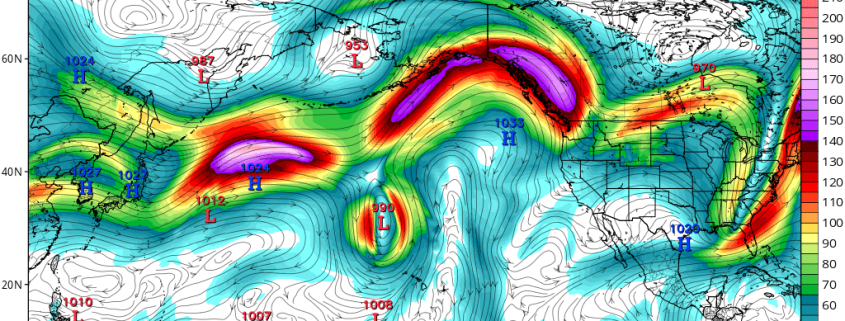
As we move into November this year, the weather pattern will be dominated by a large -EPO ridge, developing in the Pacific Ocean as we speak. We discussed yesterday in detail how these EPO ridges can impact the weather pattern throughout the hemisphere. In this case, the large ridge in the Northern Pacific Ocean will act to dislodge colder than normal air from the arctic regions into British Columbia, and eventually the Northwestern United States as well.
Read more

EPO ridging a sign of changing pattern across USA

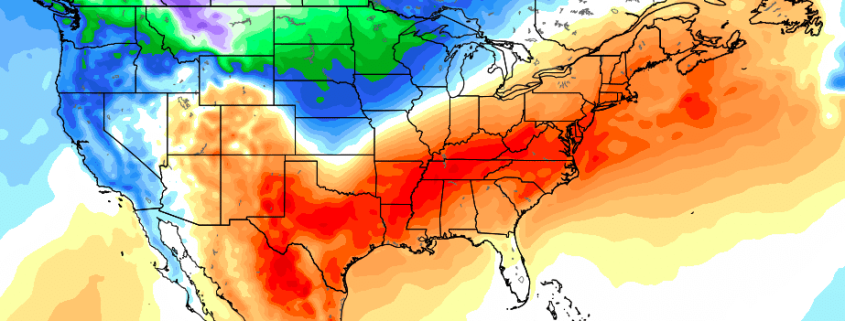
A pattern in fluctuation has led to several changes in sensible weather conditions across the Continental USA over the past few weeks. Stagnant warmth gave way to several shots of cold air, first affecting the Northern Plains and eventually leaking southward into the Tennessee and Ohio River Valleys. The change in wavelengths and  increased amplitude led to the development of a few significant storm systems; namely one which brought snow to the Upper Midwest, and another which delivered damaging winds and torrential rain to the Northeast.

The hemispheric pattern is set to change again  as we approach the middle part of this week, with appreciable changes already occurring in the Pacific Ocean. As we discuss quite often, what occurs in the Pacific Ocean from the Bering Sea towards the Gulf of Alaska (more affectionately known as the North Pacific) can often have major implications on the weather in the USA. There are other factors to consider, always, but we can often look there for clues, and the coming weeks will be no different.

Read more

ENSO Update: Weak La Nina Likely for the Winter

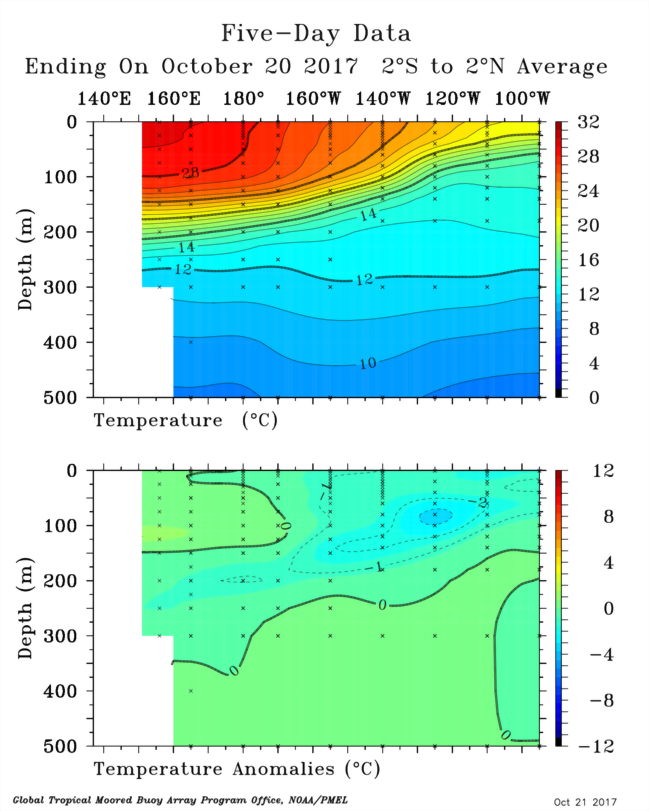
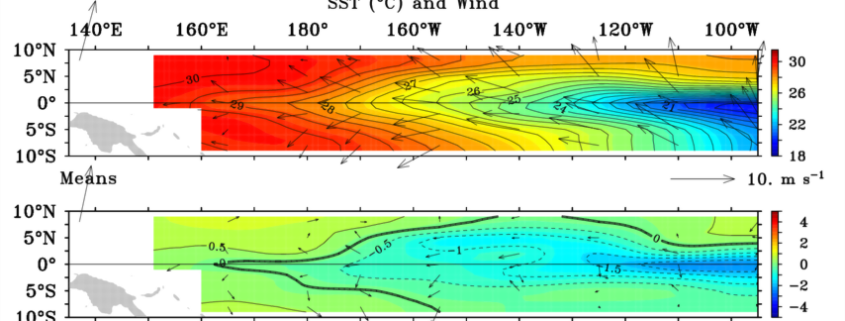
Good afternoon! We continue to monitor developments with La Nina this weekend, as it will one important features will be considering in our monthly and winter forecasts. Sea-surface temperatures this past week, have cooled over more of ENSO regions in the Central and Eastern Pacific, as anticipated in our last major update. The thermocline (sea-surface temperature gradient) has been rising this week, with an easterly trade wind bust causing more upwelling cooler sub-surface waters into the Central Tropical Pacific. The latest 30-day moving SOI is now at +13.03. So La Nina conditions have been strengthening this week.

Read more

MJO and Recurving Typhoon Leads to Volatile Pattern

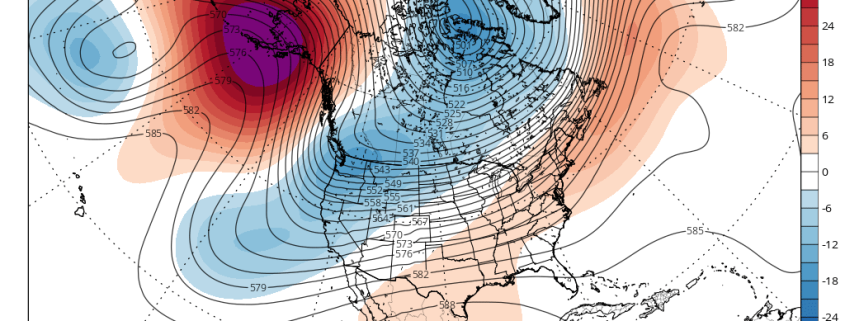
Good evening, friends! Over the past few days we have discussed, at length, an upcoming wholesale pattern change across North America. As changes in the Pacific Ocean fold down into the United States, a large and stagnant ridge over the Eastern United States will gradually become replaced with a trough, arcing from the Central States to the East through days 5-10. This will result in colder than normal temperatures expanding eastward from the Central United States. The duration and exact intensity of this cooler air remains in question, but what exactly is causing it to occur in the first place?

As we have discussed before, the pattern change comes initially from the retrogression of synoptic features over the Western Hemisphere and North Pacific.  The polar vortex retrogrades out of Northern Canada and into the Bering Sea by early next week. That very same vortex phases with more energy over the North Pacific and results in a larger, deep trough positioned over the Aleutians. This pattern forces a ridge to build over the West Coast of the United States and Canada, and large mid-latitude trough to start digging into the Central and Eastern US during the middle of next week.

Read more